
Protec Sardinia
Via Carlo Collodi 9, 08022 Cala Gonone, Cala Gonone, ITA
Über das Zentrum
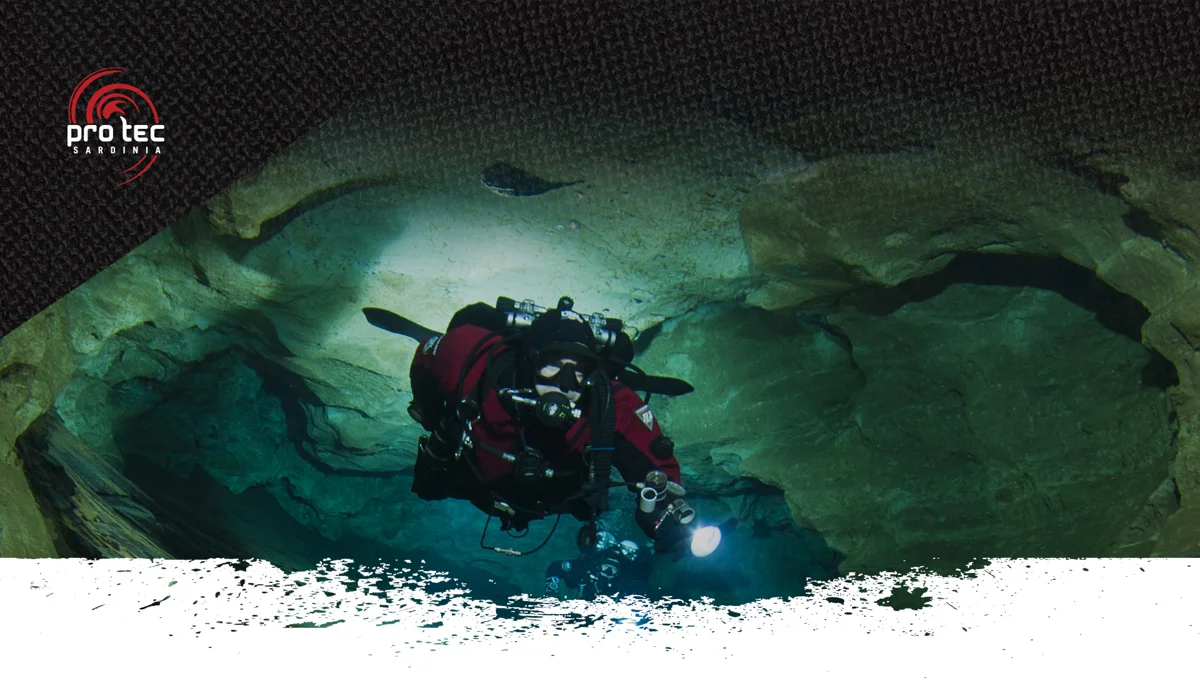
Protec Sardinia in Cala Gonone, Italien, ist ein nach SSI zertifiziertes Tauchcenter, das sich auf fortschrittliche und technische Taucherlebnisse spezialisiert hat. Das Zentrum bietet eine breite Palette von Kursen an, von Discover Scuba Diving bis hin zu Instruktorenzertifizierungen, mit einem besonderen Fokus auf Höhlentauchen und technisches Tauchen. Zu den Einrichtungen gehören Schließfächer, Unterkunft, Ausrüstungsverleih und spezielle Gasfüllungen wie Nitrox und Trimix.
Das Kursangebot von Protec Sardinia ist umfassend und beinhaltet Spezialkurse wie Enriched Air Nitrox, Rescue Diver, Technical Diving sowie Boots- und Wracktauchen. Ihre Hingabe an das Höhlentauchen spiegelt sich in Kursen wider, die von Intro to Cave Diver bis zu Sidemount Cave Diver und Technical Cave CCR reichen. Darüber hinaus bieten sie Ausbildung in Kreislauftauchgeräten (CCR) und verschiedene technische Spezialisierungen mit Trimix an.
Die verfügbaren Tauchaktivitäten umfassen Tauchen vom Boot, Tauchen vom Ufer und Nachttauchgänge, geleitet von erfahrenen Tauchlehrern. Protec Sardinia organisiert auch Tauchgänge zu ikonischen Orten wie den Höhlen Utopia Del Fico, Bel Torrente und Cala Luna sowie zu Wracks wie der Nasello (-34m) und der Ugo Bassi (-90m). Das Zentrum zeichnet sich durch seine Fähigkeit aus, Taucher unterschiedlicher Herkunft zu bedienen, da es bis zu neun Sprachen spricht, darunter Deutsch, Spanisch, Englisch, Französisch, Italienisch, Portugiesisch, Russisch und Ukrainisch, was ein inklusives und personalisiertes Erlebnis gewährleistet.
Verfügbare Kurse
10 cursosTechnical Diving
Curso de buceo técnico para inmersiones avanzadas con mezclas de gases, descompresión y equipamiento especializado.
Essentials Training
Protec Sardinia's Essentials Training program is the foundational step for sport divers aspiring to enter the specialized world of technical diving. This course meticulously covers the fundamental knowledge and safety protocols essential for this discipline. You will gain practical experience with twinset configurations and learn safe dive planning and execution techniques. The training is conducted in open water, providing a realistic environment to build your technical diving skills. It serves as an ideal precursor for advanced technical courses such as cave diving or mixed gas diving. The curriculum delves into critical areas including equipment configuration tailored for technical diving, advanced communication methods, and specialized propulsion techniques like the Flutter Kick, Frog Kick, and Shuffle Kick. Students will practice using reels and lift bags for deployment and recovery, and master emergency procedures vital for managing critical situations. The course also explores the use of Nitrox within a technical diving context, ensuring a thorough understanding of gas management and decompression principles. The maximum depth is adjusted based on your existing certification, with a limit of 40 meters, and includes approximately 4-6 dives over a minimum of 4 days, complemented by 8 hours of theory and debriefings. This program is offered by Protec Sardinia, a center recognized by multiple certifying agencies including CMAS, FFESSM, IANTD, PADI, SDI, SSI, and TDI. The training is delivered by experienced instructors fluent in German, English, Spanish, French, Italian, Dutch, Portuguese, and Russian, ensuring clear communication and effective learning for a diverse range of international students. The focus on practical application of skills not typically found in recreational certifications ensures you gain hands-on experience with essential technical diving equipment and procedures. Protec Sardinia is situated in a location that offers excellent conditions for technical diving training. While specific monthly climate data is not provided, the general environment is conducive to diving year-round. The course emphasizes practical skills, preparing you for the demands of deeper and more complex dives. The depth limit of 40 meters is a standard for this level, allowing for significant exploration while adhering to safety protocols. The inclusion of specific propulsion techniques and emergency management strategies ensures you are well-prepared for the challenges of technical diving.
Intro to Cave Diver
The Intro to Cave Diver course at Protec Sardinia is specifically designed for certified cavern divers aiming to progress into the more complex world of overhead environments. This specialty course builds directly upon your existing cavern diving skills, pushing the boundaries beyond natural light penetration and introducing advanced safety protocols essential for cave exploration. It serves as a foundational step for those aspiring to achieve full cave diver certification, equipping you with the knowledge and techniques to navigate these challenging environments safely. The program mandates a minimum of 3 days, encompassing 8 hours of theoretical instruction and 4 practical cave dives. For a more extensive training experience, it can be combined with the Cavern Course, extending the program to a minimum of 6 days with at least 8 dives. Training includes crucial land drills, pool sessions for skill refinement, and open water cave dives that simulate various conditions, such as reduced visibility, potential currents, and diverse tunnel formations. A minimum score of 80% is required to successfully complete the course and earn your certification. Protec Sardinia's Intro to Cave Diver course adheres to strict operational limits to ensure diver safety within the cave environment. Dives are conducted exclusively on the main guideline, employing simple navigation techniques. The maximum depth for this course is capped at 40 meters (132 ft), and while divers may encounter areas with limited light, no decompression stops are required. Gas planning follows a conservative 1/6 rule, utilizing a double tank configuration for penetration dives. To guarantee personalized instruction and close supervision, the instructor-to-student ratio is maintained at a maximum of 3:1. This ensures that each student receives ample attention to master the skills necessary for safe cave diving. This course requires a comprehensive and specialized equipment setup tailored for cave diving. Essential gear includes a double tank with a closed crossover, two independent regulators, a wing and backplate system, a suitable dive suit, mask, and fins. Safety equipment is paramount and includes line cutters, multiple reels (primary, safety, and gap reels), three distinct lamp systems for redundancy, a dive computer, wet notes, a waterproof dive table, and directional markers such as direction arrows and non-directional markers. This extensive list ensures divers are fully prepared for the unique demands and potential challenges encountered in overhead cave environments. Protec Sardinia provides guidance on acquiring or renting this specialized equipment. As a stepping stone towards full cave diver status, the Intro to Cave Diver course at Protec Sardinia unlocks the ability to explore further into cave systems than previously possible. It solidifies your understanding of guideline management, navigation, and emergency procedures within a simulated overhead environment. This certification is a prerequisite for more advanced cave diving training, allowing you to build confidence and experience in a controlled setting. The skills learned here are directly transferable to future cave diving expeditions, preparing you for more complex dives and longer penetrations under expert guidance. Protec Sardinia offers this course with certifications recognized by agencies including TDI, SSI, PADI, SDI, CMAS, and FFESSM, providing broad acceptance within the diving community.
Cavern Diver
The Cave Diver specialty course at Protec Sardinia is a rigorous program designed for experienced divers seeking to explore the underwater cave systems of Europe. This certification builds upon the Intro to Cave Diver qualification, equipping participants with advanced skills for safe and methodical cave exploration. The curriculum mandates a minimum of 4 days, including 8 hours of theoretical instruction and 8 dedicated cave dives. For those combining this with introductory cave diving certifications, the program can extend to 6 days (with Intro to Cave) or even 10 days (with Cavern and Intro to Cave), incorporating a total of 16 dives. Training encompasses extensive theory, practical land drills, pool sessions, and open water dives conducted in challenging conditions such as varying visibility, currents, and complex tunnel formations. A minimum score of 80% is required to achieve certification. This advanced course adheres to strict safety protocols, with a maximum depth limit of 39 meters (130 ft). Gas management is a critical component, requiring planning for penetration using a 1/3 surface reserve ratio with double tank configurations. To ensure personalized attention and safety, the instructor-to-student ratio is capped at a maximum of 3:1. Participants will master advanced navigation techniques, sophisticated gas management strategies, and emergency procedures tailored for the unique demands of complex cave environments. The course emphasizes meticulous planning and execution, crucial for navigating overhead environments. Protec Sardinia offers this challenging specialty, leveraging its expertise in advanced diver training. The center is certified by multiple recognized agencies including PADI, SSI, TDI, SDI, CMAS, and FFESSM, indicating a broad acceptance of their training standards. While specific dive sites are not detailed, the course focuses on developing the skills necessary to safely explore various European cave systems. The training environment is designed to simulate real-world cave diving conditions, preparing divers for a wide range of scenarios they might encounter. Essential equipment for the Cave Diver course is extensive and specialized, reflecting the demands of the environment. This includes a double tank with a lockable bridge, two independent regulators, a wing and backplate setup, a dive suit, mask, fins, and multiple line cutters. For navigation and safety, divers must possess a safety reel (minimum 30m), a primary reel (minimum 120m), and two to three gap reels (minimum 15m). Illumination is critical, requiring three distinct lamp systems. Additional required gear includes a dive computer, wet notes, a waterproof dive table, direction arrows, and non-directional markers. This comprehensive equipment list ensures divers are fully prepared for the rigorous demands of advanced cave exploration.
DPV Cave Diver
The DPV Cave Diver specialty course at Protec Sardinia equips divers with the skills to utilize Diver Propulsion Vehicles (DPVs) for advanced cave exploration. This program focuses on the efficient use of DPVs to extend exploration range and conserve energy within complex cave systems. Participants will gain proficiency in integrating DPVs into their dive plans, emphasizing critical aspects like gas management and emergency procedures specific to overhead environments. The course is designed to enhance a diver's capability for exploring extensive underwater cave networks. Protec Sardinia structures this specialty over a minimum of 5 days, incorporating 8 hours of theoretical instruction and 6 practical cave dives, complemented by one shallow water training session. The maximum depth for these dives is contingent upon the student's existing certification level, ensuring a safe progression. A core component of the training involves understanding the unique gas requirements and potential risks associated with DPV operation in cave environments. The commitment to specialized training is reflected in the instructor-to-student ratio, capped at a maximum of 2:1. This course mandates specific equipment beyond standard cave diving gear. Essential items include twinsets, appropriate regulators, a wing and backplate setup, a dive suit, mask, fins, line cutters, multiple reels, and robust lighting systems. Additionally, divers must provide stage tanks for bailout gas and the DPV itself. Proficiency in both advanced cave diving techniques and DPV operation is the goal, preparing divers for challenging exploration scenarios. The center offers instruction in multiple languages, including German, English, Spanish, French, Italian, Dutch, Portuguese, and Russian, catering to a diverse international clientele. DPVs are invaluable tools for technical diving, allowing for greater distances to be covered with less effort. This course at Protec Sardinia specifically addresses how to leverage this advantage within the confined and demanding context of cave diving. The curriculum covers various DPV types, their operational nuances, essential maintenance, and safe deployment strategies. The benefits extend beyond caves, with applications in exploring reefs, walls, and wrecks, always prioritizing safety and efficient exploration. The training ensures divers are well-prepared for the unique challenges of DPV-assisted cave exploration.
Sidemount Cave Diver
The Sidemount Cave Diver specialty course at Protec Sardinia is designed for experienced cave divers seeking to master the sidemount configuration. This program focuses on the distinct advantages sidemount offers in overhead environments, including enhanced maneuverability in tight passages, improved gas management strategies, and simplified equipment handling for transport. Protec Sardinia's instructors are adept at demonstrating the versatility of sidemount systems, providing thorough training on their setup and deployment within complex cave systems. Key modules within this specialized training cover the precise setup of sidemount gear, including optimal stage bottle configuration and advanced trim techniques essential for cave penetration. Emergency procedures are also a significant focus, tailored specifically to the nuances of sidemount cave diving. The course prioritizes practical application, ensuring students achieve comfort and proficiency with this alternative configuration, ultimately enabling safer and more effective exploration of underwater caves. This intensive program requires a minimum of 4 days, encompassing 8 hours of theoretical instruction and practical application through 3 dedicated sidemount cave dives, complemented by one shallow water training dive. Maximum depth is contingent upon the student's existing certification level, with strict adherence to partial pressure limits for oxygen and decompression gases. Instruction is delivered with a maximum instructor-to-student ratio of 2:1, guaranteeing close supervision and personalized feedback throughout the course. Essential equipment for this course includes two single tanks (minimum 11 L each), two independent regulator sets with separate submersible pressure gauges, a dedicated sidemount BCD, a dive suit, mask, fins, two line cutters, a safety reel (minimum 30m), a primary reel (minimum 120m), two to three gap reels (minimum 15m), three independent lighting systems, a dive computer, wet notes, waterproof dive tables, directional arrows, and non-directional markers. Proficiency with this specialized gear is fundamental for successful sidemount cave diving.
CCR Cave
The CCR Cave course at Protec Sardinia represents the apex of technical diver training, merging the sophisticated demands of rebreather diving with the intricate challenges of overhead cave environments. This program is meticulously designed for highly experienced divers who have already achieved mastery of their closed-circuit rebreather systems and are prepared to apply these advanced skills in the demanding context of cave exploration. The course necessitates exceptional discipline and rigorous preparation due to the inherent risks associated with both rebreathers and cave diving. Participants will undergo specialized training in gas planning for diluent and oxygen, optimal CCR configuration for cave penetration, the strategic handling of stage tanks for critical bailouts, and specific emergency protocols tailored for rebreather cave diving. A significant emphasis is placed on understanding complex gas rules, precise PO2 control, accurate distance determination, bailout calculations, and the management of potential equipment failures. This intensive program is structured to push divers' capabilities while upholding the highest safety standards through meticulous planning and execution. The maximum depth for this course is set at 39 meters (130 ft), with gas planning adhering to the strict 1/3 rule for both diluent and oxygen. This comprehensive program requires a minimum commitment of 12 days, encompassing at least 8 hours of theoretical instruction and a minimum of 16 challenging cave dives. Protec Sardinia offers the flexibility to combine this course with other programs to extend the learning duration. The instructor-to-student ratio is maintained at a maximum of 1:3, ensuring personalized attention and a high level of supervision throughout the training. The center is certified by multiple agencies including PADI, TDI, SSI, CMAS, IANTD, SDI, and FFESSM, reflecting a broad acceptance of their training standards. Essential equipment for this advanced course is extensive and includes a personal rebreather, two bailout tanks with dedicated regulators, a wing and backplate setup, appropriate dive suit, mask, fins, reliable line cutters, multiple reels for guideline management, three distinct lamp systems for redundancy, a CCR-specific dive computer, wet notes, a waterproof CCR dive table, direction arrows, and non-directional markers. This course is specifically for individuals possessing a deep, practical understanding of their rebreather and who are actively seeking the ultimate challenge in technical diving, preparing them for complex underwater explorations.
SF2 Air Diluent
The SF2 Air Diluent course at Protec Sardinia provides the foundational certification for divers seeking to operate the SF2 Electronic Closed Circuit Rebreather (ECCR) using air as the diluent. This program is meticulously designed to impart a thorough understanding of ECCR diving, covering its inherent benefits, potential risks, and the precise operational procedures required. Participants will develop essential skills for rebreather diving, with a strict maximum depth limit of 30 meters (100 feet) for this non-decompression certification. Upon successful completion, divers are qualified to utilize the SF2 ECCR for air dives up to 30 meters, opening up new possibilities for extended bottom times and enhanced underwater experiences. Protec Sardinia structures this course to accommodate varying student numbers and skill levels, ensuring personalized instruction. The curriculum integrates academic learning with hands-on equipment maintenance and practical application. Confined water sessions involve a minimum of 60 minutes of training at a maximum depth of 10 meters (33 feet), building core skills in a controlled environment. Open water training comprises a minimum of 420 minutes spread across at least seven dives, progressively reaching the 30-meter limit. The entire program is designed to be completed over a minimum of five days, allowing for thorough skill development and consolidation. To enroll in the SF2 Air Diluent course, candidates must be at least 18 years old and possess a minimum of 25 logged open water dives. A prerequisite certification level of Nitrox Diver or an equivalent is also required, ensuring a solid foundation in dive planning and gas management. The course content is extensive, delving into the history and mechanical principles of rebreathers, gas physiology relevant to closed-circuit diving, advanced dive planning techniques, critical emergency procedures, and the effective use of CCR dive computers. This comprehensive approach ensures graduates are well-prepared for rebreather diving. Essential equipment for the course includes the SF2 rebreather itself, a dedicated CCR dive computer, a mask, fins, a cutting device, a reel with line, a lift bag, and a suitable exposure suit. Protec Sardinia facilitates this training with instructors fluent in multiple languages, including German, English, Spanish, French, Italian, Dutch, Portuguese, and Russian, catering to a diverse international clientele. The center's commitment to diver education is underscored by its affiliation with various certifying agencies such as CMAS, FFESSM, IANTD, PADI, SDI, SSI, and TDI, offering recognized credentials.
Advanced Nitrox
The Advanced Nitrox course at Protec Sardinia is designed to equip divers with the knowledge and skills to safely plan and execute dives utilizing enriched air nitrox (EANx) up to 50% for extended bottom times and managing shallow decompression. This program is a crucial step for those seeking to optimize their dives within no-decompression limits or handle limited decompression stops effectively, serving as a prerequisite for technical diver training. The course focuses on advanced dive planning, including the use of twinsets, independent regulators, and stage decompression bottles, with a maximum depth limit of 42 meters (140 ft) and a maximum of 15 minutes of decompression. Protec Sardinia offers this advanced training with a strong emphasis on understanding the benefits and risks associated with enriched air nitrox for technical diving applications. The curriculum includes a minimum of 4 days, comprising 8 hours of theory and 4 open water dives, alongside one shallow water training session. This structured approach ensures divers are thoroughly prepared for the technical demands of advanced nitrox diving. The center's commitment to safety is reflected in its maximum instructor-to-student ratio of 4:1, allowing for personalized attention and thorough skill development. To participate in the Advanced Nitrox course, divers must have completed Deep Diver training. The required equipment is specialized and includes a double tank with a lockable bridge, two independent regulators, a stage decompression tank for 50% nitrox, a lift bag, a wing and backplate, a dive suit, mask, fins, line cutters, a reel with line, a dive computer, wet notes, a waterproof dive table, direction arrows, and a compass. This comprehensive gear list ensures students are ready for the practical application of advanced nitrox techniques. This certification represents the highest non-technical training level and unlocks further possibilities in technical diving. By mastering advanced planning and gas management with EANx, graduates of this course at Protec Sardinia will be well-prepared for more complex dive profiles and future technical certifications. The skills learned are directly applicable to optimizing dive profiles and enhancing safety margins in a variety of advanced diving scenarios.
CCR Maintenance
The CCR Maintenance course at Protec Sardinia provides essential hands-on training for rebreather divers seeking to enhance their equipment knowledge and self-sufficiency. This program focuses on the practical servicing and upkeep of specific rebreather units, moving beyond standard manual instructions to incorporate the instructor's extensive experience. Participants will gain the confidence to perform routine maintenance and minor repairs, a valuable skill especially when traveling. The curriculum covers the disassembly and reassembly of the rebreather, with detailed instruction on key components. This includes the solenoid, mouthpiece, HUD, diluent and O2 injection buttons, bailout valve, automatic diluent valve, counterlungs, and over-pressure valve. Intermediate pressure checks are also a critical part of the practical workshop. The course is structured as a half-day program, comprising 30 minutes of theory followed by 4 hours of practical application. This specialized course is designed for divers who are already certified rebreather divers or are currently enrolled in a CCR course. It empowers them with the skills to manage their equipment effectively. While the course focuses on maintenance, it explicitly excludes software updates or modifications to factory settings. Participants are required to bring their own rebreather and its manufacturer's manual to the training. Protec Sardinia offers this course with instructors fluent in multiple languages, including German, English, Spanish, French, Italian, Dutch, Portuguese, and Russian, ensuring accessibility for a diverse international clientele. While specific dive site details for this maintenance course are not applicable as it is workshop-based, the center's location in Sardinia provides an exceptional environment for diving activities. The center is certified by major agencies such as CMAS, FFESSM, IANTD, PADI, SDI, SSI, and TDI, underscoring its commitment to high training standards.
Services
Facilities
Specialties
Brands they work with
Destinations & trips
Recommended dive sites
The spots this centre offers its students
Galerie(12)
Climate
Annual average
Monthly historical data to plan your dives
Nutzerbewertungen
Hinterlasse deine Meinung
Melde dich mit deinem Taucher-Konto an, um dieses Zentrum oder diesen Kurs zu bewerten.
AnmeldenFrequently asked
What people ask before booking
The minimum age for the Intro to Cave Diver course is 15 years, with parental signature required.
For the Cavern Diver course, you need to be at least 12 years old with parental signature and possess an Advanced Junior Diver Brevet or equivalent, with a minimum of 10 logged dives.
The Technical Diver course lasts a minimum of 5 days, including 8 hours of theory and 5 dives. This can extend to 8 days if combined with Deep Air and Advanced Nitrox courses.
For the CCR Cave course, you will need your personal rebreather, two bailout tanks with regulators, twinsets, a wing and backplate, a dive suit, mask, fins, line cutters, safety reel, primary reel, gap reels, three lamp systems, a CCR dive computer, slate, waterproof table, direction arrows, and non-directional markers.
The SF2 Air Diluent course trains divers to a maximum depth of 30 meters (100 feet) using air as a diluent.
The Technical Cave course has a minimum duration of 8 days, including 8 hours of theory and 12 cave dives. This can extend to 12 or even 20 days when combined with other courses.
For the Cave Diver course, a minimum of 50 logged dives is required.


