
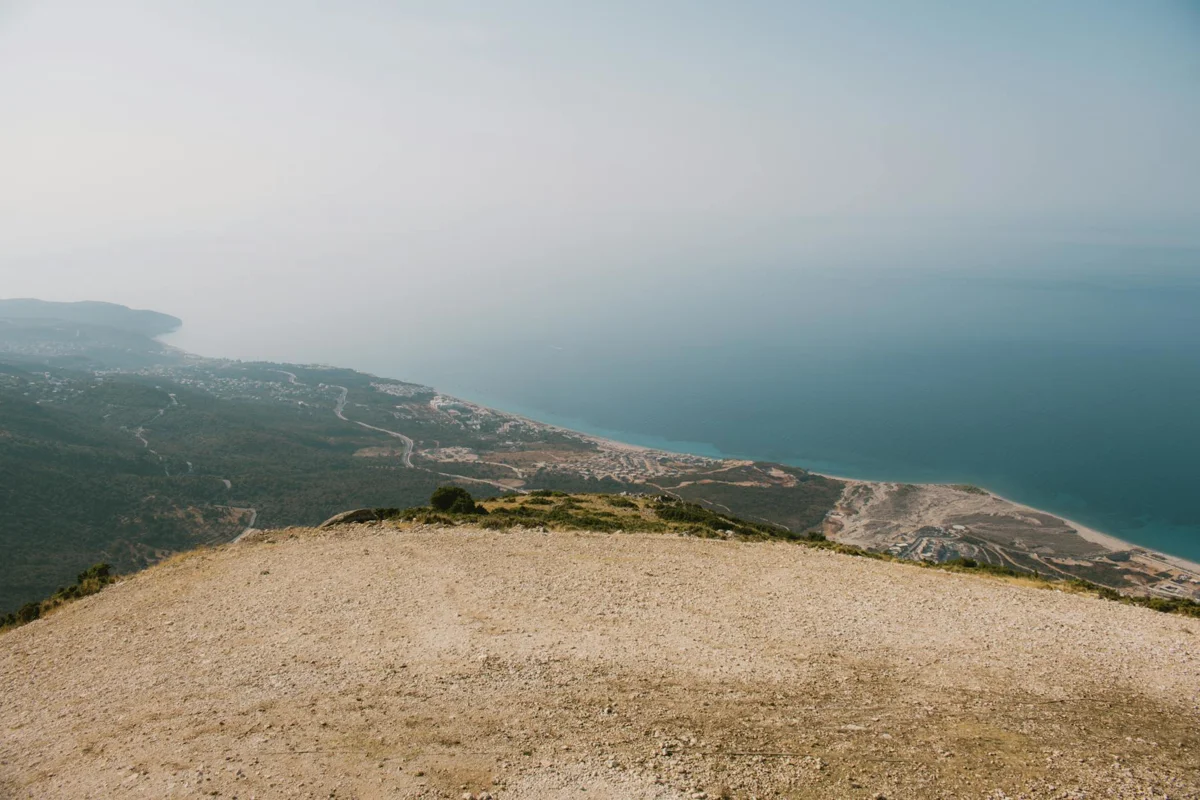
Karaburun-Sazan Marine Park, established in 2010, is Albania's first marine park — sitting where the Adriatic meets the Ionian Sea. Untouched walls dense with red gorgonian fans, Italian WWII wrecks, and virtually zero diving pressure. A genuine frontier destination for divers who already know Croatia and are ready to go further.
Albania spent most of the twentieth century sealed behind Hoxha's communist regime (1944-1991). The coastline around Vlorë and the Karaburun peninsula was classified military territory — no tourists, no development, no anchors. That enforced isolation spared these waters from the same overuse that degraded much of the Italian and Croatian Adriatic coast. Thirty years after the borders opened, diving pressure here remains negligible, though coastal tourism is beginning to arrive.
The park: Karaburun-Sazan covers 12,428 hectares linking the mountainous Karaburun peninsula with Sazan island, a former Italian military base now partially open to visitors. It sits at the strait of Otranto, where Adriatic and Ionian water masses converge. That collision drives nutrient upwelling and sustains biodiversity well above the Mediterranean average. Dive sites range from the shallows to 60 m.
The main dives: 1) Sazan Cave — a cathedral-sized cavern with overhead light shafts, 15-25 m. 2) Italian Submarine Wreck — an Italian submarine lost in 1944, resting at 30 m, advanced certification required. 3) Karaburun Wall — a long wall dive covered in red gorgonian fans at 25-40 m. 4) Sea Caves — a coastal cave network accessible to Open Water divers. 5) Old Harbor Ruins — submerged Roman remains at 8 m. Water temperature 14-25 °C, visibility 25-35 m.
The real draw is the red gorgonian. Colonies of *Paramuricea clavata* grow in densities at 25-40 m that have long disappeared from most of the western Mediterranean under tourism pressure and climate stress. Karaburun Wall is the kind of dive you would have found off Marseille or Cinque Terre thirty years ago — gorgonians from floor to ceiling, undisturbed.
Getting there: flights to Tirana run from most European capitals, with low-cost options on Wizz Air and Ryanair outside peak season. Ground transfer to Vlorë takes around three hours (30-50 € by taxi). Accommodation in Vlorë starts at 30 € for a double in a guesthouse, up to 100 € for a decent hotel. Dive operators: Albania Diving Center, Vlora Diving Center. Guided dives run 35-50 € per dive — among the cheapest guided diving in the Mediterranean — with six-dive packages available from 200 €. Italian is widely spoken along the coast; English is serviceable at the dive centres.
The pleasant surprise: how easily diving pairs with cultural travel here. Albania has become a serious adventure tourism destination. Apollonia and Butrint (both UNESCO sites), the Albanian Alps, and consistently good cheap Mediterranean food mean non-diving partners are well served. Prices run roughly 50 % below comparable destinations in Italy or Croatia.
The honest caveat: infrastructure is still rough. Albania is not Croatia. Restaurant menus outside the main towns rarely come in English, connections can be slow, and anything requiring a tight schedule demands flexibility. Divers accustomed to polished resort infrastructure will need to adjust their expectations. That gap, though, is precisely what keeps the kit costs down and the reefs pristine.
Albania is a Mediterranean diving destination for divers who put authenticity above comfort. Water quality is superior to most of the western Mediterranean. Prices are genuinely accessible. Infrastructure improves year on year. For anyone who has already ticked Croatia, Italy, and Greece, Albania is the next logical stop before the crowds catch on. Karaburun-Sazan will be well-known within five to ten years; the window to dive it undisturbed is now. June and September offer the best conditions.