
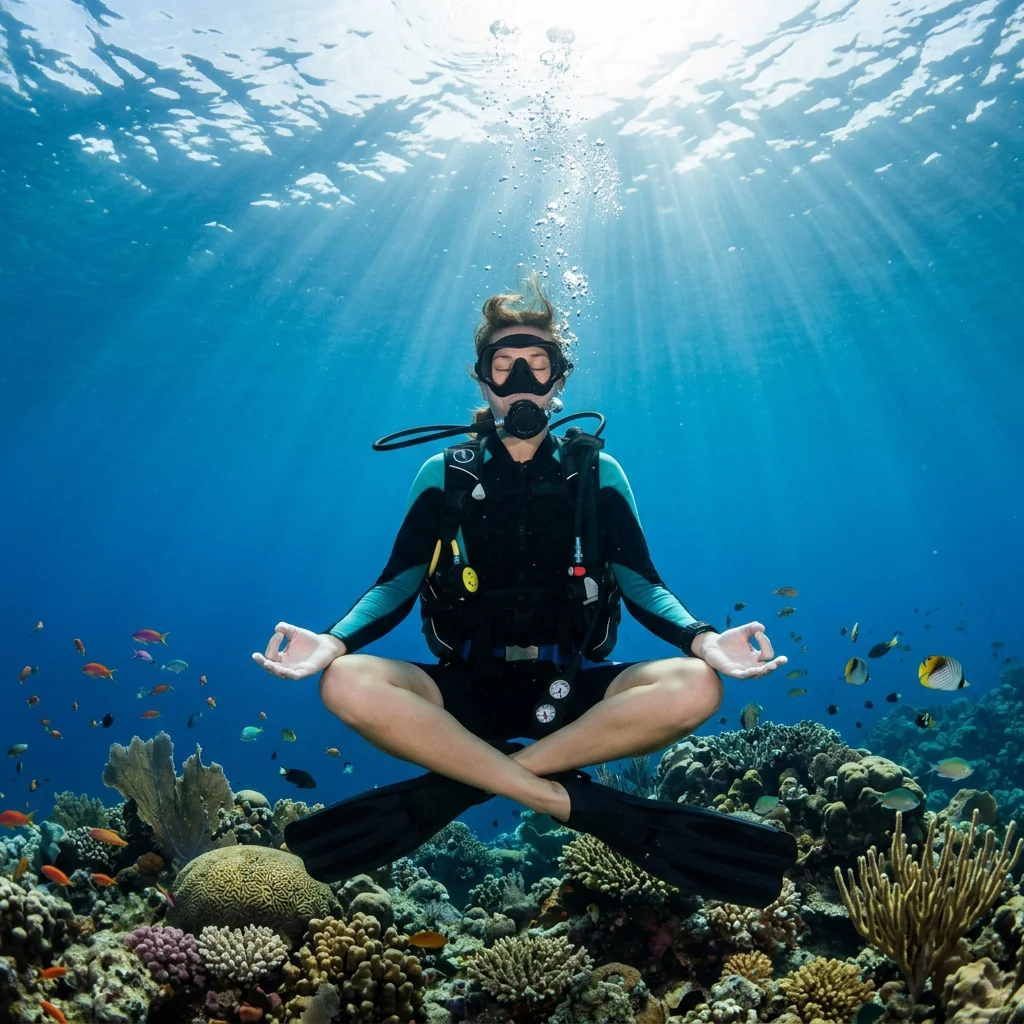
Anxiety is one of the main reasons for dropping out of diving courses. Discover mindfulness techniques, CBT and the therapeutic potential of diving.
Fear of diving is more common than is usually admitted. In the changing rooms of dive centers and in diving-related social media groups, it is spoken of in hushed tones, as if experiencing anxiety before or during a dive were a sign of weakness or incompatibility with the sport. The reality is very different: thalassophobia, the irrational fear of large bodies of water or of what may lie beneath the surface, and claustrophobia, the fear of enclosed or confined spaces that can be triggered by the mask or the equipment, are the two anxiety responses most frequently reported by students and active divers. In many cases they are the direct cause of premature withdrawal from certification courses, a loss both for the individual and for a community that could benefit from the diversity of profiles and experiences.
Anxiety in diving has specific triggers that are worth identifying precisely before trying to manage them. For some divers the problem starts already on the boat, with the anticipation of what is to come. For others it activates the moment they put their face in the water or when they see the bottom recede beneath their feet. Confined spaces underwater, the feeling of not being able to breathe normally, the pressure of the equipment on the face, or simply the darkness of deep water can be different triggers that require different approaches. Identifying exactly which specific situation generates the anxiety response is the first essential step to working through it effectively.
Cognitive behavioral therapy (CBT) is the psychological treatment with the greatest scientific evidence for managing specific phobias and panic attacks, and its application to the diving context is well documented. CBT works on the distorted automatic thoughts that fuel the fear, such as the conviction that something catastrophic is inevitably going to happen, and replaces them with more reality-based assessments. Combined with gradual exposure techniques, in which the diver faces progressively more challenging situations always starting from a level where they feel safe, it produces consistent results even in people with severe anxiety levels. Working with a psychologist specializing in phobias or sports performance, ideally with knowledge of the diving environment, significantly accelerates the process.
Mindfulness and visualization techniques are self-management tools that can be applied both before and during a dive. Mindfulness, which involves directing attention intentionally to the present moment without judging what is felt, has a demonstrated effect on the autonomic nervous system: it slows breathing, reduces heart rate, and activates the parasympathetic response that counteracts the state of alert. For a diver, practicing slow diaphragmatic breathing in the minutes before entering the water can make a perceptible difference in the level of calm during the dive. Visualization, for its part, involves mentally walking through the steps of the dive in detail with a positive outcome, familiarizing the brain with the situation before it actually happens.
There is emerging scientific evidence about the therapeutic potential of diving itself for people with certain mental health problems, beyond overcoming initial fear of the activity. A study published in the journal PLOS ONE documented significant improvements in symptoms of anxiety, depression, and post-traumatic stress disorder in participants who completed a program of six ninety-minute dives each. The researchers attribute these benefits to the combination of several factors: the calming effect of the aquatic environment, the need for full concentration that displaces ruminating thoughts, the social component of group diving, and the positive impact on self-efficacy that comes from mastering a technically demanding skill.
The pharmacological treatment of anxiety and its compatibility with diving is a topic that requires a specific medical consultation, and should not be approached in general terms. Some anxiolytics, especially benzodiazepines, are contraindicated for diving because they can affect judgment, reduce the capacity to react to emergencies, and potentially interact unpredictably with pressure changes. However, this contraindication does not extend to all medications used in the treatment of anxiety. A physician specializing in hyperbaric medicine or diving medicine can assess on a case-by-case basis whether the pharmacological treatment a person is following is compatible with diving — a consultation that many divers skip out of ignorance or for fear of receiving a refusal.
The instructor's attitude makes an enormous difference in the experience of an anxious student. An instructor who normalizes fear, who takes time to listen to each student's specific concerns, who adapts the learning pace without creating group pressure, and who has tools to manage an anxiety crisis underwater, completely transforms the experience of someone who might otherwise drop out of the course. Good dive centers train their instructors not only in technical skills but also in communication and emotional management. If you are a student with anxiety, asking before enrolling in a course about the instructor's experience with this type of situation is entirely legitimate and a sign of maturity, not weakness.
Diving and mental health have a richer and more complex relationship than the superficial image of the activity suggests. It is not only that there are anxious people who want to dive: it is that diving, approached with the right support, can be part of a meaningful personal transformation. The ocean has the virtue of putting us in contact with something larger than ourselves, of forcing us to be present in a way that few activities achieve. For those who overcome the initial barriers of fear, what they find on the other side is not just a new sport: it is, frequently, a practice that changes their relationship with stress, with their body, and with themselves.