
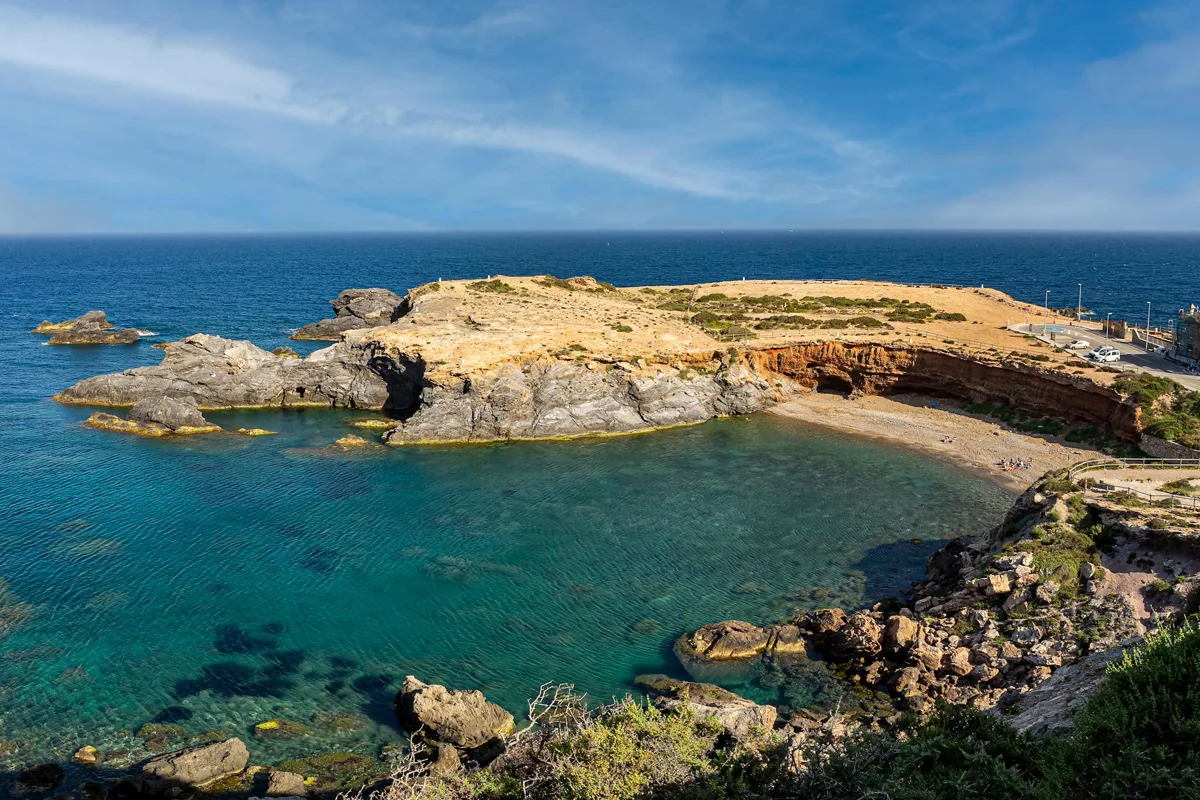
Cabo de Palos has appeared on every Mediterranean best-dives list for 30 years. Few people ask the obvious question: does it still earn that reputation, or does it coast on legacy? After 12 dives at Bajo de Dentro and surrounding sites, the honest answer has layers most dive blogs skip.
Bajo de Dentro is a seamount that rises from 50 m to 7 m, sitting directly off Cabo de Palos on the Murcia coast. Its draw is a resident barracuda school circling the summit at 12–18 m, large groupers working the walls, and a genuine chance of bluefin tuna during migration windows in May and September. The site has held marine reserve status since 1995.
The reputation started in the 1990s when Cousteau allegedly — the quote is disputed — named it one of Europe's top ten dives. That single remark put the village of Cabo de Palos on the dive-trip map, and today five or six established centres share the market. The infrastructure is genuinely strong: fast boats, well-maintained kit, experienced guides who know the site in any visibility.
Where Cabo de Palos still delivers: visibility and pelagic action. On a good day you get 30 m-plus, rare for the western Mediterranean. The barracuda school is consistent across all seasons. In spring and autumn, bluefin run through on migration. For a continental European diver whose reference point is the Red Sea, this is a solid introduction to Mediterranean pelagic diving.
Where it disappoints: the benthic fauna is depleted after decades of heavy diver traffic. Set against the Medes Islands or Columbretes, there are fewer grouper species, thinner sponge cover, sparser gorgonians. The big groupers have retreated to depths recreational divers cannot reach. What looks spectacular at Bajo de Dentro is exactly what everyone comes for — barracudas in formation — and beyond that the dive is good but not exceptional.
A second honest critique: the Naranjito wreck. Sunk in 1946, sitting between 18 and 46 m, it is the other headline dive from Cabo de Palos. But it involves an hour of boat travel each way, needs Advanced and deep diver ratings, and most recreational divers get brief bottom time at those depths. A full-day excursion runs 110–130 €. For that budget, better wrecks exist in the Mediterranean.
What does justify a visit to Cabo de Palos is the operational package. Centres here handle large groups without losing discipline, boats leave on time, six-dive packages over three days run around 250 €, and the area holds quieter sites with richer benthic life — Bajo de Fuera, El Mosquito, Roldán — that most visitors skip entirely. Four days with two dives at Bajo de Dentro and the rest at alternatives gives a fuller picture.
An honest comparison with other Mediterranean destinations: the Medes offer denser fauna, Columbretes feels more pristine, Cabrera gives that wilderness edge. Cabo de Palos trades in reliability and pelagic. It is the most professionally run destination in Spanish Mediterranean diving and the least likely to surprise you. For a first trip, the choice holds up. For the fifth, you already know the formula.
The unfiltered verdict: Cabo de Palos earns its place on the list, but not for the reasons the early 2000s dive websites claimed. It is a solid, dependable destination — guaranteed barracuda school, typically clear water, centres that function. It is not pristine, it is not magic, it is not Europe's finest dive. It is a well-run, accessible dive with punctual boats and professional staff, and that combination is rarer than it sounds.