
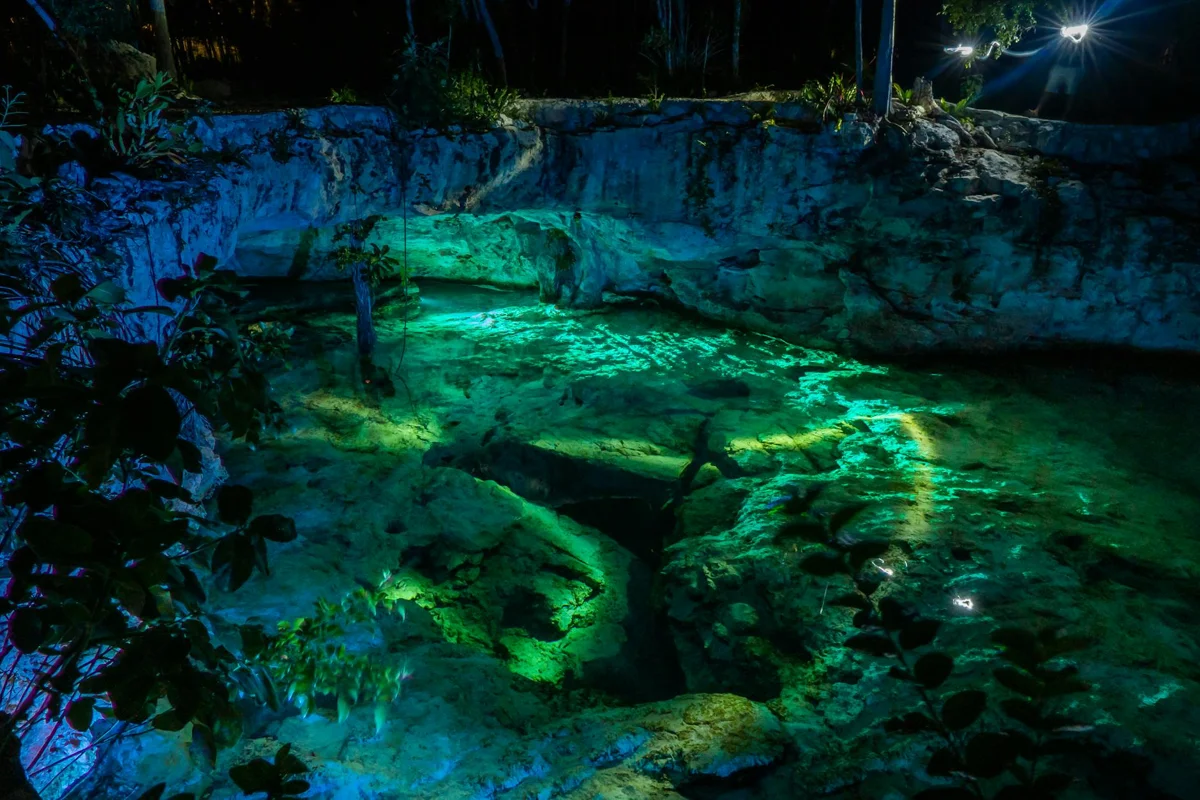
The cenotes of Yucatán tap into the largest flooded cave system on Earth — over 1,500 km of mapped passages beneath the limestone peninsula. Expect crystal-clear freshwater, dramatic haloclines where fresh meets salt, and stalactites formed in dry air thousands of years before the sea reclaimed them. Cavern diving is open to Advanced Open Water divers; full cave diving requires a cave specialty certification.
A cenote is a vertical collapse in the limestone bedrock of the Yucatán Peninsula, México, exposing the vast underground aquifer beneath. When cave ceilings gave way, they opened windows into a world the ancient Mayas called Xibalbá — the underworld. Sacred wells for drinking water and ritual sacrifice, cenotes were never just geography. More than 6,000 have been documented across Yucatán, Quintana Roo and Campeche, though only a fraction are dived. The main clusters lie within an hour or two of Tulum and Playa del Carmen.
For recreational divers, cenotes split cleanly into two categories. Cavern sites — Dos Ojos, Gran Cenote, Casa Cenote, Carwash — always keep natural light in sight and are open to Advanced Open Water. Cave sites push deeper into darkness and demand a dedicated cave specialty course. Dos Ojos links two cenotes through a cathedral passage and includes the atmospheric Bat Cave section. Gran Cenote rewards patience with shafts of overhead sunlight. Angelita sits in its own class: a halocline at 30 m that turns the water column into something resembling a cloud layer.
That halocline is hard to forget. Where a cenote connects to the sea through the karst underground, freshwater floats above the denser saltwater. Cross the mixing layer and visibility collapses into a visual haze — the water thickens, distorts, looks more like smoke than liquid. Divers who have spent years chasing coral reefs often say this single phenomenon reframes what underwater photography can be. Angelita makes the effect particularly dense, the halocline sitting right at recreational depth limit.
The geology is the silent backstory. These caves formed when sea levels ran far lower during the last glacial periods. Stalactites and stalagmites grew in open air over millennia, patient accumulations of limestone drip. Then the ice melted, sea levels rose, and the formations drowned — between 8,000 and 15,000 years ago. They sit there now, intact and fragile, roped off for a reason. Touch one and you break something that took longer to grow than any civilization currently running.
Getting there: fly into Cancún, usually via Madrid or Istanbul from Europe, or direct from a handful of major hubs. A rental car unlocks the cenote circuit properly — Tulum and Playa del Carmen are 1–2 hours south along the coast road. Dive operators are plentiful: Aldora Divers, Pro Dive Mexico and Cenote Dive Center are the names that appear most often in serious diving forums. Guided cavern dives run 90–130 € per tank (cenote entrance fee included); a four-cenote package lands around 350–400 €. English is universal at dive shops; Spanish, French and German staff are common.
Two things catch divers off guard. First, the temperature: 24–25 °C year-round, stable because the aquifer buffers seasonal change completely. Europeans braced for cold freshwater find themselves entirely comfortable in a 3–5 mm wetsuit. Second, the visibility: 50–100 m inside sheltered caverns, because the water has been filtering through limestone for decades before it reaches you. After a career measuring good visibility at 30 m, the cenotes operate on different terms entirely.
What erodes the experience is regulation, and arguably it has been earned. Cavern sites face increasing booking requirements, daily diver caps, and entry fees that have climbed 30–40 % over the last five years. The calendar favours November through March — the Riviera Maya hurricane season (June–October) brings real cancellation risk, especially for open-air cenotes. Shoulder months land awkward: warm but humid, with unpredictable afternoon storms.
Stacked against any Caribbean reef week, the Yucatán cenote circuit offers something structurally different: geological time made visible, Mayan cultural weight attached to every pool, freshwater clarity that reef sites cannot match. The practical combination — three or four cenote days based around Tulum, then a few days of wall diving off Cozumel — turns the peninsula into one of the more complete dive destinations on earth. Underwater photographers and geology enthusiasts have known this for decades.