Chuuk Lagoon (Micronesia) and Bikini Atoll (Marshall Islands) are the two most significant WWII wreck sites in the Pacific, each with a very different profile. Chuuk has 60+ Japanese ships sunk in February 1944, accessible at recreational depths. Bikini has 21 US vessels sunk during 1946-1958 nuclear tests, a premium operation with minimal residual radiation. This comparison helps divers choose the right destination.
Chuuk Lagoon (formerly Truk) and Bikini Atoll are the two iconic WWII wreck diving destinations in the Pacific. Chuuk lies in the Federated States of Micronesia (western Pacific, just above the equator). Bikini is in the Marshall Islands (central Pacific, 5 degrees north of the equator). Both are flat coral atolls with a sheltered interior lagoon. They sit roughly 2,000 km apart and operate very differently. This comparison helps divers pick the right destination based on budget, interests and experience level.
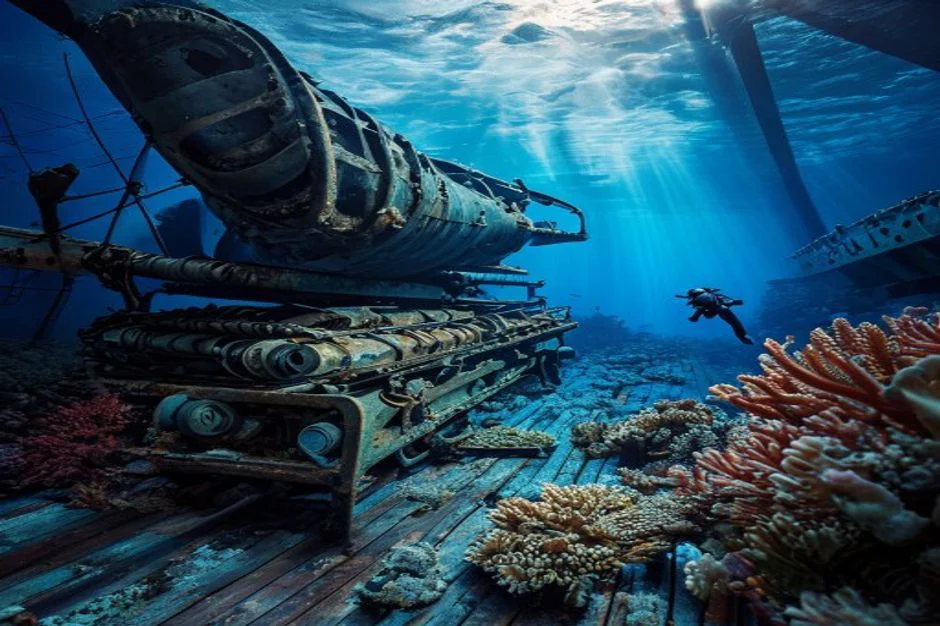
Chuuk Lagoon (Truk): on 17-18 February 1944, Operation Hailstone (US Navy strike against the Japanese imperial base) sank 60+ Japanese vessels inside the lagoon. More than 50 wrecks remain accessible at depths of 8-65 m. The most famous: Fujikawa Maru (freighter with Zero fighters in the hold, 18-32 m, recreational), Shinkoku Maru (tanker, 18-37 m), San Francisco Maru (freighter carrying Type 95 tanks, 60 m, technical), Heian Maru (submarine tender with torpedoes, 25-35 m), Yamagiri Maru (freighter, 25-35 m). By sheer quantity and variety, this is the world's top destination for WWII wreck diving.
Bikini Atoll: between 1946 and 1958 the US conducted 23 nuclear tests at Bikini, including Castle Bravo (1954, the largest US nuclear detonation). The vessels from Operation Crossroads (1946), sunk during the Able and Baker tests, include: USS Saratoga (270 m aircraft carrier, the world's largest diveable wreck, 17-50 m), USS Arkansas (battleship, 50-58 m), HIJMS Nagato (Japanese battleship, 35-50 m, fleet flagship at Pearl Harbor), USS Carlisle (transport, 35-50 m), Prinz Eugen (German cruiser, 22-37 m). The ships were exposed to nuclear blasts and carry minimal residual radioactive contamination, which is measured and monitored.
Cost comparison: Chuuk Lagoon: flight to Chuuk (TKK) via Guam (United flights from Honolulu or Tokyo), accommodation at Chuuk Blue Lagoon Resort or S.S. Thorfinn liveaboard, 7-night dive package including accommodation and meals €3,500-4,500. Bikini Atoll: flight to Majuro (MAJ, Marshall Islands) via Honolulu, charter connection to Bikini, accommodation exclusively on M/V Indies Trader liveaboard (the only operator), 12-night dive package including accommodation and meals €8,000-12,000. Bikini costs 2-3 times more due to remote logistics and exclusive operation.
Operations comparison: Chuuk: Thorfinn liveaboard with 50 years of operation, recreational access (most wrecks at 18-40 m), active diver community, 500+ visitors per year, Open Water certification sufficient for some sites, Advanced or technical for the deeper ones. Bikini: Indies Trader exclusive liveaboard, only 50 visitors per year (fishery and radiation quota), minimum wreck depth 35 m (TDI Trimix technical certification recommended), special permit from the Marshall Islands Atomic Energy Commission, government escort required.
Marine life comparison: Chuuk: abundant soft corals on wrecks (after 80 years of encrustation), green and hawksbill turtles, Napoleon wrasse, seasonal reef mantas, occasional grey reef sharks, abundant tropical fish. Bikini: corals on wrecks (after 70 years of encrustation, less diverse due to extreme isolation), abundant grey reef sharks (no fishing due to radiation, wildlife has recovered), seasonal tiger sharks, oceanic mantas, giant Napoleon wrasse (rare elsewhere). Bikini has wilder fauna due to isolation; Chuuk has better coral growth given lower radiation impact.
Historical context comparison: Chuuk: Japanese imperial naval base 1939-1944, sunk by American air assault, classic WWII context, no displacement of local people (the Chuukese were not relocated). Bikini: 167 Marshallese residents were displaced in 1946 to make way for nuclear tests and have been unable to return due to residual soil contamination (Cesium-137 in the soil, not in the water). Visiting Bikini carries a complex post-colonial dimension. Royalties fund a trust for the displaced Marshallese community.
The verdict: for an accessible, recreational and affordable WWII wreck destination, Chuuk Lagoon wins outright. For an exclusive, technical and genuinely unique site (nuclear-tested wrecks with wildlife recovered through isolation), Bikini Atoll is the premium choice. Chuuk is the destination for the serious wreck diver; Bikini is the destination for the trimix diver with the budget to match. Both are worth doing: pair Chuuk (wrecks, coral, recreational fauna) on one trip and Bikini (nuclear wrecks, sharks, exclusivity) on another. Chuuk operates year-round; Bikini season runs March to November. Both are global benchmarks for wreck diving.