
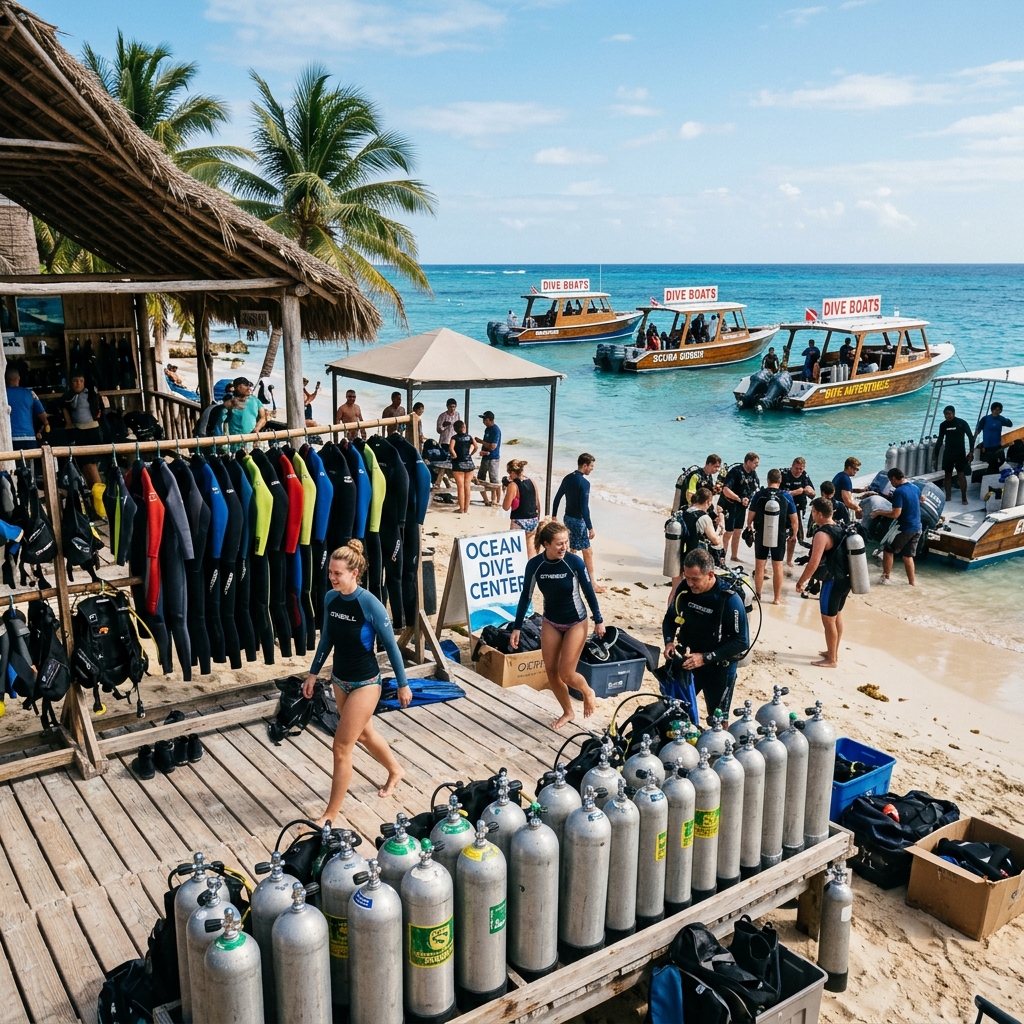
Discover how to choose a safe diving centre. What to check: certifications, insurance, equipment maintenance and your consumer rights under RD 550/2020.
Choosing a dive center is a decision that goes far beyond price or location. Every year, hundreds of divers in Spain have disappointing experiences: instructors without the proper qualifications, equipment in poor condition, cancellations without refunds, or treatment bordering on negligence. Knowing your rights and knowing what to ask before signing any contract can make the difference between an excellent training experience and a frustration that makes you want to quit diving.
The first step before enrolling in any course or booking a guided dive is to verify that the center is registered in the corresponding regional registry. In Spain, the activity of dive centers is regulated and each autonomous community maintains a registry of authorized establishments. Requesting the registration number and checking it is a quick process that will save you problems.
Royal Decree 550/2020 establishes the technical and safety conditions that recreational dive centers in Spain must meet. Among its most relevant requirements is the obligation to have valid third-party liability insurance, to maintain a protocol for monitoring the health status of students, and to ensure periodic maintenance of all diving equipment. Ask to see that documentation.
Instructor certifications are another critical element. Check that the person training you holds qualifications recognized by federations or accredited agencies: FEDAS, PADI, SSI, CMAS, or other equivalents. Ask directly for the name and qualification of the instructor who will deliver your course.
The most frequent complaints received by consumer offices tend to revolve around the sale of second-hand equipment with hidden defects, non-refund of payments upon cancellations, and poor technical service. If you are going to buy second-hand equipment through a center, always insist on a written contract detailing the condition of the equipment.
If you have had a bad experience and have not reached an amicable agreement, the Oficina Municipal de Información al Consumidor (OMIC) is your first resource. You can submit a formal complaint that obliges the center to respond. You can also request consumer arbitration, a free and binding system that resolves disputes without the need to go to court.
When the bad experience occurs in another European Union country, the European Consumer Centre offers free advice and acts as an intermediary with the foreign dive center. This service is especially useful for those who take courses or go diving during their holidays at European destinations.
In short, choosing a good dive center requires a little prior research. Check the registry registration, verify instructor qualifications, inspect the condition of the equipment, and always read the contract before paying. Reputable centers appreciate demanding customers because it confirms that they are doing things right.