
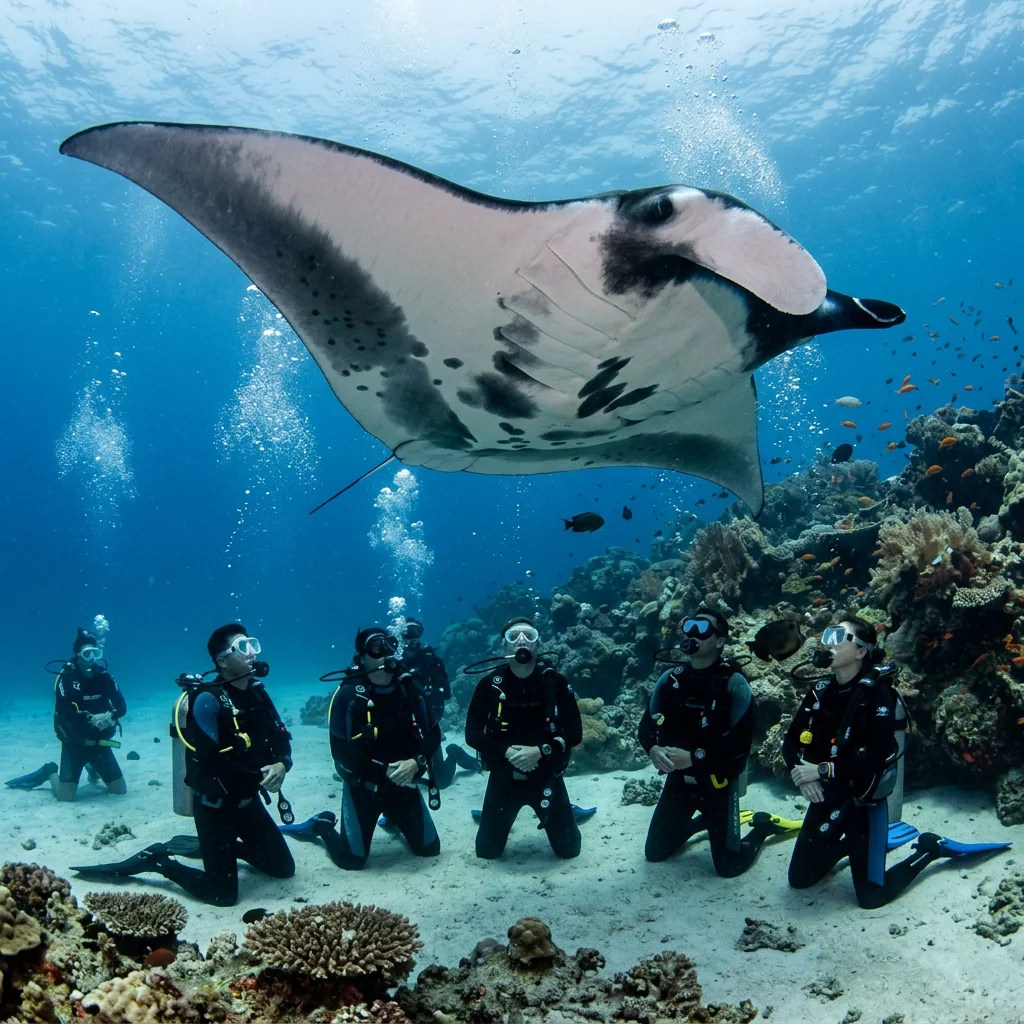
NOAA: touching removes the protective mucus layer from fish skin. UK: tourist fined £1,370 for touching a turtle. Social media incentivises risky behaviour. Dive centres turn a blind eye to avoid losing clients. Report to the authorities.
Numerous cases of divers harassing whale sharks, extracting abyssal fauna, killing octopuses, or capturing sharks for illegal sale are documented. These behaviors generate debate about diving ethics and the effectiveness of marine conservation training. The spread of such conduct on social media is identified as an additional problem that normalizes the mistreatment of wildlife.
Touching, chasing, or feeding animals causes acute stress, disruption of behavioral patterns, and abandonment of breeding areas. NOAA insists that even apparently harmless contact can remove the protective mucus layer from the skin of many fish. In the United Kingdom, a tourist was ordered to pay £1,370 for touching an endangered sea turtle. The search for spectacular images on social media incentivizes risky behaviors that some dive centers sometimes tolerate to avoid losing clients.