
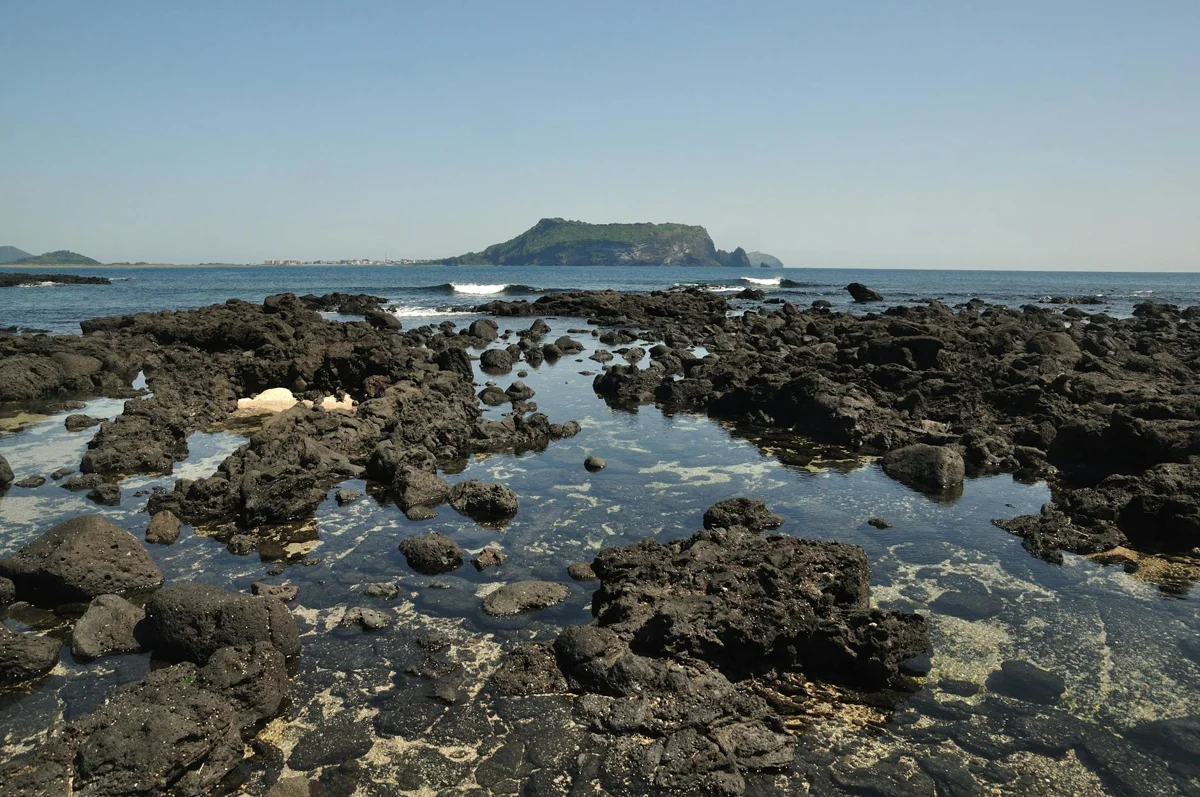
Jeju is South Korea's largest island, lying south of the peninsula in the East China Sea. A subtropical destination with temperate corals, modern Korean wrecks, and the haenyeo culture — women freedivers harvesting shellfish on breath-hold, UNESCO heritage since 2016. Korean diving largely unknown in the West, with a genuinely distinct cultural identity.
Jeju (Jeju-do) is a volcanic island of 1,847 km² south of the Korean peninsula, in the East China Sea. It is South Korea's largest island — an autonomous province — with 670,000 inhabitants. The island is dominated by Mount Halla (1,947 m, dormant volcano, the highest point in South Korea). UNESCO heritage: lava tubes, volcanic cones, and Seongsan Ilchulbong crater. The provincial capital is Jeju City (north). Language: Korean. No visa required for EU nationals (90 days). Currency: South Korean won (KRW).
Underwater geography: Jeju sits in a warm-temperate subtropical zone. Water temperatures are warm in summer (24–26 °C from July to September) and cold in winter (12–14 °C from January to March). It is a transition zone between tropical fauna (the northern limit of the West Pacific coral belt) and temperate fauna. Coral biodiversity is modest — around 60 species, compared with 250 in Okinawa. Soft corals and gorgonians dominate. Average visibility is 8–20 m (best from June to October). Currents can be strong (Tsushima Current influence).
The haenyeo: haenyeo (literally 'women of the sea') are female freedivers who harvest shellfish, abalone, and seaweed on breath-hold in Jeju's cold waters. The tradition is four centuries old and was inscribed on the UNESCO Intangible Cultural Heritage list in 2016. Haenyeo work into their eighties, descend to 20 m without equipment, hold their breath for 3–5 minutes, and produce a distinctive whistle called sumbisori when surfacing. About 4,000 active haenyeo remain on Jeju, most aged 60–80 — younger generations are not continuing the tradition. They can be observed at Hado-ri and Sehwa-ri.
Dive sites: 1) Seopjikoji (east Jeju, volcanic walls and soft corals, 12–25 m). 2) Munseom (south Jeju, marine park, 18–30 m). 3) Beomseom (south Jeju, walls with large fish, 22–35 m). 4) Munseom Cave (cave with resting leopard sharks in winter, 18–22 m). 5) Hwangwoojin (west Jeju, shoaling fish and tropical species, 15–25 m). 6) Wolyeong-ri (haenyeo zone, observable during operations, 5–12 m). Coral coverage is modest; the main draw is temperate marine life and wrecks.
Wrecks: Jeju has several modern Korean wrecks. 1) Jindo Wreck (fishing vessel sunk in 2010 at 28 m). 2) Munseom Submarine (a recreational submersible deliberately scuttled at 22 m). 3) Seogwipo Wreck (cargo vessel at 32 m). These are not comparable in historical terms to Mediterranean or Philippine wrecks, but they are interesting for wreck enthusiasts. Macro life includes seahorses, octopuses, cuttlefish, lobsters, and scorpionfish. This is scenic and wreck diving, not big-pelagic diving.
Logistics and costs: flights to Jeju (CJU) direct from Seoul (Incheon, Gimpo, 60 minutes), Busan, Tokyo, Osaka, Beijing, Shanghai, Hong Kong, Taipei. International route: fly to Seoul Incheon and connect to Jeju (60 minutes, high frequency). Dive centres: Jeju Submarine Diving, Jeju Diving Pool, Big Blue Diving Center. Cost per dive: €50–70 (Korean pricing). 3-dive day package: €130–180. PADI Open Water course: €400–550. Accommodation ranges from guesthouses from €30 to hotels at €80–200.
What surprises visitors: the combination with Korean culture. Jeju pairs naturally with cultural tourism in Seoul (Gyeongbokgung Palace, Myeongdong and Itaewon markets, K-pop), Busan (Jagalchi fish market, Haeundae beach) and Jeju itself (Hallasan National Park, volcanic cones, Jeju Folklore Museum). Korean food is a world reference: kimchi, bulgogi, bibimbap, samgyeopsal, gochujang, soju. For a 10–14 day trip, South Korea is a complete Asia destination with diving added.
Bottom line: Jeju is a temperate West Pacific destination for divers with cultural and anthropological interests. Haenyeo culture (UNESCO), temperate soft corals, modern Korean wrecks, abundant macro life. For tropical diving with rich coral and pelagic fauna, better options exist elsewhere in Asia (Philippines, Indonesia, Thailand). For a mixed itinerary — Korean culture, K-pop, food, and subtropical diving — Jeju is a unique proposition in the Far East. Best season is June to October. Easily combined with Seoul–Busan sightseeing in a 14-day trip.