
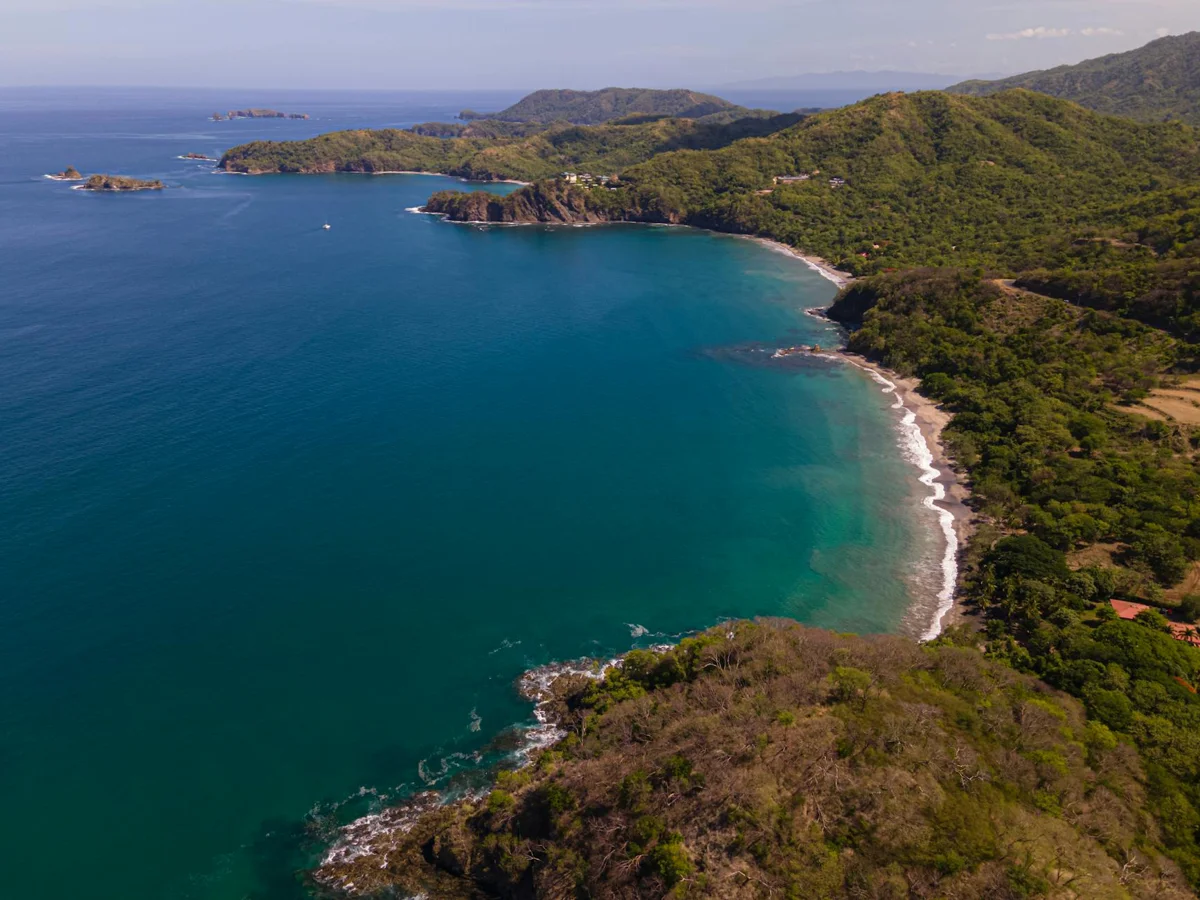
Costa Rica has 1,290 km of coastline split between the Pacific (dominant) and Caribbean. Caño Island, in the south off the Osa Peninsula, is a biological reserve with shore-accessible diving — no liveaboard required like Cocos. Oceanic pelagic fauna (sharks, manta rays, tuna) alongside volcanic rocky reefs. Costs run 70% lower than Cocos. Pairs well with nature tourism in Corcovado and Manuel Antonio.
Costa Rica covers 51,100 km² in Central America and has 5.1 million people. Of its 1,290 km of coastline, 1,016 km face the Pacific (west, primary for diving) and 274 km face the Caribbean (east, secondary). The Caño destination is Reserva Biológica Isla del Caño, in the southern Pacific off the Osa Peninsula, Puntarenas province. The capital is San José. Costa Rica is a global reference for ecotourism and conservation — national parks cover 26% of the territory. No visa needed for Europeans (90 days). Currency: Costa Rican colón (CRC); USD widely accepted.
Caño Island: a small 326-hectare island 17 km off the Osa Peninsula coast. It has been a Biological Reserve since 1978 with strict protection rules — no overnight stays, no fishing, no walking outside marked trails. All visits are day trips from the coast. The island has volcanic rocky corals in the shallows and rocky walls at depth. Waters are productive due to seasonal upwelling. Water temperature ranges from 26 °C in February to 30 °C in May. Visibility 12–30 m depending on the month (best May to November).
The pelagic fauna: Caño Island sits on a transit route for eastern Pacific oceanic species. Frequent sightings include whitetip reef sharks, nurse sharks, occasional hammerheads (best August–October), green and olive ridley turtles, tuna, sailfish, rare swordfish, oceanic and reef manta rays, humpback whales on migration (July–October and December–March), and resident bottlenose and spotted dolphins. Fauna is less consistent than at Cocos (600 km to the west), but costs run 70% lower and access is far easier.
Top dive sites: 1) Bajo del Diablo (main pinnacle with schools of jacks and tuna, 18–32 m). 2) The Cave (cave system with sleeping nurse sharks, 12–22 m). 3) Paraíso (coral garden and tropical fish, 8–18 m). 4) Coral Garden (shallow, ideal for beginners, 5–15 m). 5) Los Arcos (volcanic rock arches with schooling fish, 12–22 m). 6) Calzado del Diablo (pinnacle with vertical walls, 22–35 m). Diving here is drift and pinnacle style with occasional currents — not suitable for beginners at all sites.
Other dive destinations in Costa Rica: 1) Cocos Island (UNESCO, 600 km west, requires 10-day liveaboard, 4,500–7,000 €, world-class pelagic fauna). 2) Bat Islands (northern Pacific, bull sharks May to November). 3) Catalinas Islands (north, oceanic manta rays and sharks). 4) Isla del Caño (south, this destination, shore-accessible). 5) Southern Caribbean (Cahuita, Manzanillo, Puerto Viejo, accessible diving with Caribbean corals). The Pacific dominates for diving; the Caribbean is secondary.
Logistics and costs: flights to San José (SJO, Juan Santamaría) direct from Madrid (Iberia), Frankfurt (Condor, Lufthansa), London (BA, seasonal), Houston, Miami. Getting to Caño: domestic flight to Drake Bay or Puerto Jiménez (Sansa Airlines, 60 minutes) then boat (45–60 minutes to Caño). Dive operators: Caño Island Diver, Drake Bay Getaway Resort Diving, Aguila de Osa Inn Diving. Cost per dive: 65–90 € (includes boat and park entrance). Four-dive day package: 240–340 €. Accommodation in Drake Bay: guesthouses from 60 €, eco-lodges 150–350 €.
What surprises visitors: the Corcovado combination. The Osa Peninsula contains Corcovado National Park, which National Geographic calls the most biologically intense place on the planet. It holds 2.5% of global biodiversity in 0.001% of the Earth's land surface. A Corcovado land tour (1–3 days, mandatory guide) offers tapirs, jaguars, spider monkeys, endemic amphibians, and toucans. Pairing this with Caño diving creates a mixed land-and-marine nature destination unlike anything else in Central America. Five to ten days gives a complete Osa trip.
The verdict: Costa Rica's Caño Island is an accessible, budget-friendly alternative to Cocos Island. Tropical Pacific oceanic pelagic fauna — sharks, manta rays, humpback whales — rocky reefs, drift dives. Combine with Corcovado for a diving-plus-jungle destination. For guaranteed, consistent pelagic action, Cocos remains superior, but Caño costs 70% less and is far easier to reach. For pure coral, look at the Caribbean (Bonaire). For a Central American destination with both oceanic and terrestrial biodiversity, Caño plus Corcovado is the winning combination. Recommended May to November.