
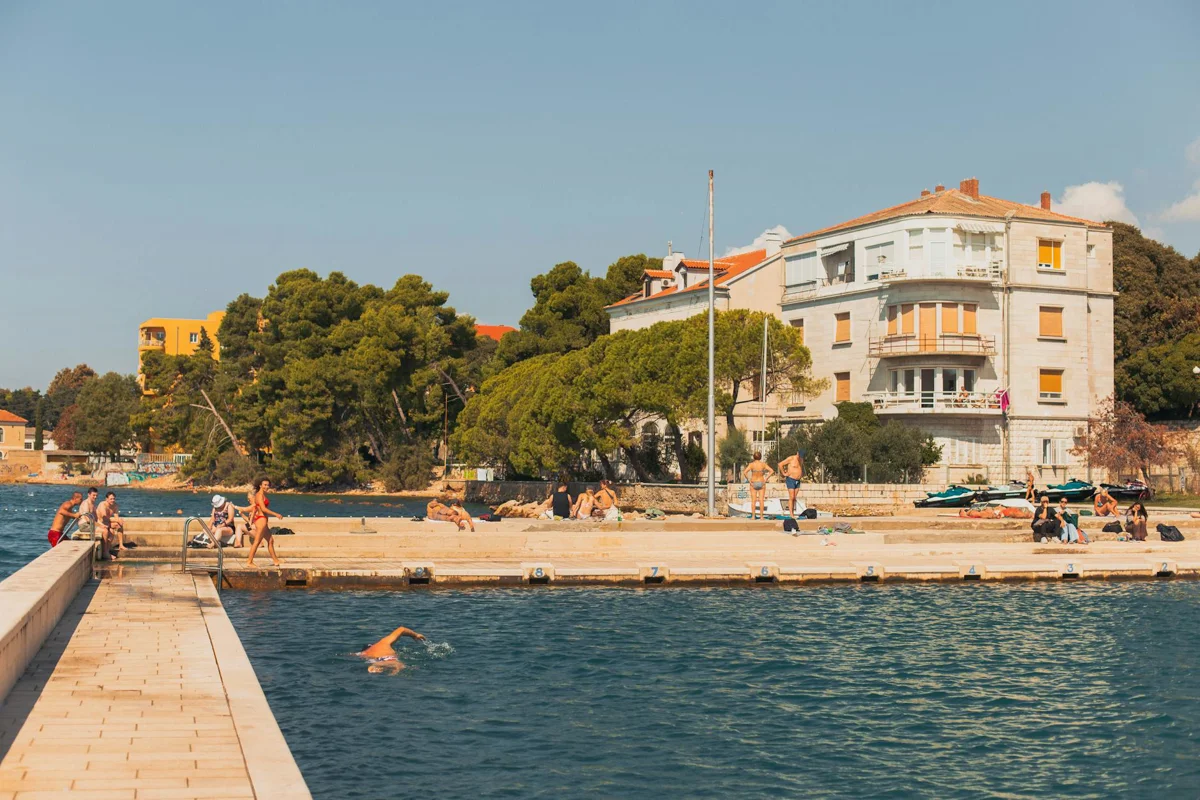
Vis and its small neighbour Biševo hold some of the Adriatic's best-kept diving secrets. The Blue Cave delivers an otherworldly light show, WWII wrecks rest in cold, clear water with visibility reaching 30 m, and the Dalmatian food and wine scene rounds off a trip that feels nothing like mass-market Croatia.
Vis sits 50 km off Split, the most remote inhabited island on the Croatian coast. It served as an Allied base and hiding place for Tito during WWII, then remained a closed military zone until 1989. Four decades of restricted access kept developers at bay. Today the island counts roughly 3.500 residents spread between two small towns — Vis and Komiža — and the diving benefits directly from that history of deliberate isolation.
The Blue Cave (Modra Špilja) on Biševo, a tiny island 5 km southwest of Vis, is the centrepiece. A submerged arch leads into a domed chamber open to the sky. Between 10:00 and 12:00, sunlight refracts through the arch and floods the interior in a surreal cobalt-white glow from below — the kind of light you cannot recreate with a strobe. Entry by guided boat only, park fee 8–10 €, guided dive mandatory. Typical visibility 30 m.
WWII wreck diving is the other draw. The area holds several documented wrecks, mainly Italian merchant vessels sunk by Allied forces. The three most dived: B-17 (American bomber, lost in 1944, 70 m — technical only), Teti (Italian merchantman, 30 m, well within recreational range), and Vassilios T (Greek steamer built in 1939, resting at 35 m). Cold water and low traffic have kept all three in excellent structural condition.
Beyond the headline sites, Stupišće offers vertical walls draped in gorgonian fans, Pločica is the go-to drift dive with coral growth along the current line, Kamik features a series of small caves threaded through volcanic rock, and Smokova is an easy site with dense fish life. Depths range from 12 to 35 m, water temperature from 14 °C in February to 25 °C in August, and visibility holds at 25–40 m. Currents are generally light — most sites are manageable for Open Water divers.
Getting there: fly into Split on any of the European low-cost carriers, then take the ferry to Vis — roughly 2.5 hours, 8–12 € per passenger. Accommodation in Vis town or Komiža runs from 50 € in guesthouses to 150 € in the better hotels. Dive operations: Manta Diving Vis and Issa Diving Center, both experienced with visiting divers. A guided single dive costs 35–50 €; a five-dive package comes to around 180 €. Dive briefings and boat crew all speak English; Italian and German are also widely understood.
The cultural layer is what catches many divers off-guard. Vis is among the best-preserved islands in the Mediterranean: white Dalmatian stone villages, Vugava vineyards — Vugava being an endemic grape variety found nowhere else — and the tradition of cooking octopus and lamb under the peka, a cast-iron bell covered in embers. The island works equally well for couples or families where one person dives and others want something beyond the beach.
Two honest caveats. First, the isolation cuts both ways: a spell of bad weather can cancel ferries and strand you on Vis for a day or two, which is a real risk on a short trip. Second, July and August bring a wave of yacht tourism partly triggered by Mamma Mia 2, filmed here in 2018, and prices climb accordingly. The dive centres operate May through October only; everything shuts in winter.
Vis and Biševo belong on the shortlist for divers who have already done Kornati and are looking for something more layered. The Blue Cave, the wrecks, and the Dalmatian cultural backdrop do not exist as a package anywhere else in the Adriatic. A September week, with settled weather and thinner crowds, is the sweet spot. The awkward logistics — ferry, small island, seasonal operations — act as a natural filter, and that is precisely why the quality has held.