
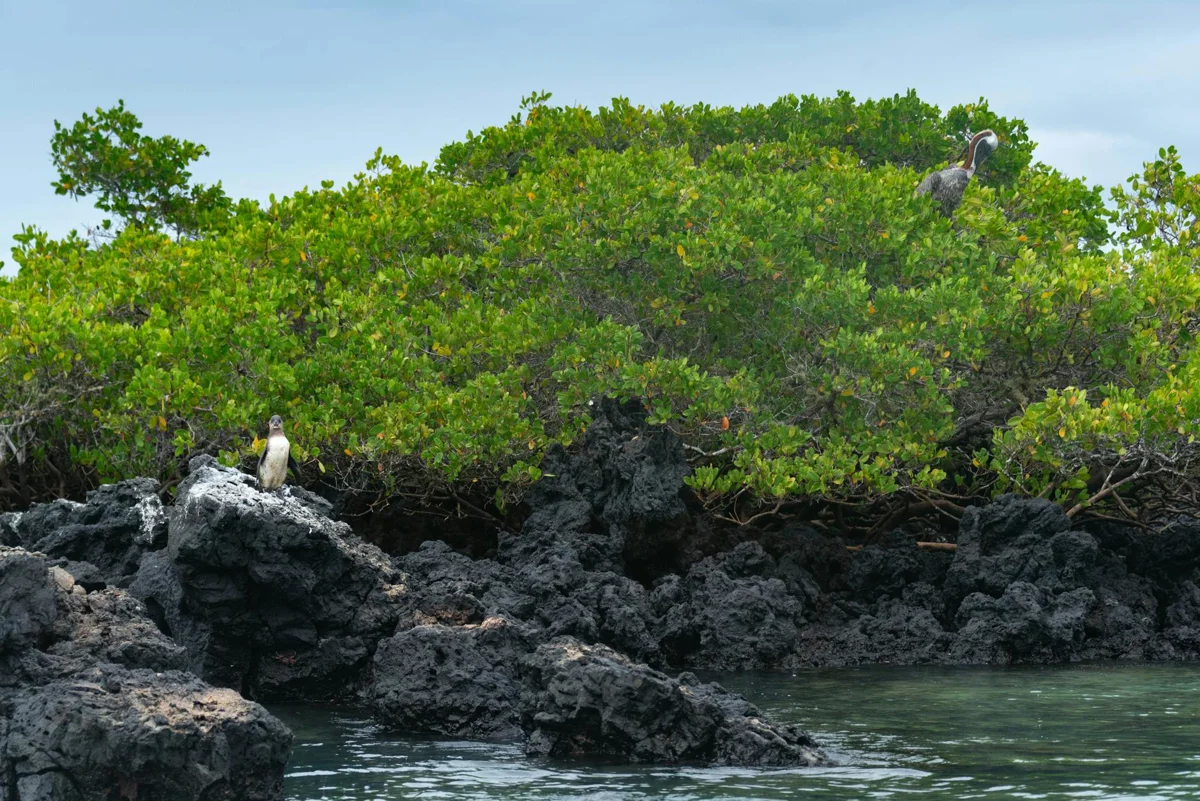
Isla de la Plata is a Pacific island 40 km off the Manabí coast, within Machalilla National Park. Known as the 'poor man's Galápagos' for its similar pelagic fauna at 80% lower cost. Resident oceanic manta rays (June–October), humpback whales on migration (June–September), and rocky reefs make it a compelling budget alternative. Easily combined with broader Ecuador travel.
Isla de la Plata is a small rocky island of 14 km² located 40 km off the Manabí coast (mainland Ecuador). It sits within Machalilla National Park, established in 1979 and designated a UNESCO Biosphere Reserve in 2003. The island is uninhabited, covered in dry tropical vegetation and home to seabirds including blue-footed boobies, magnificent frigatebirds, and Galápagos albatrosses in winter. Access is from Puerto López by boat (60 minutes). The name reportedly traces to pirate treasure legends—Francis Drake, according to local lore. No visa required for EU nationals (90 days). Currency: US dollar (USD).
Underwater geography: Isla de la Plata sits in the tropical eastern Pacific at the intersection of the Humboldt Current (cold South Pacific) and the equatorial countercurrent. This generates seasonal upwelling with cold, plankton-rich water. Sea temperature ranges from 18–22 °C at peak upwelling (June–October) to 24–27 °C in the warm season (December–May). Visibility averages 10–25 m, best June through October. Biodiversity resembles eastern Pacific Galápagos species—sharks, manta rays, sea turtles, tuna—though consistency varies.
Oceanic manta rays: Isla de la Plata is one of a handful of sites worldwide with a resident population of giant oceanic manta rays (Mobula birostris, formerly Manta birostris). Mantas concentrate from June to October at coral cleaning stations near the island. Wingspan reaches up to 7 m. Encounter rates exceed 70% at peak season. The population is monitored by Manta Trust with individual photo-ID cataloguing.
Humpback whales: between June and September humpback whales migrate into Ecuadorian Pacific waters to breed and calve. The area is a South Pacific breeding ground comparable to Tonga or French Polynesia. Surface sightings are frequent from boats between Puerto López and the island. In-water snorkelling with whales is not permitted, but breaches, tail slaps, and male song are common. Few places in the world offer mantas and humpbacks in the same season.
Key dive sites: 1) Bajo Cantagallo (manta cleaning station, 18–25 m). 2) Punta Manta (walls with mantas and sharks, 22–32 m). 3) La Cueva (cave with nurse sharks, 12–22 m). 4) Bajo del Sur (macro site with seahorses, 8–18 m). 5) Punta Norte (vertical walls and tropical fish, 18–30 m). Diving here is wall and sand diving—hard coral is sparse throughout the eastern Pacific.
Logistics and costs: fly to Quito (UIO) or Guayaquil (GYE) with direct flights from Madrid (Iberia, Air Europa), Amsterdam (KLM), and Paris (Air France). Connect to Manta or Portoviejo (30-minute domestic flight) then bus to Puerto López (90 minutes). Dive operators: Manta Diving Center (Puerto López), Exploradiving, Aquatropic. Price per dive: 60–80 € (includes boat transfer and park entry). Full-day 4-dive package: 200–280 €. Half-day whale-watching: 35–50 €. Accommodation in Puerto López: guesthouses from 25 €, hotels 50–120 €.
What stands out: the combination with broader Ecuador travel. Ecuador packs an extraordinary range into a small country—living indigenous cultures (Quechua, Shuar, Achuar), UNESCO Quito (finest preserved colonial centre in the Americas), the Mitad del Mundo equatorial monument, Andean volcanoes (Cotopaxi, Chimborazo), Amazon rainforest (Yasuní, Cuyabeno parks), and colonial Cuenca. Adding Isla de la Plata to a 14–21-day Ecuador circuit gives you Pacific diving plus Andean highlands plus Amazon in one trip. Galápagos can be added for guaranteed premium fauna.
Bottom line: Isla de la Plata is a credible, affordable alternative to Galápagos. Resident oceanic manta rays (June–October), migrating humpback whales (June–September), and eastern Pacific rocky reefs at 80% lower cost and without a mandatory liveaboard. For consistent, guaranteed megafauna Galápagos still leads, but for a South American trip combining oceanic, Andean, and Amazonian biodiversity on a single circuit, Ecuador with Isla de la Plata is a strong choice. Best visited June through October.