
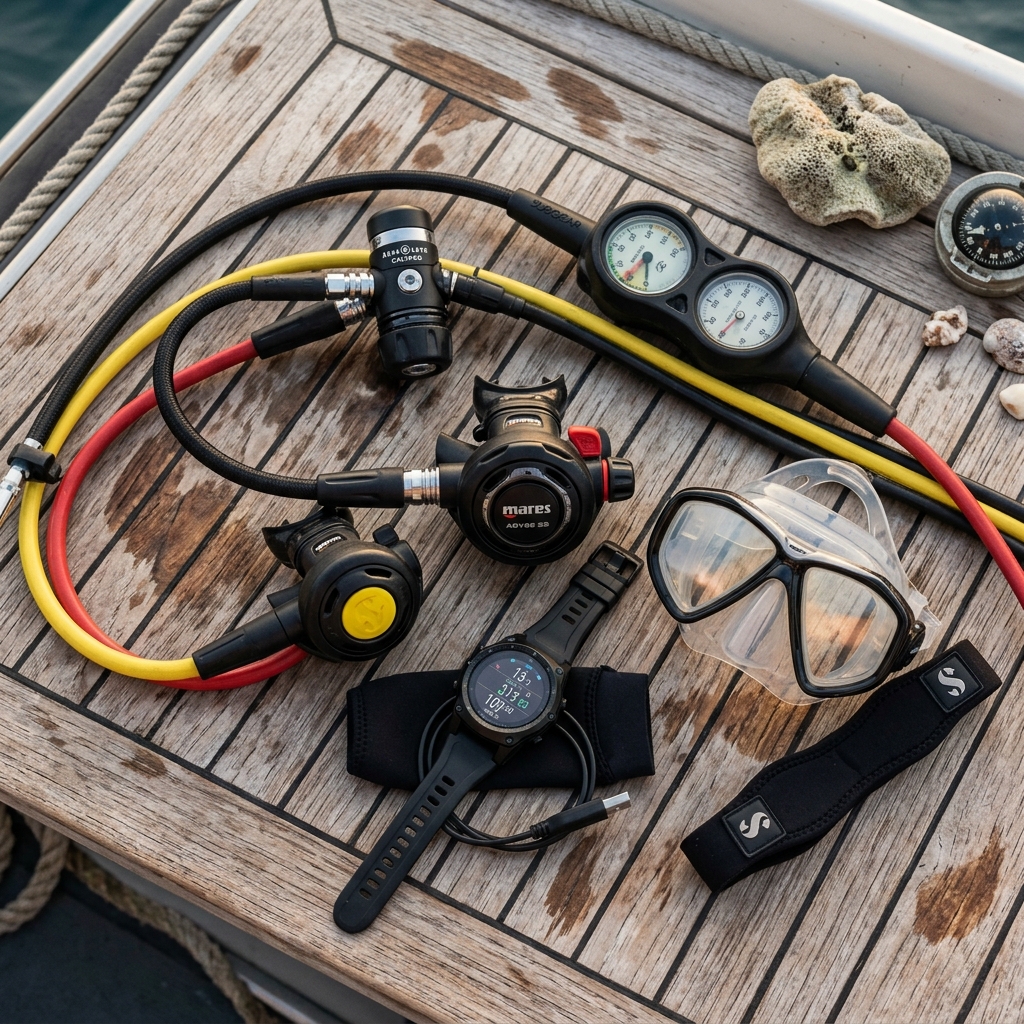
Discover how to choose the best diving equipment: computers with Bluetooth, regulators for cold water, smartwatches and maintenance tips. Comparison of leading brands such as Scubapro, Suunto and Mares for divers of all levels.
The global diving equipment market surpassed $2.3 billion in 2023 and continues to grow at a rate above 4% per year. This expansion is no coincidence: more and more divers understand that investing in quality gear not only improves the underwater experience but is also a decision directly related to safety. Choosing the right equipment may seem overwhelming at first, but understanding the key concepts makes the decision much easier.
The dive computer is today one of the most important elements of personal gear. Modern models have evolved enormously: multimode computers can calculate dive profiles with different gas mixes, including nitrox, and many incorporate Bluetooth connectivity to sync dive data with mobile apps. Brands such as Scubapro, Suunto, and Mares offer very comprehensive ranges, from affordable entry-level models to high-end wrist units with color screens and proprietary algorithms. The choice depends on experience level, diving frequency, and the type of dives you plan to do.
A growing trend is the use of smartwatches with integrated diving functions. Models from Garmin or Apple Watch Ultra include dive modes that, while not always reaching the precision of a dedicated computer, are very practical for recreational divers looking for a versatile everyday solution. However, it is important to review the technical specifications carefully: the certified maximum depth, the type of algorithm used, and nitrox compatibility are factors that should not be overlooked before relying on a wrist device to manage safety stops.
The regulator is the heart of the breathing system and deserves special attention. Not all regulators perform equally in all conditions: models designed for cold water incorporate special sealing systems that prevent internal membranes from freezing, a real problem when diving below 10°C. If you dive in the Mediterranean during the summer, a standard regulator will suffice, but if you plan dives in Norway, the Arctic, or even in mountain waters, investing in a cold-water-sealed regulator is not a luxury — it is a necessity.
Regulator maintenance is just as important as the initial choice. Manufacturers set mandatory annual service intervals, regardless of the number of dives performed. During these services, membranes, springs, and O-rings are replaced — components that degrade over time even if the equipment has not been used. A regulator outside its service schedule can fail unpredictably at depth, with very serious consequences. Taking gear to an authorized service center guarantees that original spare parts are used and that the equipment is calibrated according to the manufacturer's specifications.
When equipping themselves, many divers consider purchasing second-hand cylinders. This is an economically interesting option, but it requires precautions. In Spain, diving cylinders are subject to pressure equipment regulations and must undergo mandatory periodic inspections by certified bodies. Before buying a second-hand cylinder, it is necessary to verify that the hydrostatic test is current, that the interior is in good condition, and that there are no signs of corrosion or impact damage. A defective cylinder is one of the most serious risks a diver can face.
Thermal protection is also part of essential equipment and is often underestimated. Under a wetsuit, especially during prolonged dives or in water below 20°C, the use of specific thermal undergarments makes a substantial difference in comfort and safety. Thin neoprene thermal underlayers or thermal lycra suits act as an intermediate layer, reducing heat loss and allowing extended time in the water without cold compromising concentration or the diver's well-being. In truly cold water, a drysuit with diving undergarment is the definitive solution.
Choosing good diving equipment is a long-term investment. Most components last many years if properly cared for: rinse with fresh water after each dive, store away from direct sunlight, and carry out periodic servicing. It is not necessary to buy everything at once or always opt for the most expensive model: starting with the elements that have the greatest impact on safety, such as the regulator and the computer, and gradually completing the kit is a very sensible strategy.