
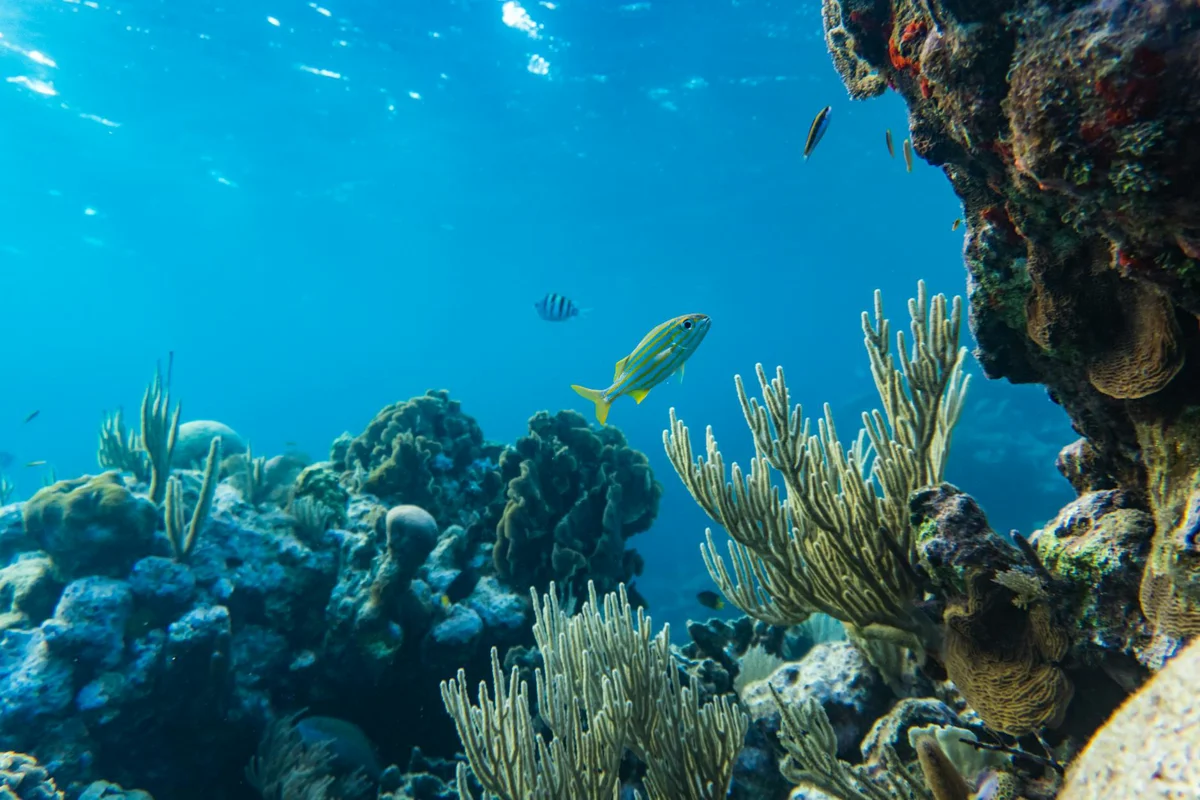
Roatán is the largest of Honduras's Bay Islands and the main gateway to the Mesoamerican Reef System, the second-longest barrier reef on the planet. Moderate prices, solid infrastructure, and reefs in better shape than most of the western Caribbean. For divers who want accessible Caribbean diving without the crowds of Cozumel or the Cayman Islands, Roatán is the straightforward choice.
Roatán sits in the western Caribbean, off the northern coast of Honduras. Together with Utila and Guanaja it forms the Bay Islands, an archipelago anchored on the Mesoamerican Reef System — 1,000 km of coral barrier stretching from Belize down to Honduras. The reef is in better condition than the western Caribbean average, partly because historical tourist pressure has been lower than in Cozumel or Cayman, though bleaching and degradation events in 2019 and 2023 have left visible marks.
Roatán's most celebrated sites: Mary's Place, a submerged canyon whose vertical walls are thick with gorgonian fans; Hole in the Wall, a swim-through formation with dramatic overhead light; Mesoamerican Reef Wall, a wall dive dropping past 30 m draped in soft corals; and Spooky Channel, a drift dive through a coral-flanked passage. Depths run 12–30 m, water temperatures hold at 26–30 °C year-round, and visibility reaches 25–40 m on a good day. Currents are gentle, making the sites workable for any certification level.
Utila is the smaller neighbouring island, known for two things: rock-bottom certification prices — an open water course runs 250–350 €, among the cheapest in the world — and reliable whale shark sightings between February and May. Beginners looking to combine a course with a beach holiday flock here. For certified divers with a few hundred dives behind them, Roatán offers more consistent quality.
Guanaja is the least developed of the three main islands. Infrastructure is sparse, logistics are awkward, but the coral walls are good and the water feels genuinely uncrowded. Two main dive resorts operate there, plus a handful of small operators. Prices run slightly below Roatán, though getting there takes more effort.
Getting to Roatán: direct flights from Houston, Miami, Atlanta, and New York on US carriers. From Europe, the standard route involves a connection in the United States. Direct flights to mainland Honduras — Tegucigalpa or San Pedro Sula — exist but require an onward hop to the island. Accommodation ranges from backpacker guesthouses (around 40 € a double) to full-service dive resorts (300–500 €). The main operators are Anthony's Key Resort, CoCo View Resort, and Bay Islands College of Diving. Guided dives cost 35–55 €; packages of 6–10 dives are standard.
What surprises most visitors is how family-friendly the island feels. Roatán has enough tourist infrastructure — beaches, restaurants, car rental, varied lodging — to keep non-divers happy. It pairs well with inland excursions to Honduran nature parks, and day trips to Utila or Guanaja are straightforward. For a first western Caribbean trip that mixes diving with a beach holiday, it is a less saturated alternative to Cozumel.
The downsides are real. Honduras's broader social instability has periodically created security concerns on the island, though the tourist corridors — West End and West Bay — have remained calm. Outside those areas, basic precautions apply. The routing through US hubs inflates transatlantic fares noticeably: budget 1,500–2,200 € in economy from Europe. Hurricane season runs June through November and can disrupt travel.
The honest assessment: Roatán delivers solid mid-range Caribbean diving at reasonable prices. The reef quality is good but not exceptional compared to Cuba's Jardines de la Reina or the best sites around Cozumel. For a week combining wall dives with beach time at a sensible budget, it delivers. For a dedicated elite diving trip, other destinations make more sense. For couples or families where only one person dives, it is one of the more consistent options the Caribbean offers.