
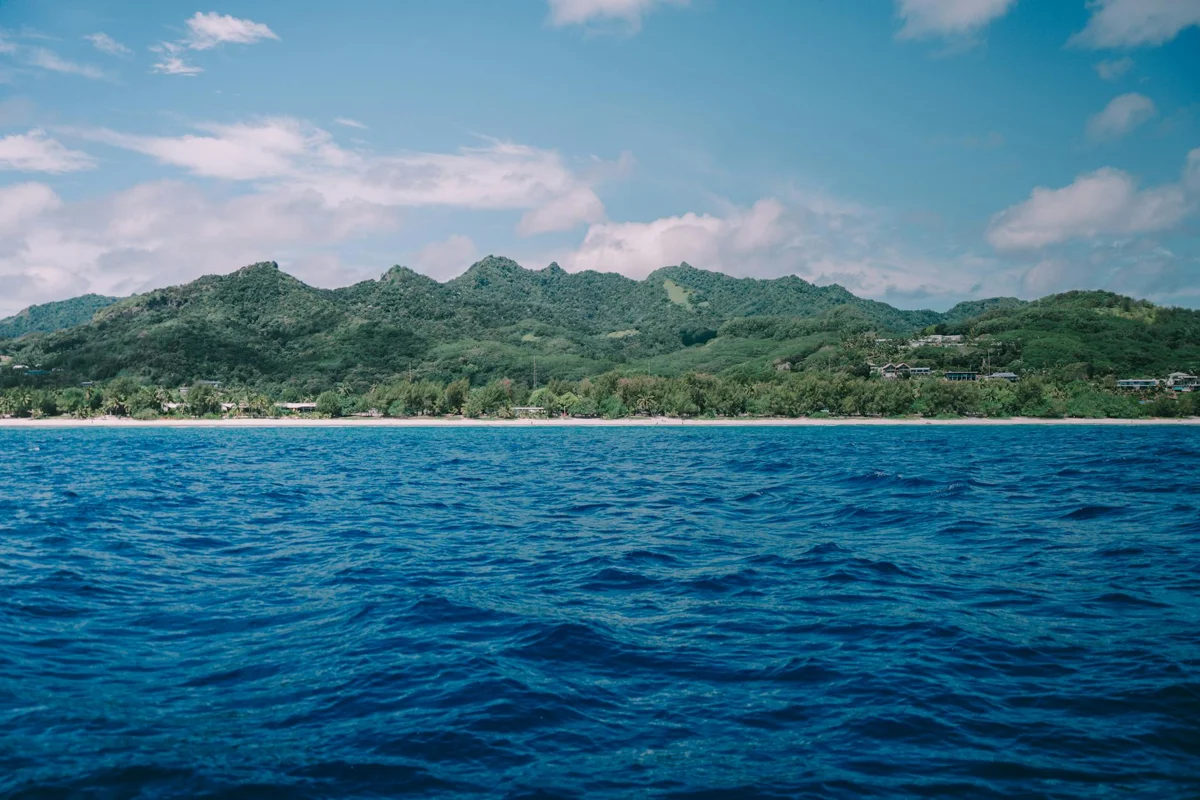
The Cook Islands are an archipelago of 15 Polynesian islands in the South Pacific, self-governing in free association with New Zealand. They have some of the clearest water in the Pacific (50+ m visibility) and coral reefs with Polynesian biodiversity. Aitutaki and Rarotonga are the operational dive islands. Combinable with New Zealand and lightly visited — around 140,000 tourists per year. Authentic Polynesia without the crowds.
The Cook Islands (officially Cook Islands) are an archipelago nation of 15 Polynesian islands spread across 2 million km² of the South Pacific. Self-governing in free association with New Zealand since 1965 — residents hold New Zealand citizenship. The permanent population is 17,000 (another 80,000 live in New Zealand and Australia). The capital is Avarua on Rarotonga. Languages: Cook Islands Māori and English. No visa required (31 days on arrival). Currency: New Zealand dollar (NZD) and the Cook Islands dollar (same value).
Underwater geography: the Cook Islands have exceptionally clear water — visibility typically 30–60 m, often 50+ m. The reason is simple: the archipelago sits in complete isolation, at least 1,000 km from the nearest landmass. Water temperature reaches 24 °C in August and 28 °C in February. The southern islands are volcanic and mountainous; the northern group are flat atolls. Biodiversity is Polynesian in character: 130 coral species, 600 fish species, and visiting oceanic pelagics. Coral diversity is lower than in Indonesia, but condition is markedly better thanks to the isolation.
Rarotonga (the capital island): a 67 km² volcanic island with a fringing barrier reef and inner lagoon. Notable dive sites: 1) Mata Pueva (vertical walls at the harbour passage, 18–30 m). 2) Avaavaroa (outer reef walls with turtles, 12–25 m). 3) Sandriver (underwater canyon with schooling fish, 22–35 m). 4) Black Rock (walls with large fish, 18–30 m). 5) Tikioki (marine protected area with coral garden, 8–15 m). 6) Avana (macro site with seahorses, 5–12 m). Coral health is solid, best at sites away from Avarua.
Aitutaki (the atoll): the main island sits inside a 50 km² lagoon ringed by a barrier reef, widely regarded as one of the most beautiful lagoons in the Pacific. Key dive sites: 1) The Drop (outer wall at 18–35 m with grey reef sharks and tuna). 2) Honeymoon Island (shallow coral site, 5–12 m). 3) Maina Island (coral gardens with turtles, 8–15 m). 4) The Trees (massive table corals at 12–22 m). Access is by Air Rarotonga (45-minute flight). More exclusive than Rarotonga, with noticeably fewer tourists.
Logistics and costs: direct flights to Rarotonga (RAR) from Auckland (4 hours, Air New Zealand), Sydney (6 hours, limited frequency), Los Angeles (10 hours, weekly). No direct flights from Europe — connections through Auckland or Los Angeles add up to 24–30 hours total travel. Dive operators: Cook Islands Divers (Rarotonga), Dive Rarotonga, Pacific Divers, Aquila Aitutaki. Single dive: 60–80 NZD (35–45 €). 5-dive package: 250–330 NZD (150–200 €). PADI Open Water course: 600–750 NZD (350–450 €).
What surprises you: the living Polynesian culture. The Cook Islands maintain genuine Cook Islands Māori traditions — dances (umuke), tattoos (tatau), music (himene tarava, drumming), food (rukau, ika mata, kumara), and historic marae. Everything closes Sunday — Christianity runs deep here. The cultural overlay in Rarotonga (Punanga Nui Market, Te Vara Nui Cultural Village, Highland Paradise) and traditional villages on Atiu (cave and local coffee) or Mauke rounds out any trip. Aitutaki's lagoon cruise to One Foot Island is worth doing.
What disappoints: big pelagic encounters are not reliable here. Biodiversity is decent by Polynesian standards, but the Cook Islands are not a consistent big-animal destination — hammerheads are rare, tiger sharks occasional, open-water encounters sporadic. The northern islands (Penrhyn, Manihiki) hold better pelagic potential but access is severely restricted (weekly or fortnightly flights). For guaranteed big pelagics, Galápagos or French Polynesia (Fakarava, Rangiroa) are stronger options. For coral density, Indonesia or the Philippines pull ahead.
The bottom line: the Cook Islands are a South Pacific destination with an intact Polynesian identity and genuinely exceptional water clarity. Low tourist volumes, English-language comfort (New Zealand affiliation), quality lagoon and barrier reef diving, and a living Māori culture set them apart. For consistent big pelagic action there are better choices, but for a mixed dive-plus-culture trip in an unspoilt Polynesian setting, the Cook Islands are hard to beat. Pairs well with New Zealand (3-hour flight) or French Polynesia (limited direct routes). Best from May to October during the austral dry season.