
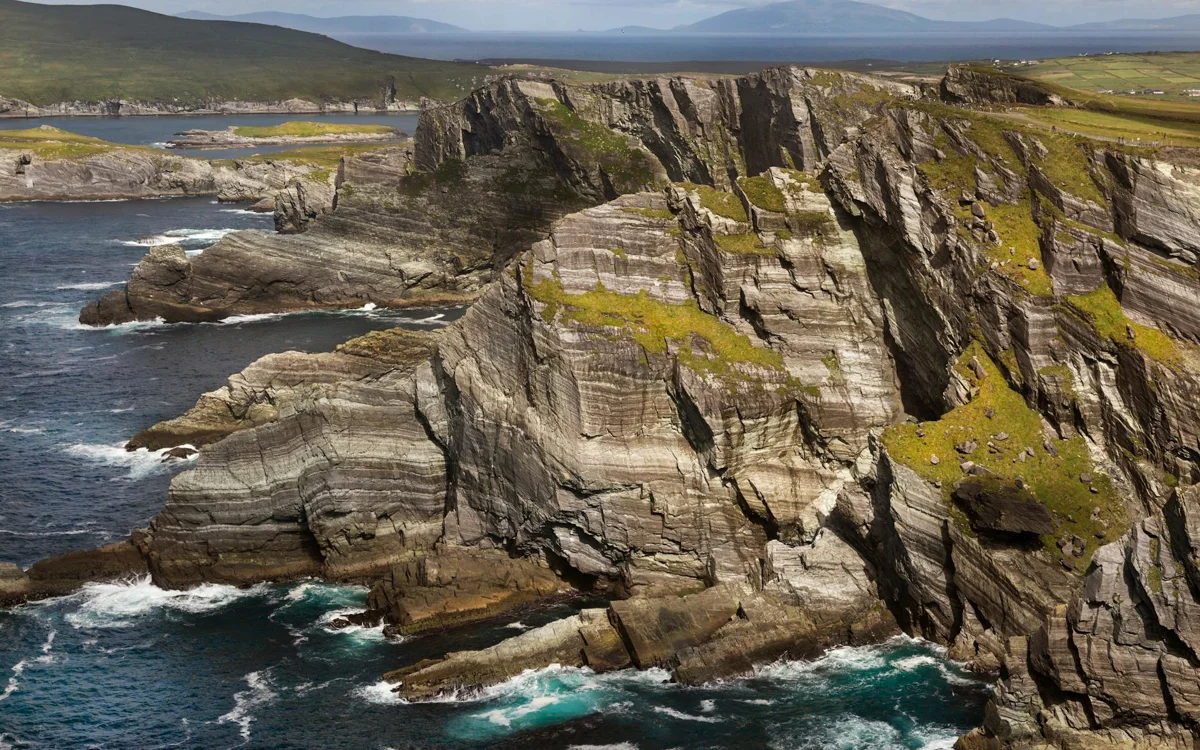
Ireland has 7,500 km of Atlantic coastline with cold-temperate diving. The west coast (Donegal, Mayo, Galway, Clare, Kerry) offers colonial British wrecks, Arctic-Atlantic fauna (wolf fish, lobsters), and from May to August seasonal migrations of basking sharks (Cetorhinus maximus, second largest fish in the world). Easily combined with Irish cultural tourism and the Wild Atlantic Way.
Ireland has 7,500 km of Atlantic coastline spanning the Irish Sea (east, facing the UK), the North Atlantic Ocean (west), and the Celtic Sea (south). The main diving destination is the west coast, particularly the counties of Donegal (north), Mayo, Galway, Clare, and Kerry. The famous Wild Atlantic Way — a 2,500 km coastal touring route — runs along this entire shoreline. Capital: Dublin. Languages: English and Irish Gaelic. Visa: simplified for EU citizens (90 days, no visa required). Currency: euro (EUR). Easily reachable from anywhere in Europe with budget carriers (Ryanair, Aer Lingus).
Underwater geography: Irish Atlantic waters are cold-temperate, ranging from 8–12 °C in winter to 13–17 °C in summer. Visibility is moderate (8–20 m, best in summer). The coastline is rocky with vertical walls, caves, and underwater arches. The fauna is Arctic-Atlantic in character: wolf fish, pollack, cod, bass, scorpionfish, conger eels, European lobsters, scallops, grey seals (resident in many areas), seasonal basking sharks, occasional blue and mako sharks, pilot whales, and bottlenose dolphins.
The basking shark: the basking shark (Cetorhinus maximus) is the second largest fish in the world, reaching up to 12 m. It migrates annually into the northeast Atlantic to feed on plankton. Between May and August they concentrate in waters off western Ireland, especially Inishowen (Donegal) and the Cork–Kerry coast. Sightings are done from small boats on the surface. Snorkelling is legal and requires no special permit. For consistent basking shark encounters, the Inishowen Marine Diversity Group and Aran Islands operators are your best bet.
Top dive sites: 1) Aran Islands (Galway, limestone walls and abundant fauna, 12–30 m). 2) Mizen Head (Cork, walls with currents, 18–32 m). 3) Lough Hyne (sea lough connected to the ocean, unique in Europe, specialist fauna). 4) Slieve League (Donegal, walls below the highest sea cliffs in Europe, 18–35 m). 5) Skellig Michael (UNESCO, vertical walls and caves, 22–40 m). 6) Cork Harbour (wrecks and coastal fauna, 12–25 m). 7) Roonagh–Clare Island (Mayo, walls and grey seals, 12–22 m).
Notable wrecks: the Irish coast is a graveyard of ships lost to Atlantic storms and two world wars. 1) RMS Lusitania (ocean liner torpedoed by a German U-boat in 1915 off Old Head of Kinsale, Cork, 93 m, technical). 2) HMS Audacious (British battleship sunk by a mine in 1914 off Donegal, 64 m). 3) Drumelzier (merchant ship sunk in 1882 at 28 m, recreational). 4) Saint Patrick (cargo vessel at 28 m, abundant marine life). 5) Liberty (American Liberty ship at 25 m). The RMS Lusitania is one of the most historically significant ocean wrecks in the world.
Logistics and costs: flights to Dublin (DUB), Cork (ORK), Shannon (SNN), and Galway (limited) direct from across Europe (Ryanair, Aer Lingus, easyJet). Budget flights are frequent. Dive centres: Atlantic Pro Divers (Donegal), Mayo Diving, Burren Sub Aqua Club, Aran Islands Diving. Guided dive: €50–70. Six-dive package: €250–400. PADI Drysuit course: €350–450. Accommodation: B&B guesthouses from €60, hotels €80–180.
What surprises divers: the culture combination. Ireland is a premium cultural destination — pubs (Guinness, Murphy's stout, Irish whiskey), traditional music (folk sessions, uilleann pipes), food (Irish stew, soda bread, Atlantic seafood), and landscapes (Cliffs of Moher, Giant's Causeway in Northern Ireland, Ring of Kerry). Shore diving slots naturally into a mixed itinerary of diving, Celtic culture, Wild Atlantic Way, and hill walking. For a 7–14 day trip, Ireland delivers the full package.
The bottom line: Ireland's west coast is a cold-water European dive destination with genuine historical weight (colonial wrecks), natural highlights (seasonal basking sharks, grey seals), and strong cultural appeal (Wild Atlantic Way, pub culture, music). It is not the choice for tropical reef diving. For cold-water European diving with accessible culture and cheap flights, Ireland is a solid mid-budget option. Best from May to September (warmest water, basking shark season). Easily paired with the UK (Scotland, England) for a 14–21 day British Isles circuit.