
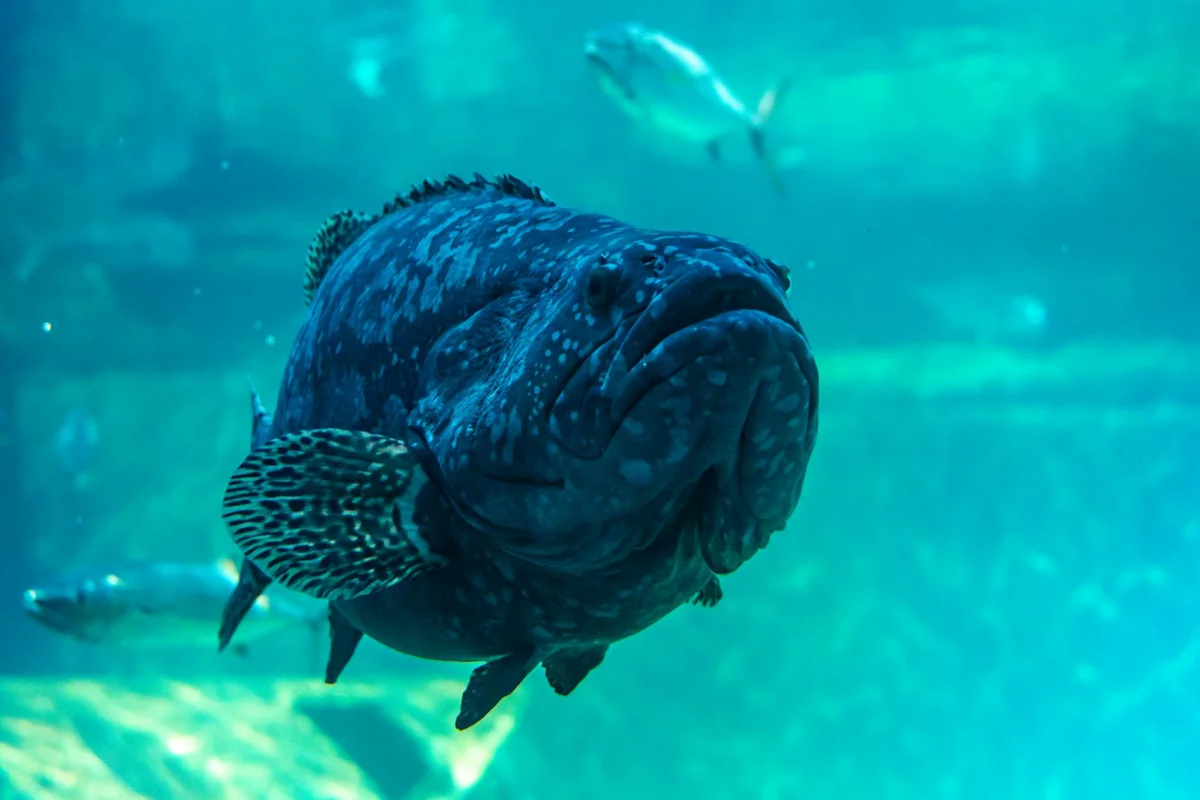
Madeira rarely appears on diving destination lists, which is precisely what makes it worth considering. Water stays between 19 and 23 °C throughout the year, visibility reaches 25–35 m, and the strictly protected Desertas Islands marine reserve holds the largest concentrations of dusky grouper left in the eastern Atlantic.
Madeira is a Portuguese volcanic island sitting 700 km southwest of Lisbon and 600 km north of the Canaries. At just 5 million years old, it rises from the ocean floor with 500-metre sea cliffs, abrupt volcanic drop-offs, and a subtropical microclimate that keeps water temperatures mild in every season. Expect 18 °C in March, 23 °C in September, average visibility around 25 m, and occasional autumn windows of 40 m.
The headline destination is the Reserva Natural Integral das Ilhas Desertas — three uninhabited islets 40 km southeast of Funchal. Integral reserve status means no fishing, regulated access, and limited daily permits. That protection has allowed *Epinephelus marginatus* populations to rebuild to densities now absent from the rest of the eastern Atlantic. Adults here weigh 30–50 kg and have not been hunted for decades; they approach divers with no hesitation.
Principal dive sites: Banco do Pináculo, a seamount stacked with barracuda schools and grouper; Doca do Cavacas, volcanic caves and arches near Funchal; Garajau, the closest marine reserve to the capital, with resident turtles and rays; and Caniço de Baixo for macro work along the coast. Getting to the Desertas means a dedicated boat trip — 3 to 4 hours return — booked well in advance at premium pricing. The shore sites are reachable in 20–40 minutes from Funchal on a standard dive boat.
The fauna is a blend of Atlantic and African-influence species: dusky grouper, occasional juvenile sunfish, barracuda, amberjack, manta rays in August, and hammerheads in deeper water beyond recreational range. Green and loggerhead turtles are present year-round. The Desertas hold one of the last breeding colonies of Mediterranean monk seal (*Monachus monachus*) in the eastern Atlantic — though an encounter underwater is rare; sightings from the surface require patience and luck.
Getting there is straightforward: direct flights to Funchal operate from most European capitals, and package deals are affordable. Accommodation in Funchal runs €60–150 per double room depending on category. Dive centres operate out of Funchal and Caniço de Baixo. A guided dive costs €50–65; a six-dive package runs around €270. A full Desertas day trip with two dives sits at €180–220. Staff at most centres speak English and Spanish alongside Portuguese.
The pleasant surprise is the quality of nearshore diving. Not every dive on Madeira requires the Desertas. Sites within 15 minutes of Funchal — Garajau in particular — deliver volcanic topography, approachable turtles, and solid marine life at prices roughly 40 % below the Desertas rate. For a five- or six-day trip, splitting time between two days at the Desertas and three days on the local sites is the practical choice.
The frustration is the swell. Madeira faces open Atlantic fetch, and ground-swell cancellations are a regular reality. In winter — December through March — entire weeks can pass without a single boat going out. Summer is calmer but also busier and more expensive. The sweet spot is October–November: water still at 22 °C, more settled conditions, and shoulder-season pricing on kit, accommodation, and boats.
Madeira sits in the upper-mid tier of European Atlantic diving — genuinely interesting for divers who have covered the usual circuit and want something different. It pairs naturally with exceptional land tourism: the caminhos das levadas, the northern villages, local wine and food. That makes it a workable destination for a group where not everyone dives. The Desertas justify at least one trip. In autumn with a cooperative weather window, the diving holds up against anything the eastern Atlantic offers.