
Mayotte is a French overseas department in the Comoros archipelago (western Indian Ocean). It holds the world's second-largest lagoon (1,500 km²) enclosed by a 195 km coral barrier reef. The destination combines lagoon and open-sea diving with frequent encounters with resident dugongs — among the few places worldwide where they are reliably accessible to divers — plus humpback whale migration.
Mayotte is an archipelago of two main islands (Grande-Terre and Petite-Terre) plus some thirty islets, sitting in the Mozambique Channel between Madagascar and the African coast. It became a French department in 2011 (the 101st), meaning it is EU territory: euro currency, French healthcare system, European mobile roaming. Population is 270,000 across 374 km². The capital, Mamoudzou, is on Grande-Terre. Languages spoken: French, Shimaore (local tongue) and Kibushi.
Underwater geography: the coral barrier reef stretches 195 km and nearly encircles the island, forming a 1,500 km² interior lagoon — the world's second largest after New Caledonia. Maximum depth in the lagoon reaches 80 m; the passes (channels cutting through the barrier) go down to 200 m. Twelve main passes connect lagoon to open sea and funnel pelagic life through them. Water temperature ranges from 25 °C in August to 29 °C in February. Visibility runs 20–40 m in open water, 10–25 m inside the lagoon.
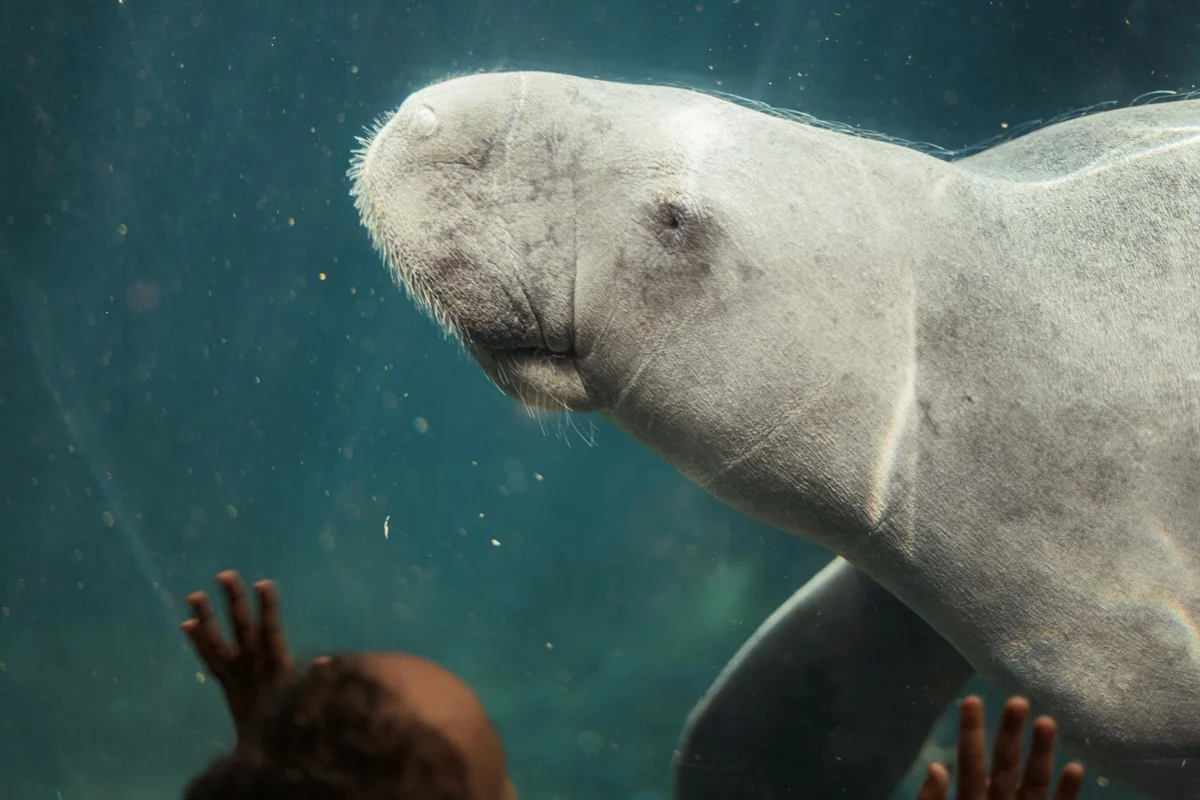
Resident dugongs: Mayotte hosts a resident population of 10–15 dugongs (herbivorous sirenians, relatives of manatees), the largest in the western Indian Ocean. They graze on seagrass meadows within the lagoon. Encounters are possible by snorkel or scuba at sites like Mtsamboro, N'Gouja and Saziley Bay. The species is critically endangered and sightings are regulated (minimum distance 10 m, no chasing). It remains one of very few places in the world with consistent encounters.
The passes and pelagic life: the 12 passes are the hotspots for large fauna. 1) Passe en S (the most famous: manta rays, grey reef sharks, tuna). 2) Passe Sada (currents and amberjack schools). 3) Passe Bouéni (grey reef sharks and mantas). 4) Passe Choizil (green and hawksbill turtles). 5) Passe Longoni (drift dive in strong current). These are technical dives — strong currents, depths of 25–40 m. Species sighted include grey reef sharks, hammerheads (rare), manta rays, yellowfin tuna, barracuda and turtles.
Humpback whales: between July and November, humpback whales migrate through the Mozambique Channel. Mayotte sits on a key feeding and calving corridor. Boat encounters are frequent; snorkelling with whales is authorised under strict regulation (8 people maximum, 100 m distance, time-limited sessions). Dolphins — bottlenose, spinner, common, pilot whales, occasional orcas — are year-round residents. It is the western Indian Ocean destination with the greatest cetacean diversity accessible to tourists.
Logistics and costs: flights to Mayotte (DZA) run direct from Paris (Air Austral, Corsair) or via Réunion. As EU territory, no visa is required for Europeans. Currency: euro. Dive centres include Centre de Plongée du Cap, Maéva Plongée, Lagon Maoré and Mayotte Sub. Single dive: €55–75 (French pricing). Ten-dive package: €500–650. Whale-watching half-day trip: €80–120. Accommodation: chain hotels €100–200 per night or local gîtes €50–80. Imported French food is expensive; local food cheaper.
The downsides: security. Mayotte has serious social and immigration problems (heavy flows from neighbouring Comoros). Some areas experience petty crime. Avoid walking alone at night and do not display valuables. The hotel offer is limited and expensive for what it delivers. Travel time from mainland Europe is long (10–12 hours with a connection). For a safer, more developed destination, Réunion to the south is the better choice. For dugongs and humpback whales together, Mayotte stands alone.
Bottom line: Mayotte is a unique French destination in the Indian Ocean, blending EU comfort (euro, healthcare, roaming) with tropical wildlife. Giant lagoon, passes thick with pelagic life, resident dugongs and seasonal humpback whales. Prices are high by French standards but operations run at European quality. For French-speaking families or Europeans wanting the Indian Ocean without bureaucratic surprises, it fits well. Budget travellers looking for adventure have cheaper options nearby (Comoros, Madagascar). Best window is July to November for whales; reef diving is worthwhile year-round.