
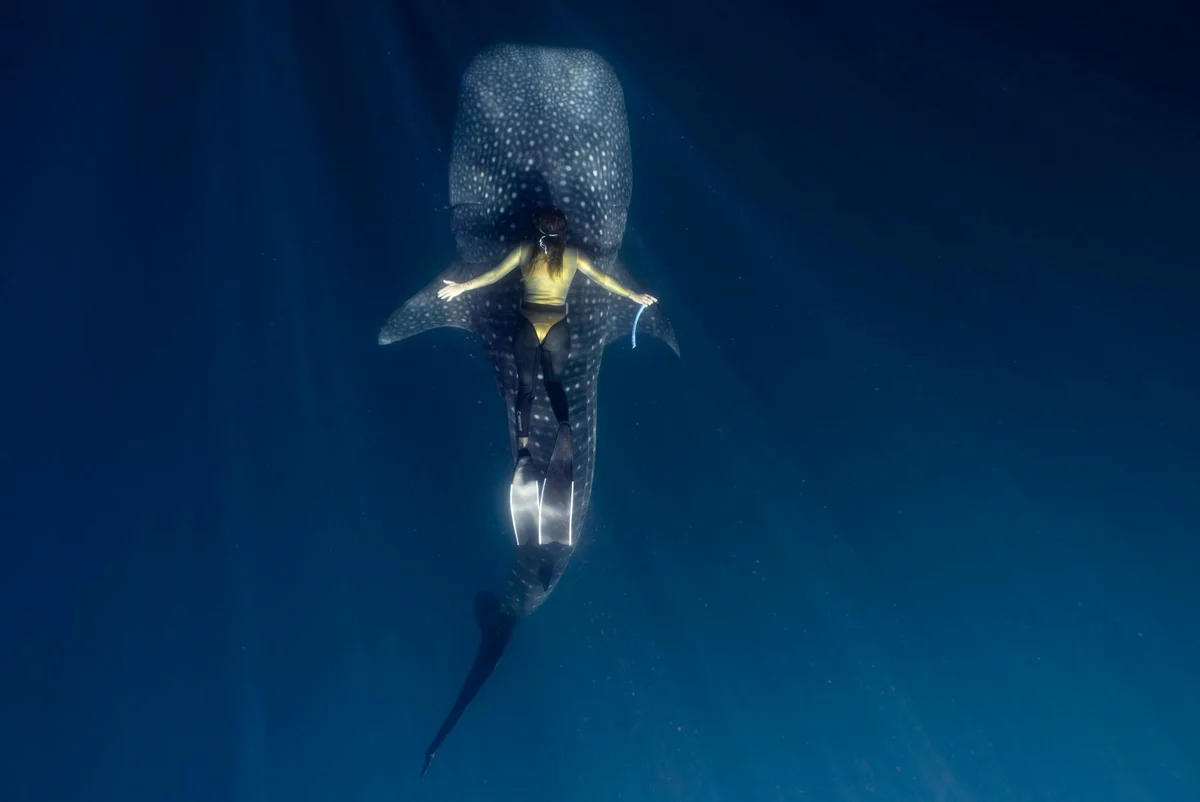
Mozambique ranks among Africa's most overlooked dive destinations. The Tofo coast, in the country's centre, holds one of the world's largest resident whale shark populations, near-guaranteed encounters with oceanic and reef mantas, and prices running 40 % below comparable Indian Ocean spots. The logistics filter out casual travellers.
Tofo is a coastal village in Inhambane province, 500 km north of Maputo. Locals make their living from fishing and dive tourism. The beach stretches 7 km of white sand, with swell that feels Atlantic despite being Indian Ocean — open exposure to the southeast means persistent current and variable visibility.
The main draw: whale sharks (*Rhincodon typus*) are resident for 8-10 months of the year at Tofo. Large females (12-14 m) appear regularly from June to November. Encounters happen at the surface by freediving or snorkel — SCUBA with whale sharks is prohibited by law — but the proximity and duration of those encounters rival anywhere else on the planet. Three-hour zodiac trips, typical encounters lasting 30-60 minutes per outing. The probability of seeing at least one per trip is 90 % in season.
Mantas are the second headline act. Reef manta (*Mobula alfredi*) and oceanic manta (*Mobula birostris*) maintain permanent cleaning stations on reefs at 18-25 m depth. Manta Reef and Giants Castle are unmissable dives. The encounters are close: mantas at cleaning stations hold position and hover 10-15 minutes above divers parked 2-3 m below. For underwater photography of megafauna, this is among the finest in the Indian Ocean.
Other worthwhile dives: Salon Reef (caverns holding scorpionfish and grouper), Sherwood (drift dive with grey reef sharks), Office (soft corals and moray eels). Depths 18-30 m, visibility 8-25 m depending on conditions — highly variable — water temperature 24-28 °C year-round. Five main dive centres operate out of Tofo, all professional and well established. Standard schedule runs two dives per day.
Logistics: flights to Inhambane from Johannesburg (1 hour) or Maputo (1 hour), then road transfer to Tofo (40 minutes). Alternative: bus from Maputo (8 hours, not recommended for a first visit). Mozambican visa obtainable at the border or through a consulate. Costs: accommodation from €30 at backpackers to €100 at a lodge. Diving: €50-70 per guided dive, six-dive packages from €280. Whale shark snorkel trip: €60-80 for a half day.
What surprises first-timers: the mix of diving with surfing, kitesurfing and beach tourism. Tofo is not an exclusive diver's enclave. It is a general tourist village with a full range of water activities, which makes it well suited for couples or families where only one person dives. Local food — shellfish, fresh fish, coconut rice — is excellent and cheap. Beachfront lodges charge €60-90 for a double with breakfast.
What disappoints: instability. Mozambique has a security situation in the far north (Islamist insurgency in Cabo Delgado since 2017) that does not affect the south — Inhambane sits 1,500 km from the conflict zone — but checking travel advisories before any trip is essential. The cyclone season runs January to March, with storms that cancel dives for days at a stretch. June to October is the prime window: dry season, consistent whale shark presence.
The verdict: Tofo works well for divers after near-guaranteed whale sharks and mantas in an African setting without the crowds of Egypt or the Maldives. For underwater photography of megafauna, it sits in the global top five. As a first trip to Africa it demands preparation: infrastructure is basic, logistics require planning, and comfort is limited. Those who go once tend to return, and what happens in the water justifies destinations costing four times as much.