
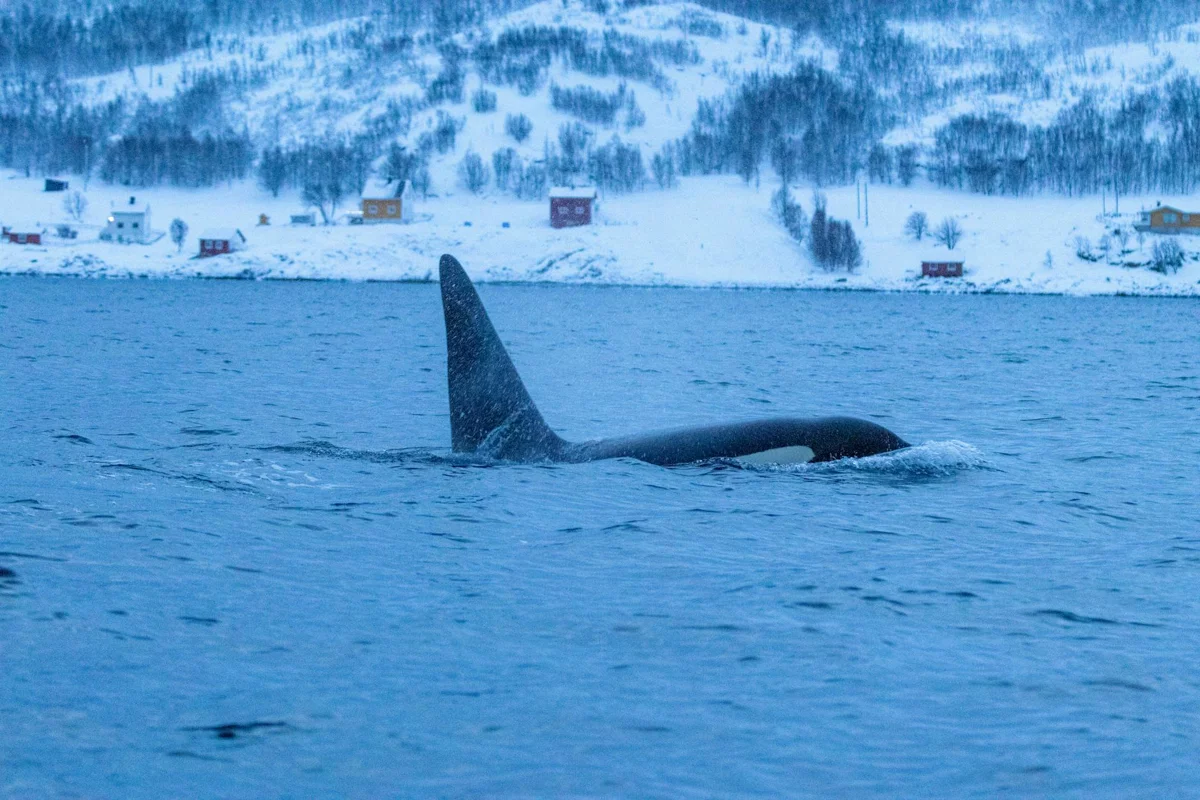
Norway hosts one of diving's most extraordinary spectacles: each winter (October–February) massive Atlantic herring shoals migrate into northern fjords (Skjervøy, Trondheim, Tromsø). Orcas and humpback whales follow, creating feeding events in accessible waters. Snorkelling and diving at 4–7 °C requires a drysuit. A cold-water destination defined by Arctic megafauna.
Norway has 25,148 km of Atlantic and Arctic coastline laced with thousands of fjords. It is a premium cold-water diving destination because of the dense winter aggregations of pelagic fauna. The operational season for orca and humpback encounters runs October to February. Main areas: Skjervøy (north of Tromsø, Troms county), Andenes (Vesterålen islands), Trondheim (central), Lofoten (north). The destination gained traction between 2010 and 2025 as orcas shifted northward tracking herring—a consequence of both climate change and cyclical herring migration patterns. Visa: Norway is Schengen, no visa required for EU/EEA nationals.
The phenomenon: every autumn–winter, massive shoals of Atlantic herring (Clupea harengus, up to one million tonnes) enter Norwegian fjords to overwinter. Orcas (200–500 individuals) and humpback whales (10–50 animals) follow and feed in cooperative events. Orcas use carousel feeding: they circle a shoal, compress it into balls of 5–10 m, stun fish with tail slaps, then eat. Humpbacks use lunge feeding. Few wildlife events on the planet match the scale of this spectacle.
Diving and snorkelling: contact with orcas and humpbacks is done primarily by snorkel from a Zodiac—not scuba, because bubbles spook orcas. Some operators offer certified freediving slots. Gear: 7 mm drysuit with double hood, 5 mm neoprene gloves, wide-bore mask. Water temperature: 4–7 °C. Visibility is moderate (5–15 m, reduced by herring oil in the water). Snorkel sessions run in groups of 6–8 with a guide; regulations require passive observation—let the animals approach, never swim toward them.
Other dive sites: 1) Saltstraumen (near Bodø, the world's strongest tidal current at 22 knots peak, expert diving, rich upwelling fauna). 2) Trondheim (central, Norwegian wrecks, cold-water species: cod, halibut). 3) Lofoten (granite walls, steep terrain, rich folklore of the kraken). 4) Bergen west (shore diving for cod and haddock). 5) Arendal south (warmer coastal sites, mixed fauna). Orca snorkelling is the headline; other sites are secondary.
Logistics and costs: flights to Trondheim (TRD), Tromsø (TOS) or Andenes (ANX) connect via Oslo (1–2 hours, SAS/Norwegian) or via Stockholm, Copenhagen. International: limited direct routes; connect through Oslo (daily services from London, Amsterdam, Frankfurt, Paris). Orca snorkel operators: Arctic Whale Tours (Skjervøy), Whale2Sea, Nordic Sea Angling, Tromsø Outdoor. Day trip (4–6 hours on the water): 350–500 €. Five-day orca package with accommodation: 2,500–4,000 €. Accommodation: guesthouses from 100 €, hotels 150–300 €, remote lodges 200–400 €.
Equipment: the cold is genuine. Air temperature can drop to −10 °C. Recommended kit: compressible 7 mm drysuit with thermal undersuit, 5 mm double hood, 5 mm dry gloves, 5 mm drysuit socks, anti-fog mask treatment. Organised tours include full neoprene kit rental. Some centres accept clients who bring their own drysuit. Certifications required: drysuit specialty if diving; snorkelling needs no certification but cold-water experience is strongly advised.
The unexpected bonus: the northern lights. Northern Norway (Tromsø, Skjervøy, Lofoten) sits inside the auroral oval. Between October and February—the same season as the orcas—northern lights appear on 60–70% of clear nights; clouds are the main obstacle. A 7–10 day trip can combine orca snorkelling by day with aurora chasing at night, plus Sami indigenous culture. The destination stacks pelagic wildlife, polar landscapes and Arctic heritage into a single itinerary.
Conclusion: Arctic Norway is a premium cold-water diving destination built around orca and humpback feeding events on a massive scale. Wild orcas (not captive), humpback whales, herring in million-tonne shoals, Arctic scenery and northern lights. If you want tropical reef diving, this is not it—visibility is moderate and the fauna is cold-water. For pelagic wildlife in a genuinely raw environment, Arctic Norway is hard to beat. Best window: November to January (peak orcas and auroras). Pairs well with Stockholm, Helsinki or any Scandinavian city stopover.