
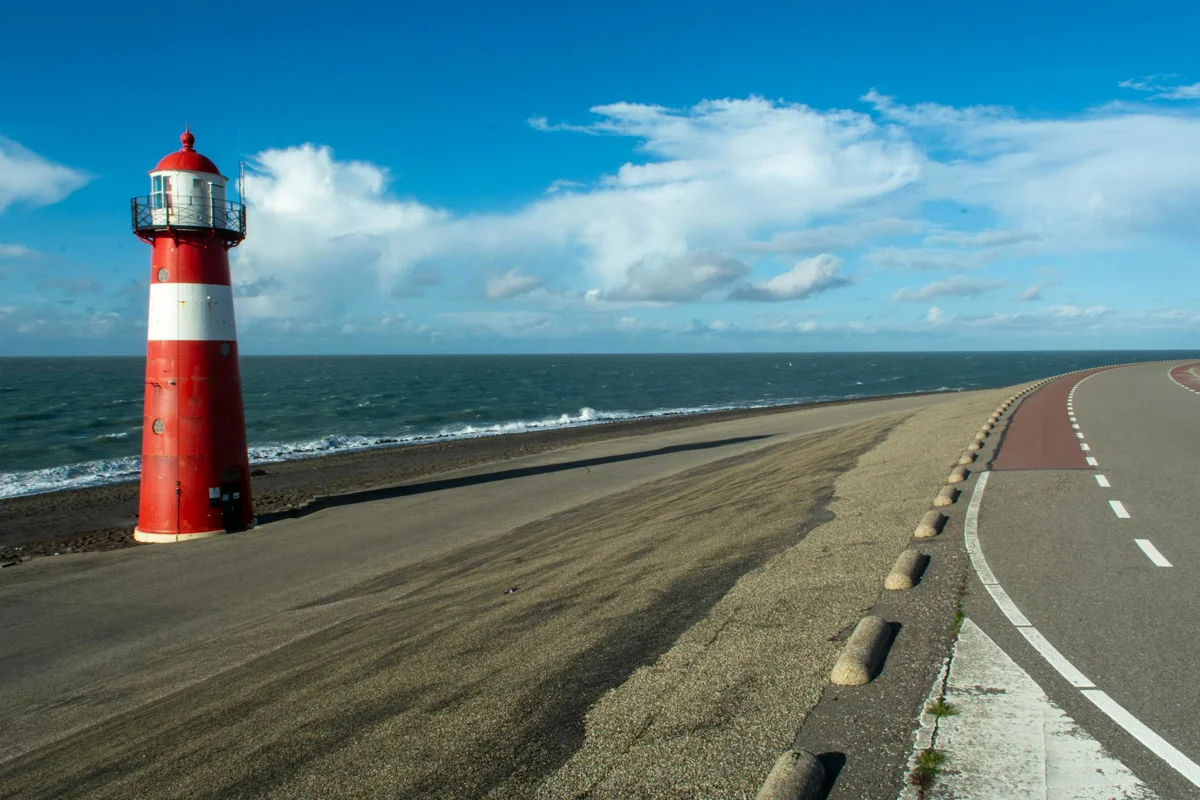
Zeeland (southern Netherlands) is home to the Oosterschelde, a national park with the highest concentration of recreational divers in northern Europe. It is a tidal estuary with cold-water North Sea species: giant cuttlefish, lobsters, wolffish. Sites are shore-accessible by car, with infrastructure well suited to beginners. A classic cold-water initiation destination.
Zeeland — literally 'sea land' — is the southernmost province of the Netherlands, a patchwork of islands and peninsulas in the Rhine-Meuse-Scheldt delta. Population: 392,000 across 2,933 km². Capital: Middelburg. The province is defined by the Delta Works (Deltawerken), a system of dams and storm-surge barriers built after the 1953 flood that killed 1,836 people. The Oosterschelde national park, enclosed by the Oosterscheldekering barrier, is the heart of Dutch diving. Entry: Schengen, no visa needed for EU nationals. Currency: euro (EUR).
The Oosterschelde: this 370 km² tidal estuary is protected by the Oosterscheldekering (ranked among the seven modern wonders of civil engineering by ASCE). North Sea water floods in and out with the tides, creating tidal ranges of 2–4 m. Water temperature swings hard: 4 °C in winter (January–March), peaking around 19 °C in summer (July–August). Visibility follows the tides: 5–15 m on a clear incoming tide, 1–5 m when silt stirs on the ebb. Maximum depth 35 m, average 8–12 m. Currents run strong around tide changes, but slack-water windows make safe diving accessible.
Dive sites: the Oosterschelde has 60+ recreational dive sites reachable by car, each with parking. Key spots: 1) Anna Friso (Burghsluis, cuttlefish garden, lobsters, ideal for beginners, 5–15 m). 2) Den Osse (artificial structure with dense fauna, 8–22 m). 3) Tholen (walls and fish, 12–25 m). 4) Kerkpolder (busy weekend site with facilities, 5–18 m). 5) Sandkreek (currents and larger fish, 8–22 m). 6) Stavenisse (vertical walls, 15–28 m). The whole set-up — car to water, picnic area nearby — is designed for family day trips.
Cold-water fauna: the Oosterschelde holds a characteristic North Sea assemblage. Giant cuttlefish (Sepia officinalis, up to 80 cm in large individuals), occasional wolffish (Anarhichas lupus), scorpionfish, pollack, sea bass, bull-rout, European conger eels, European lobsters, edible crabs, queen scallops, octopus. The cuttlefish season (May–August) is the headline attraction: cuttlefish congregate in the estuary to breed, growing large and allowing close-range observation of courtship displays and egg-laying.
Logistics and costs: Zeeland is reachable from across Europe. Fly into Amsterdam Schiphol (AMS) or Brussels (BRU) and drive 2–3 hours. Train to Goes or Vlissingen, then bus or taxi to the sites. Dive centres: Aquadelta Diving, Alpha Sport Center (Burghsluis), Deepblu Diving, Duikexpeditie. Guided dive: €30–45. PADI Open Water including drysuit: €400–550. Accommodation: campsites from €25, B&B €60–100, hotels €80–180.
Equipment: a drysuit is required in winter; in summer a 7 mm wetsuit is manageable for most divers once water climbs to 18–19 °C. Recommended certifications: PADI Drysuit Specialty (several Dutch clubs run it in a single day), Nitrox Specialty, PADI Open Water as a minimum. Most Dutch divers are weekend enthusiasts organised into local clubs — over 200 clubs in the country. The culture is communal and social rather than resort-oriented.
What surprises first-time visitors: Dutch diving culture. The Netherlands has around 25,000 certified recreational divers — roughly one per 700 inhabitants, high by European standards. Diving is a mainstream weekend sport, on par with cycling. On summer weekends, Zeeland sites overflow with cars, drying drysuits, and divers comparing dives over beers. There is an annual Zeeland Diving Festival with international visitors. The destination pairs well with Amsterdam (Rijksmuseum, Anne Frank House, canals) for a mixed diving-and-culture trip.
Bottom line: Zeeland is an accessible cold-water destination for beginners and weekend divers. Oosterschelde delivers 60+ shore-accessible sites, North Sea fauna (cuttlefish, lobsters), an active community, and moderate prices. For tropical coral reefs, look elsewhere. For European cold-water diving, a vibrant Dutch diving community, and a weekend getaway that combines with Amsterdam, Zeeland is a strong choice. Best season: June to September. Budget flights from across Europe make it viable as a long-weekend trip.