
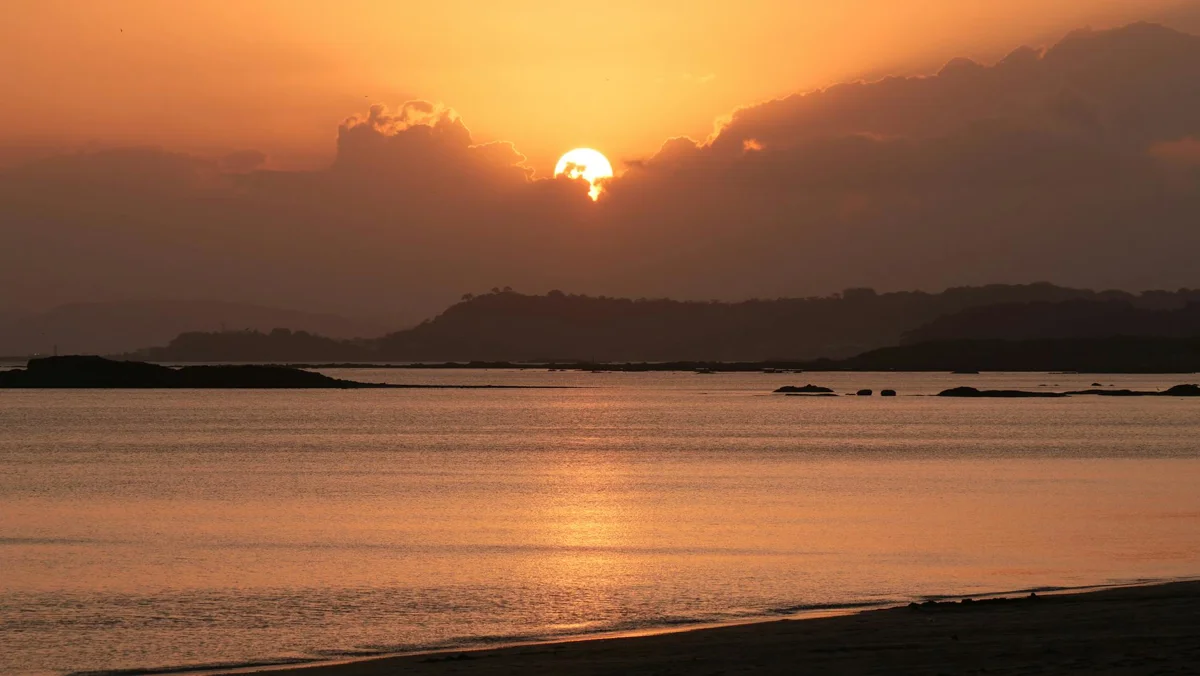
Coiba is an archipelago of 38 islands in Panama's Pacific, a UNESCO national park since 2005. A penal colony until 2004 that kept its reefs isolated for 80 years, it is now one of the best-preserved marine areas in the tropical eastern Pacific. Hammerhead schools from June to November, oceanic biodiversity, and an accessible alternative to Cocos and Galápagos at moderate prices.
Coiba is the largest island in Central American Pacific waters (493 km²) and forms part of Coiba National Park, established in 1991 and declared a UNESCO World Heritage Site in 2005. The park covers Coiba plus 37 islets and surrounding waters — 270,000 marine hectares in the Veraguas province of Panama's Pacific coast. The island operated as a penal colony from 1919 to 2004, which kept the ecosystem isolated from tourism and development for 85 years. It is now a protected marine area with regulated visits. No visa required for European citizens (90 days). Currency: balboa (PAB) and US dollar (USD) circulate in parallel.
Underwater geography: Coiba sits in the tropical eastern Pacific, in the path of the Cromwell Current (cold subsurface flow from Central America). This generates seasonal upwelling with cold, plankton-rich waters. Water temperature ranges from 22 °C at peak upwelling (January–March) to 28 °C in the warm season (July–October). Visibility is moderate — 10–25 m, best from June to November. Eastern Pacific biodiversity includes scalloped hammerheads, tiger sharks, whitetip reef sharks, oceanic manta rays, reef mantas, migrating humpback whales (July–October and December–March), green turtles, and olive ridley turtles.
Top dive sites: 1) Bajo Hannibal (main pinnacle with hammerhead schools June–November, 22–35 m). 2) Bajo del Diablo (wall with whitetip reef sharks, 18–30 m). 3) Wahoo Rock (rocky point with sailfish and tuna, 15–28 m). 4) Don Diego (coral garden and tropical fish, 8–22 m). 5) Frijoles Rock (vertical walls, 18–32 m). 6) Coibita Wall (coral walls on tiny Coibita island, 12–25 m). 7) Iglesias (macro site with seahorses, 8–18 m). The destination is pinnacle diving and drift diving — hard coral is sparse, as it is throughout the eastern Pacific.
Compared to Cocos and Galápagos: Coiba offers eastern Pacific pelagic fauna similar to Cocos Island (Costa Rica, 800 km northwest) and Galápagos (Ecuador, 1,500 km south). Coiba's advantages: 1) Shore-accessible — no 7–10-day liveaboard required. 2) Cost 50–70% lower than Cocos. 3) Pairs well with mainland Panama tourism. 4) Fewer divers. Disadvantages: 1) Pelagic encounters less consistent (Cocos and Galápagos offer near-guaranteed sightings). 2) Visibility lower (Galápagos can reach 25–40 m). 3) Limited dive infrastructure, few operators.
Logistics and costs: direct flights to Panama City (PTY) from Madrid (Air Europa, Iberia), Frankfurt (Lufthansa), Paris (Air France), Amsterdam (KLM), and London. Onward to Coiba: domestic flight to Santiago de Veraguas or David (1 hour) then bus or car to Santa Catalina or Pixvae (4–6 hours), or catamaran/yacht from Santa Catalina to the park (45 minutes). Dive operators: Coiba Diving (Santa Catalina), Panama Dive Center, Scuba Coiba. Cost per dive: €60–80 (includes park permit, USD 25). Full-day 4-dive package: €200–280. Accommodation in Santa Catalina: guesthouses from €30, hotels €60–150.
Liveaboard option: for premium diving at remote sites (Roca Hacha, Las Cucas), 4–7-day liveaboards depart from Panama City or Santa Catalina. Operators include Yemaya II Liveaboard, Mar Pacifico, and Sea Hawk. Cost: €1,500–3,000 per trip. This is the best option for maximising pelagic encounters. Can be combined with a liveaboard to Malpelo (Colombia, 200 km south, same tropical eastern Pacific corridor) for a full circuit.
The surprise factor: the Panama City combination. The Panamanian capital is a cosmopolitan city with a UNESCO old quarter (Casco Antiguo), the Panama Canal (Miraflores locks, Centennial Bridge, evening stroll), Frank Gehry's BioMuseo tower, and a mestizo Central American–Caribbean–Asian food scene. Pairs well with Coiba for a mixed diving + city + canal + culture trip. Santa Catalina is 320 km from Panama City, reachable by bus or domestic flight.
Bottom line: Coiba is an accessible entry point to the Cocos–Malpelo–Galápagos pelagic circuit of the tropical eastern Pacific. Oceanic fauna (hammerheads, mantas, whales), a UNESCO park with an extraordinary isolation history, moderate prices, coast-accessible diving, and a natural fit with Panama City tourism. For consistent, near-guaranteed pelagic action, Cocos or Galápagos remain superior. For a serious Central American dive destination with genuine ecological isolation and cultural pairing, Coiba wins. Best June to November for hammerheads and warmer water. Combinable with Costa Rica to the north or Colombia (Malpelo) to the south.