
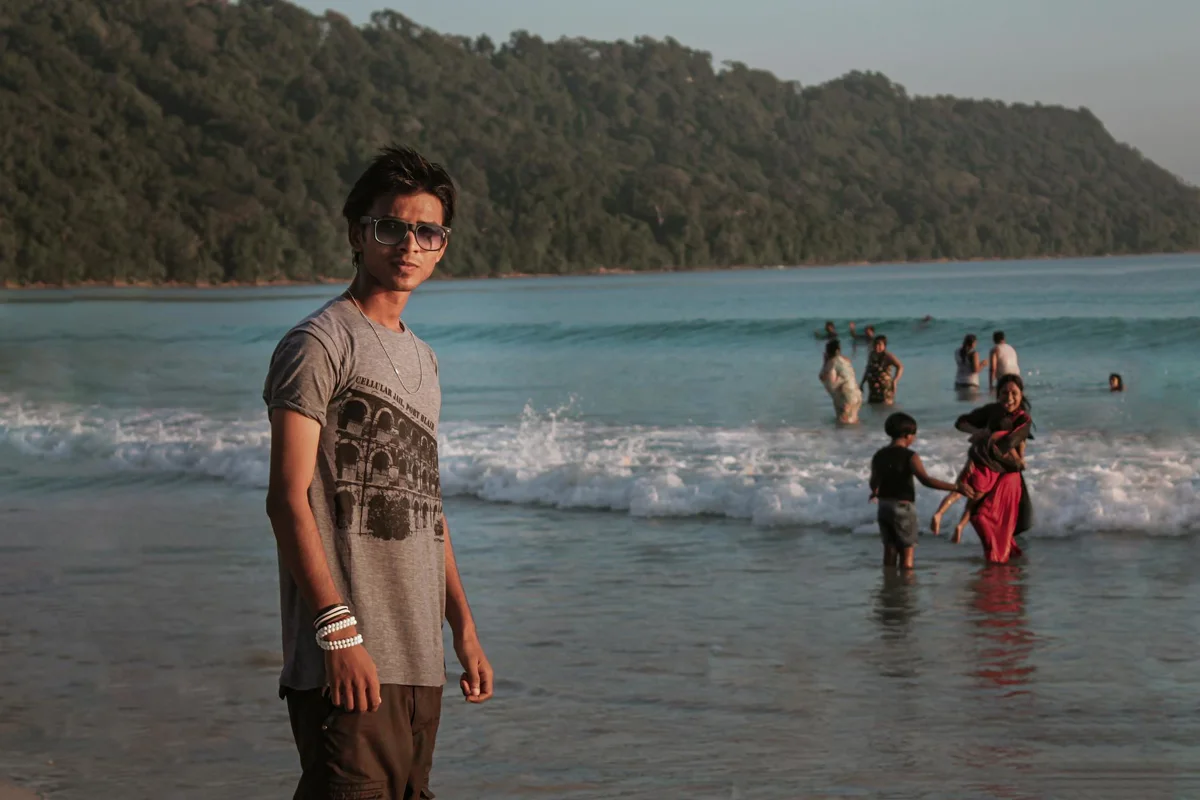
The Andaman Islands are an Indian archipelago in the Bay of Bengal, closer to Burma and Thailand than to mainland India. Decades of restricted access preserved the reefs in near-pristine condition. The Sentinelese tribe made international headlines in 2018. This is a remote, expensive destination with coral biodiversity ranking among the best in the Indian Ocean.
The Andaman and Nicobar Islands form an archipelago of 572 islands in the Bay of Bengal, roughly 1,300 km from the Indian mainland and considerably closer to Burma and Thailand. Administered from Port Blair as a Union Territory of India, the islands have a population of around 380,000 across 8,249 km². Foreign visitors need a Restricted Area Permit (RAP), issued free at the airport for 30 days, covering authorised islands: Havelock, Neil, Long Island, Diglipur. The Nicobar group remains closed to tourists.
Underwater geography: the Andamans sit on an active tectonic plate — the 2004 earthquake and tsunami hit this area directly. The northern islands are volcanic (Barren Island, India's only active volcano); the central and southern islands are coral-fringed tropical. Water clarity is high: visibility 25–40 m, temperature 26–30 °C depending on the month. Seasonal upwelling brings pelagic life. Biodiversity figures: over 250 coral species, 1,200 fish species, consistent sightings of sharks, mantas and turtles.
Top sites around Havelock: 1) Dixon's Pinnacle (isolated seamount, 25–35 m, reef mantas and grey reef sharks). 2) Johnny's Gorge (underwater canyon with schools of trevally and tuna, 18–30 m). 3) Jackson's Bar (pristine coral plateau, 12–25 m). 4) The Wall (vertical drop to 35–45 m). 5) Lighthouse (shallow site with turtles and moray eels, 8–15 m). 6) Aquarium (beginner-friendly shallow reef, 5–12 m). 7) Tribetrack (massive table corals, 15–22 m).
Neil Island and further sites: 1) Bus Stop (shallow coral garden, 8–15 m). 2) Margherita's Mischief (canyon with trevally schools, 18–28 m). 3) K Rock (soft-coral walls, 18–30 m). Long Island: 4) North Reef (corals and reef mantas). Remote sites require a liveaboard: Barren Island (active volcano, pelagic fauna), Invisible Bank (oceanic mantas and sharks), Narcondam (endemic species). Liveaboards depart from Port Blair, typically 7–10 nights.
Logistics and costs: flights to Port Blair (IXZ) from Chennai, Kolkata, Bangalore, Delhi, Hyderabad — no direct international routes. An Indian visa is required before arrival. Dive operators: Barefoot Scuba Havelock, Doongi Dives, Ocean Tribe, Lacadives. Single dive: €35–50. 7-night liveaboard: €2,500–3,500. PADI Open Water course: €350–450. Accommodation on Havelock: guesthouses from €30, hotels €80–200, luxury resorts €200–500.
What catches you off guard: the indigenous peoples. The islands host unique aboriginal tribes — the Sentinelese (North Sentinel Island, zero contact, hostile; killed an American missionary in 2018), the Jarawas (limited contact), the Onge (in a reserve), the Shompen and Nicobarese (Nicobar). Approaching these areas is prohibited and fined. The anthropological context gives the destination unusual depth: pristine reefs coexisting with Palaeolithic-era societies.
What disappoints: the operational realities. The diving season is narrow (October–May; monsoon storms outside that window). Internet on Havelock is unreliable. Some remote sites get cancelled due to sea conditions. The Indian visa process is bureaucratic and not available online in every country. Prices rose after COVID-19, with tourism reopening delayed. Large pelagic encounters are less consistent than in the Maldives or Indonesia. For guaranteed pelagic action, the southern Maldives atolls are a stronger bet.
Bottom line: the Andamans are an Indian Ocean destination for experienced divers with time and budget to spare. Pristine water, exceptional coral and fish life, high visibility, reasonably frequent pelagics. It pairs well with mainland India cultural travel for a 21+ day trip (Delhi, Agra, Jaipur, Chennai, Andamans). For a conventional resort destination with smooth operations, there are easier options. For exclusive reefs preserved by administrative isolation, this is in a category of its own. Best November to April. Liveaboards to Barren Island and Narcondam are the premium tier.