
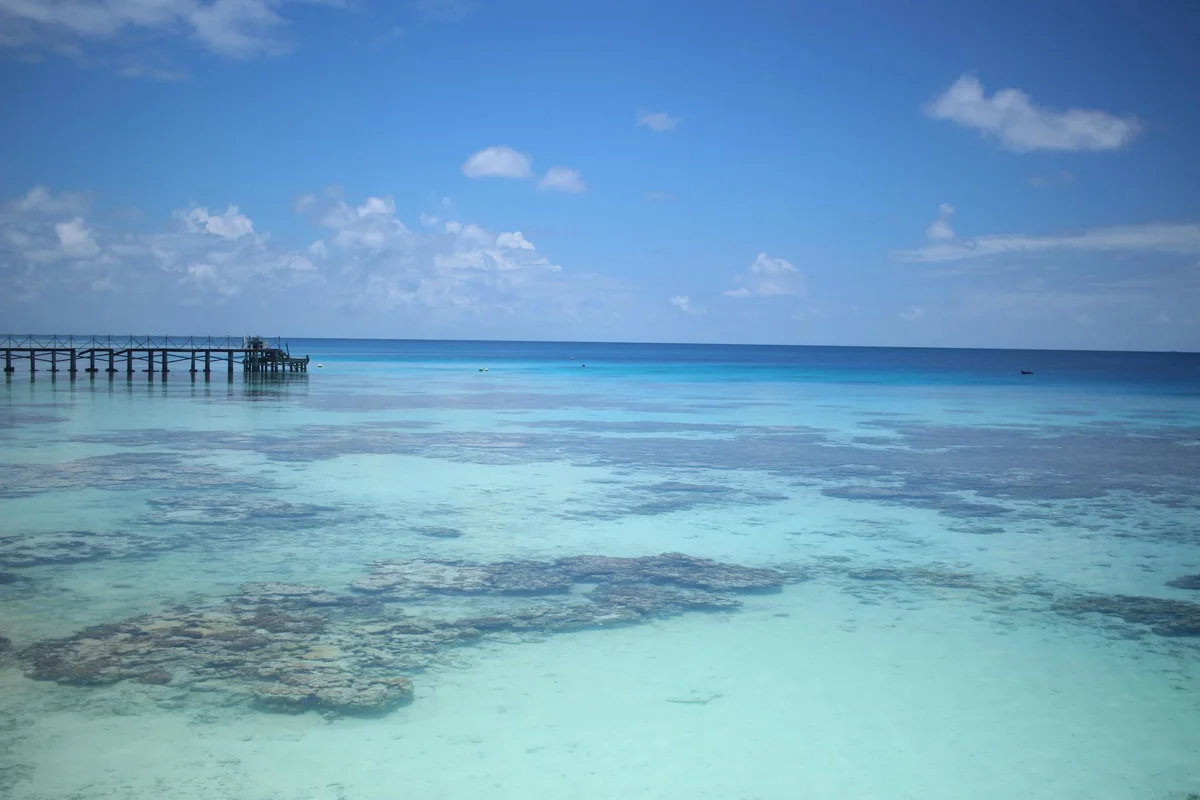
French Polynesia is a French overseas territory of 118 islands in the South Pacific (5 archipelagos). It combines luxury (Tahiti, Bora Bora) with world-class pelagic diving: grey reef shark walls at Fakarava, tigers at Tikehau, manta rays at Tikehau-Rangiroa, humpback whales at Moorea-Rurutu. South Pacific premium destination with direct flights from Paris on Air France.
French Polynesia (French territory, not EU but currency pegged to the euro) is an archipelago of 118 islands across 5 groups: Society (Tahiti, Moorea, Bora Bora), Tuamotu (atolls, best diving), Marquesas (north), Australs (south), Gambier (southeast). Population: 280,000 in 4,167 km². Capital: Papeete (Tahiti). Currency: CFP franc (XPF) tied to the euro (1 € = 119 XPF). Languages: French and Reo Tahitian. Simplified French visa for Europeans (90 days visa-free). One of the most expensive destinations in the Pacific — French pricing plus remote location.
The Tuamotu atolls for diving: the Tuamotus are 76 flat atolls covering an enormous marine area. Main diving sites: 1) Rangiroa (second largest atoll in the world, 1,640 km² inner lagoon, 79 km × 32 km). 2) Fakarava (UNESCO Biosphere Reserve since 2006, two passes with sharks). 3) Tikehau (small atoll with resident manta rays). 4) Manihi (black pearls and diving). 5) Apataki (less-visited atoll). The passes are channels connecting the lagoon to the open ocean — prime corridors for pelagic species.
Fakarava South Pass (Tetamanu): the southern pass at Fakarava ranks among the world's top dive sites. Between June and August, 700+ grey reef sharks (Carcharhinus amblyrhynchos) gather along an underwater wall during a grouper mass spawning event. The sharks exploit the surge in prey. Few places on earth concentrate this many sharks in one formation. Drift dive between 18–25 m. The northern Garuae Pass holds grey sharks year-round. Logistics: guesthouses in Tetamanu village (population: 100).
Other key sites: 1) Tiputa Pass Rangiroa (resident bottlenose dolphins, manta rays and sharks, 12–30 m). 2) Tikehau Manta Cleaning Station (reef mantas at cleaning stations, 12–18 m). 3) Vahitahi Pass Tikehau (grey reef sharks). 4) Avatoru Pass Rangiroa (northern pass with seasonal tiger sharks). 5) Moorea Stingray City (stingrays, shallow, 5–8 m). 6) Bora Bora Faux Pass (reef mantas and lemon sharks, 18–25 m). 7) Rurutu Australs (humpback whales July–October, snorkelling permitted).
Humpback whales: between July and October humpbacks migrate to French Polynesia to breed and calve. It is a South Pacific breeding ground comparable to Tonga. Sightings off Tahiti, Moorea (opposite the Sofitel) and especially Rurutu (Austral archipelago). At Rurutu whale snorkelling is permitted under regulation: minimum 5 m, maximum 30 m distance, groups of 10, sessions capped at 30 minutes. One of few places worldwide where in-water encounters are officially sanctioned.
Logistics and costs: flights to Papeete (PPT) direct from Paris (Air France or Air Tahiti Nui, 22 hours via Los Angeles) or from Auckland, Tokyo, Honolulu, Los Angeles. Inter-atoll connections: Air Tahiti domestic flights. It is an expensive destination — flights from Europe: €1,500–2,500. Dive operators: TopDive (chain, multiple atolls), Tahiti Plongée, Manihi Divers. Cost per dive: €80–110. 5-dive package: €350–500. Accommodation: pensions de famille (family guesthouses) €80–150, hotels €200–500, Bora Bora luxury €800–2,500 per night.
What catches people off guard: the understated luxury. French Polynesia has five-star resorts (Bora Bora, Moorea) but also genuine cultural depth. The pensions de famille offer a more authentic and affordable alternative — lodging with a local family including meals, transfers and cultural experiences. The cuisine is Franco-Polynesian: poisson cru (raw fish in coconut milk), fresh tropical juices, imported foie gras. Polynesian tattoo culture (tatau) traces its origins to French Polynesia and the Marquesas.
Bottom line: French Polynesia is the South Pacific's premium destination with world-class pelagic diving. Grey sharks at Fakarava (700+ peak June–August), manta rays at Tikehau, tigers off Tahiti, humpbacks at Rurutu (July–October). Pairs well with Bora Bora–Moorea luxury or the pension de famille budget circuit. For pelagic wildlife on a tight budget, Philippines or Indonesia make more sense. For dense shark aggregations, optional luxury, Polynesian culture and exceptional water clarity, French Polynesia is a top-tier choice. Recommended May to October.