Bonaire is a Dutch island of 294 km² in the southern Caribbean (off Venezuela). It is a world reference for shore diving with 86 sites accessible from the shore, a marine park since 1979 (one of the oldest in the world), and a coral ecosystem among the best preserved in the Caribbean. Combinable with Curaçao and Aruba (the other ABC islands).
Bonaire is a southern Caribbean island located 80 km off the Venezuelan coast, part of the Dutch Antilles. Together with Curaçao and Aruba it forms the ABC islands. Since 2010 it has been a 'special municipality' of the Netherlands (not an autonomous state like Curaçao and Aruba). Population: 21,000 in 294 km². Capital: Kralendijk. Languages: Papiamentu, Dutch, English and Spanish. No visa required for EU citizens (90 days, it is Dutch territory). Currency: US dollar (USD) since 2011 (previously Netherlands Antillean guilder).
Underwater geography: Bonaire is a coral island (not volcanic). The west coast has a coral barrier that drops quickly to depths of 30–40 m. Water temperature ranges from 26 °C in February to 29 °C in September. Visibility is exceptional (25–45 m year-round). Currents are weak to moderate. Bonaire National Marine Park (established 1979, one of the first in the Caribbean) protects the entire coastline down to 60 m depth; fishing prohibited, moorings regulated, anchoring prohibited. Diving tag mandatory (45 USD per year).
Shore diving: Bonaire has 86 sites marked with yellow stones along the western road. Each site is accessible by car with dive gear (renting a pickup truck is effectively mandatory). The diver arrives, gears up, checks air, enters the water and dives from the shore. The logistics are flexible: 2–4 dives per day as desired, no boat needed. It is a world reference for this format (alongside Curaçao and Florida). Dives are self-directed, not guided.
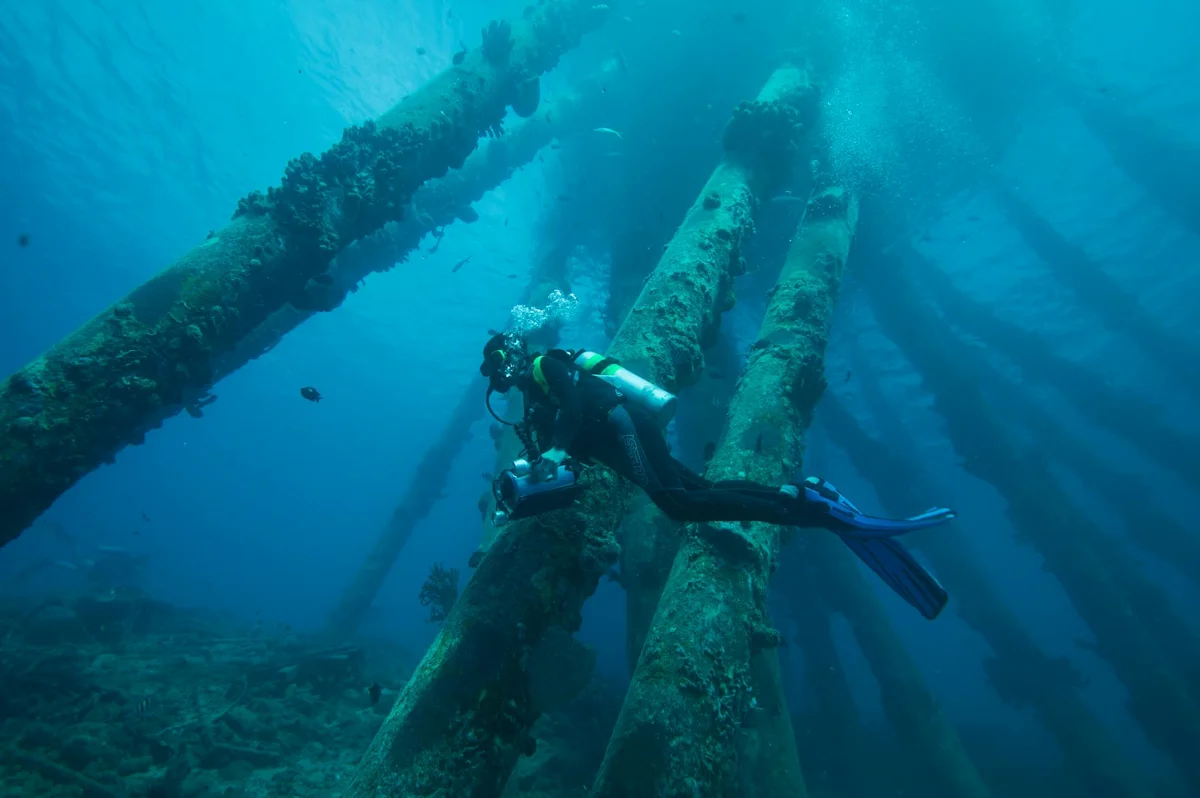
Top sites: 1) Salt Pier (salt dock with corals on pilings, 12–22 m). 2) Hilma Hooker (cargo wreck at 30 m, accessible for recreational divers). 3) 1,000 Steps (staircase access, shallow coral garden, 8–25 m). 4) Karpata (coral wall with abundant marine life, 18–35 m). 5) Klein Bonaire (small island, short ferry, premium sites with sea turtles). 6) Andrea Wreck (commercial wreck at 30 m). 7) Bachelor's Beach (macro site with seahorses, 5–15 m). 8) Country Garden (coral garden with turtles, 5–12 m).
Caribbean marine life: Bonaire has typical Caribbean fauna in good conservation condition. Green and hawksbill turtles (nesting on beaches), tarpon (Megalops atlanticus, a sport fish species), barracuda, angelfish (French, queen), parrotfish, green moray eels, small Napoleon wrasse, octopuses, lobsters. Sharks are rare but present (occasional nurse and tiger sharks). Large pelagic fauna (big sharks, mantas) is scarce — for big pelagic encounters the Caribbean is not the right option. For reef and macro fauna, Bonaire is premium.
Logistics and costs: flights to Bonaire (BON) direct from Amsterdam (KLM, 9 hours), Atlanta, Houston, Miami, Newark, Curaçao. Most convenient connection from Europe: via Amsterdam. Dive centres: VIP Diving, Wannadive, Buddy Dive, Capt. Don's Habitat (historic operator since 1962). Cost per guided dive: 30–40 €. Diving holiday package (accommodation + unlimited diving + pickup rental): 1,200–2,000 € per person per week. PADI Open Water course: 400–500 €. Varied accommodation: guesthouses from 80 €, hotels 150–300 €.
What surprises visitors: the combination with Curaçao and Aruba. The ABC islands have ferries and short flights between them (15–30 minutes). Curaçao offers diving similar to Bonaire (also shore diving) plus a wider cultural scene (UNESCO capital Willemstad, colonial synagogue, colourful streets). Aruba has more limited diving but greater international tourism. For a 14–21 day trip, the three islands deliver a complete Dutch Caribbean experience: intensive diving in Bonaire + culture in Curaçao + relaxation in Aruba. Same currency (USD) and shared languages (English/Papiamentu).
The bottom line: Bonaire is a premium Caribbean shore diving destination with well-preserved coral and autonomous operations. 86 land-accessible sites, a historic marine park (1979), abundant reef and macro fauna. For big pelagic encounters the Caribbean is not the answer (Galápagos or French Polynesia are better options). For dedicated shore diving with full autonomy, no crowded liveaboards and stable premium prices, Bonaire is a world reference. Combinable with Curaçao and Aruba for a complete circuit. Recommended year-round (stable climate, no pronounced rainy season). Direct KLM flights from Amsterdam allow a non-stop trip from Europe.