
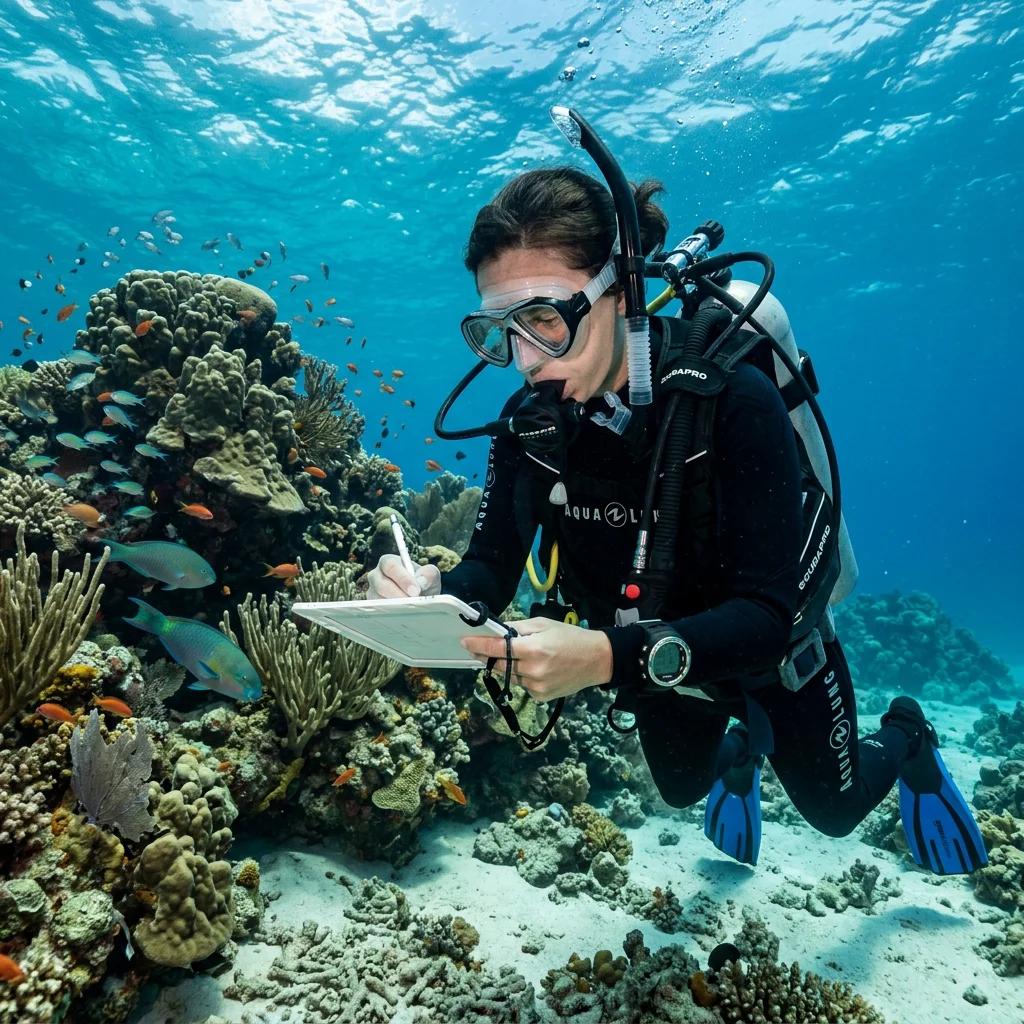
Learn about the legislation governing scuba diving in Spain: Royal Decree 347/2011, restrictions in marine reserves and the division of powers between the State, autonomous communities and municipalities.
Diving in Spain is subject to a complex and fragmented legal framework that many practitioners are unaware of. Regulation is not concentrated in a single body or a single rule, but is distributed among the State, the autonomous communities, and local municipalities. This dispersion creates situations in which a diver can commit an infraction without knowing it.
Royal Decree 347/2011 regulates recreational sea fishing in outer waters. It establishes a prohibition that many are unaware of: it is not permitted to simultaneously use autonomous breathing equipment and fishing gear. Diving with a tank and fishing at the same time is prohibited, regardless of what is being caught.
Order APA/126/2019 establishes specific criteria for diving in marine reserves of fisheries interest: mandatory prior registration, access restrictions to integral reserve zones, and minimum qualification requirements. Non-compliance can result in fines of considerable amounts.
The overlapping of jurisdictions is the most complicated aspect. The State manages outer waters, but autonomous communities have jurisdiction over inner waters with their own regulations. Catalonia, the Balearic Islands, the Canary Islands, Murcia, and Andalusia have regulations that differ in minimum sizes, quotas, closed seasons, or restricted zones.
Marine reserves are where regulations are strictest. Some require using an authorized center, others prohibit unsupervised free diving, and there are seasonal restrictions to protect the reproduction of species.
The case of Tossa de Mar is a paradigmatic example: the combination of a municipal marine reserve, Catalan regional regulations, and State restrictions created confusion for years. Local divers and tourists were fined without being fully aware they were breaking any rule.
Beyond fisheries legislation, it is necessary to consider the regulations for protected natural spaces, the Coastal Law, and local ordinances. In declared bathing areas, diving may be restricted during the summer season. In Natura 2000 sites, prior authorization may be required.
To avoid fines: get informed before each outing, respect maritime signage, do not capture living organisms without a license, and verify whether the area is protected. Accredited dive centers are the best source of local information about the regulations in their area.