Réunion is a French overseas department in the western Indian Ocean, a volcanic island with shore diving accessible coastlines. Since 2011, a crisis involving bull shark (Carcharhinus leucas) attacks has led to strict regulation and prohibited zones for swimming and diving. It is a destination defined by a human-shark conflict unique in recreational diving across the Indian Ocean.
Réunion is a volcanic island of 2,512 km² east of Madagascar, a French department since 1946 (EU territory, euro, French healthcare). It has 870,000 inhabitants on an island with two volcanoes: Piton des Neiges (3,071 m, dormant) and Piton de la Fournaise (2,632 m, active, one of the most frequently erupting volcanoes in the world). The interior is mountainous, spectacular, and a UNESCO World Heritage site. The capital is Saint-Denis. Official language: French.
Underwater geography: Réunion's coastline is predominantly rocky and volcanic. The western side (from Saint-Paul to Saint-Pierre) has a coral barrier reef with a protected inner lagoon. The eastern side has open waters with vertical basalt walls. Water temperature ranges from 22 °C in August to 28 °C in February. Visibility is average (15–30 m). Marine life includes grey reef sharks, reef manta rays, bull sharks (population has grown), green and hawksbill turtles, and migrating humpback whales (July–November).
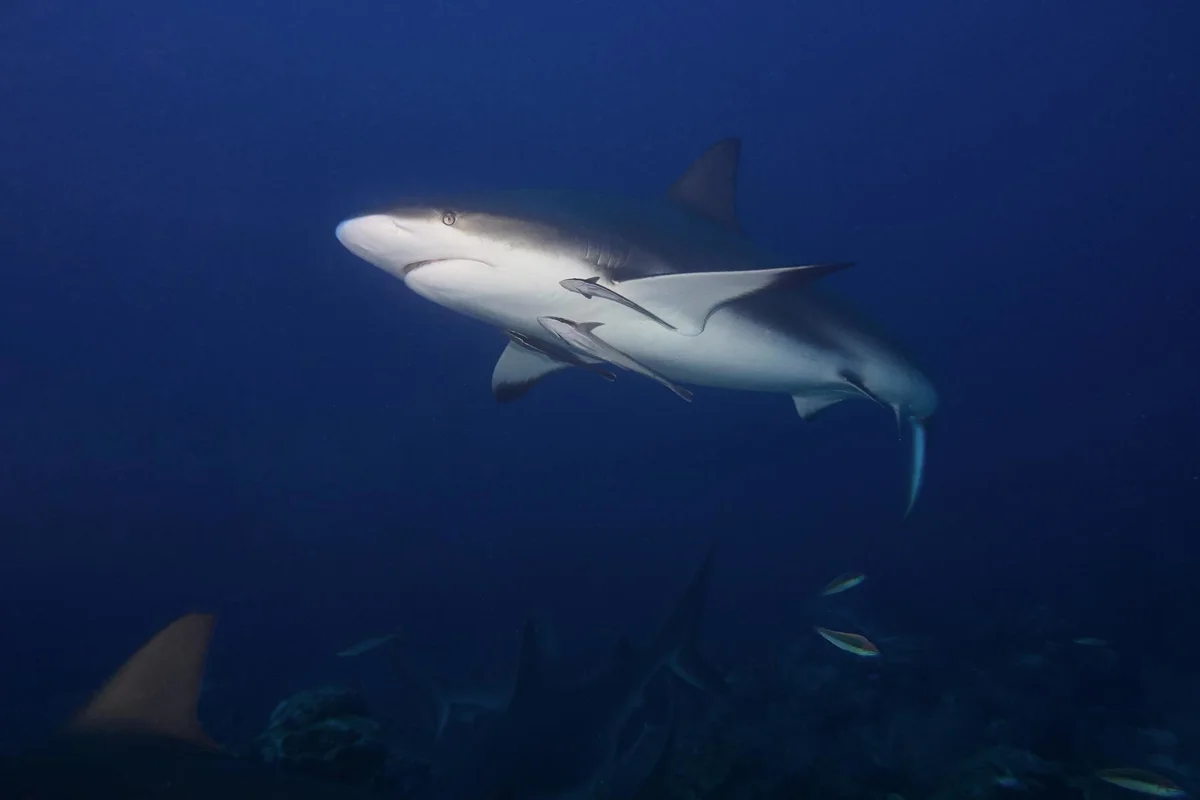
The bull shark crisis: since 2011, Réunion has suffered more than 30 bull shark (Carcharhinus leucas) and tiger shark attacks, with 12 recorded fatalities. The exact cause is debated: climate change, urban runoff, increased prey availability, overfishing of reef sharks that maintained ecological balance, end of shark culling. The response has been to ban swimming and surfing along much of the western coastline. Preventive fishing (Vigie Requins Renforcée) removes large sharks from bathing areas.
Regulated diving: recreational diving is permitted in authorised zones under strict conditions. Operating areas: 1) Saint-Gilles-les-Bains (lagoon and outer reef, main sites). 2) Saint-Leu (deep walls and manta rays). 3) Saint-Pierre (south coast). The Shark Shield (electrical deterrent device) is mandatory at some sites. Dives are always guided with a detailed safety protocol briefing. This is technical, heads-up diving — not relaxed reef cruising.
Notable dive sites: 1) La Passe (Saint-Gilles, marine traffic channel at 18–30 m). 2) La Tour (isolated pinnacle at 30 m, manta rays). 3) Le Tombant (vertical wall to 35 m). 4) Maharani Wreck (wreck sunk in 2012 at 38 m). 5) Sec Jaune (bonito and tuna shoals at 25 m). 6) Cap La Houssaye (soft coral walls at 18–25 m). Reef manta rays are common at Saint-Leu (best season August–October).
Humpback whales: between July and November, humpback whales migrate through the Mozambique Channel. Réunion is a transit zone (not a breeding ground like Madagascar or Tonga). Boat encounters are frequent; snorkelling is possible under strict regulation (8 people, 100 m distance, limited time). It is a more comfortable alternative than Mayotte or Comoros (better infrastructure) for encounters with migrating cetaceans. Direct Air France flights from Paris allow a non-stop journey.
Logistics and costs: flights to Saint-Denis (RUN) direct from Paris via Air France or Corsair, and via Mauritius (15-minute flight). As an EU territory, no visa is required. Currency: euro. Dive centres: Bleu Marine Réunion (Saint-Gilles), O2 Réunion (Saint-Leu), Plongée Australe (Saint-Pierre). Cost per dive: €55–75. 6-dive package: €320–400. Whale excursion: €80–120. Accommodation: guesthouses from €60, hotels €100–200. French food (expensive) and local Créole cuisine (cheap).
The bottom line: Réunion is a comfortable French destination in the Indian Ocean with diving regulated by the bull shark crisis. Reef manta rays, migrating humpback whales, volcanic walls. The operation is European quality but the shark context imposes strict protocols. It combines well with inland tourism (volcanoes, cirques, UNESCO hiking). For a destination with abundant pelagic life and unrestricted diving, there are better options in the Indian Ocean (Maldives, Seychelles). For a mixed destination with French culture, inland nature, and controlled diving, Réunion is a strong choice.