
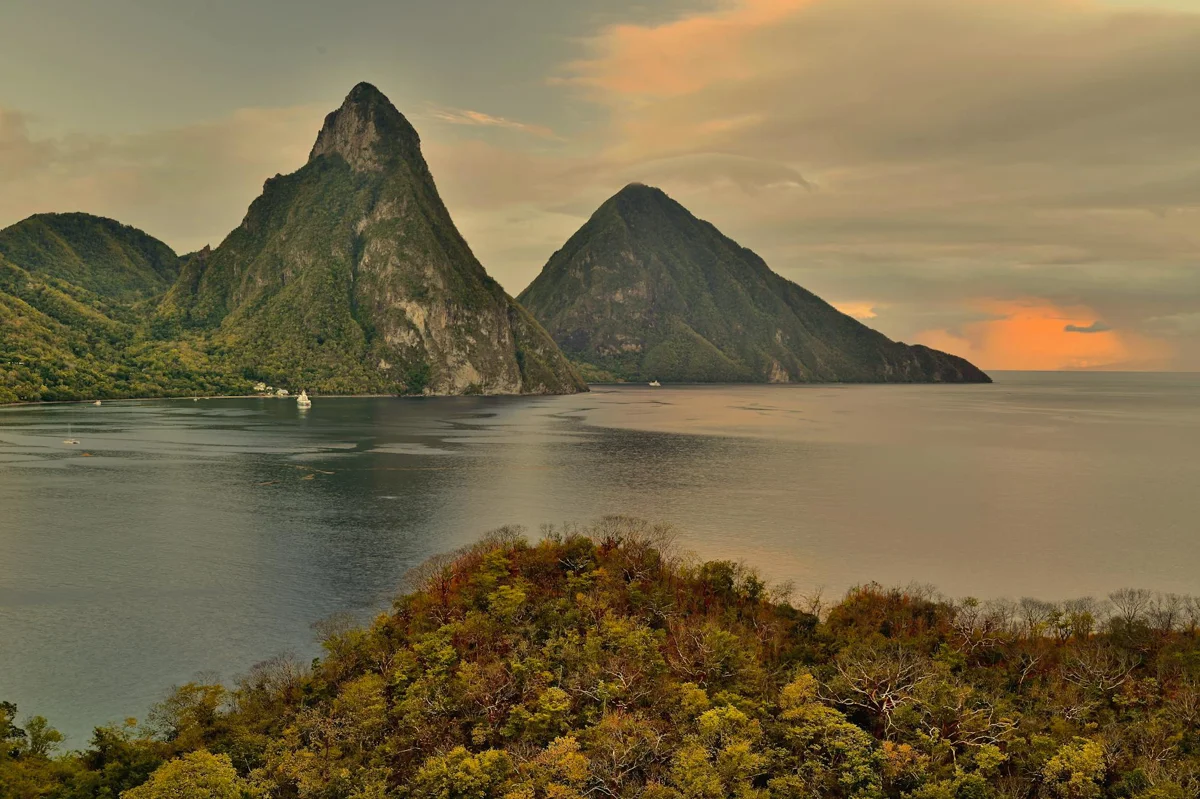
Saint Lucia is a volcanic island in the eastern Caribbean, best known for the twin Pitons (UNESCO World Heritage). Diving centres on the west coast with vertical walls, drift dives and coral pinnacles in the shadow of Petit Piton (743 m) and Gros Piton (798 m). Works well combined with land adventure and is a popular honeymoon destination.
Saint Lucia is a 616 km² volcanic island in the eastern Caribbean, sitting between Martinique to the north and St. Vincent to the south. Independent since 1979 (former British colony), it has around 180,000 inhabitants. Capital: Castries. Languages: English (official) and French Creole (local). A well-developed tourist destination with luxury resorts and cruise traffic, though Caribbean character is intact. No visa required for EU and UK nationals (42 days). Currency: Eastern Caribbean dollar (XCD).
The UNESCO Pitons: Petit Piton (743 m) and Gros Piton (798 m) are two near-perfect conical volcanic spires declared UNESCO World Heritage in 2004. They define the national identity. The surrounding area — Soufrière, Anse Chastanet, Anse des Pitons — concentrates most of the diving. Underwater slopes of the Pitons drop sharply to 30–40 m depth, creating vertical walls reachable from shore or a short boat ride.
Underwater geography: Saint Lucia is volcanically active (Sulphur Springs, onshore fumaroles). The west coast (Castries–Soufrière) is sheltered from swell with clear water. Sea temperature ranges from 26 °C in February to 29 °C in September. Visibility: 18–30 m. Marine life is typical eastern Caribbean: angelfish, parrotfish, green and hawksbill turtles, occasional large fish (barracuda, jacks), moray eels, lobsters. Coral health is moderate — some degradation from tourism pressure.
Top dive sites: 1) Anse Chastanet Reef (shallow coral garden, good for beginners, 5–15 m). 2) Fairyland (coral garden with schooling fish, 12–22 m). 3) Pinnacles (four coral pinnacles near shore, 12–22 m, drift dive with current). 4) Superman's Flight (drift dive along vertical walls, 18–30 m). 5) Lesleen M Wreck (cargo ship sunk in 1986 at 18 m, lots of marine life). 6) Coral Gardens (coral gardens in Soufrière, 10–25 m). 7) Anse Cochon (shallow, turtles, 8–18 m). This is a drift and wall diving destination, not a big-animal spot.
Pinnacles and drift dives: drift diving — moving with the current rather than fighting it — is the defining format on Saint Lucia's west coast. Currents run moderate, around 1–1.5 knots. Pinnacles, the flagship site, is a series of four coral spires near Anse Chastanet with consistent current flow. It is dynamic diving, not lazy sightseeing, and suits divers with some current experience. Beginners stick to sheltered shore sites like Anse Chastanet Reef.
Logistics and costs: flights to Saint Lucia arrive at UVF (Hewanorra International, south of the island), with direct services from London (BA, Virgin Atlantic), Frankfurt (Condor), Toronto, New York and Miami. Most convenient from Europe: via Frankfurt or London, roughly 8 hours. Dive operators: Scuba Steve's, Anse Chastanet Resort Diving (long-established), Eastern Caribbean Diving, Action Adventure Divers. Single dive: €50–65. Six-dive package: €250–350. PADI Open Water course: €450–550. Accommodation ranges from guesthouses at €80/night to hotels €150–300 and high-end resorts €400–1,500 (Jade Mountain, Sugar Beach).
What catches visitors off guard: the land adventure. Saint Lucia pairs diving with a Gros Piton hike (4 hours return, 798 m climb, spectacular UNESCO views), Sulphur Springs (drive-in volcanic complex with sulphur mud baths), Diamond Falls (waterfall with botanical garden), rainforest zip-lining and Pigeon Island National Park. For a trip mixing diving with land adventure and romance, Saint Lucia sits near the top of the eastern Caribbean.
Bottom line: Saint Lucia is an eastern Caribbean drift-and-wall destination with dramatic topside scenery (UNESCO Pitons). It pairs well with land adventure (Gros Piton, Sulphur Springs) and luxury stays (Anse Chastanet, Jade Mountain). For a pure coral-reef diving holiday, Bonaire wins. For a combination of diving, volcanic landscape, land activities and optional luxury, Saint Lucia is the standout pick in the eastern Caribbean. Best season: November to June (dry season). Can be combined with Martinique (north) or St. Vincent (south) for a Lesser Antilles circuit.