
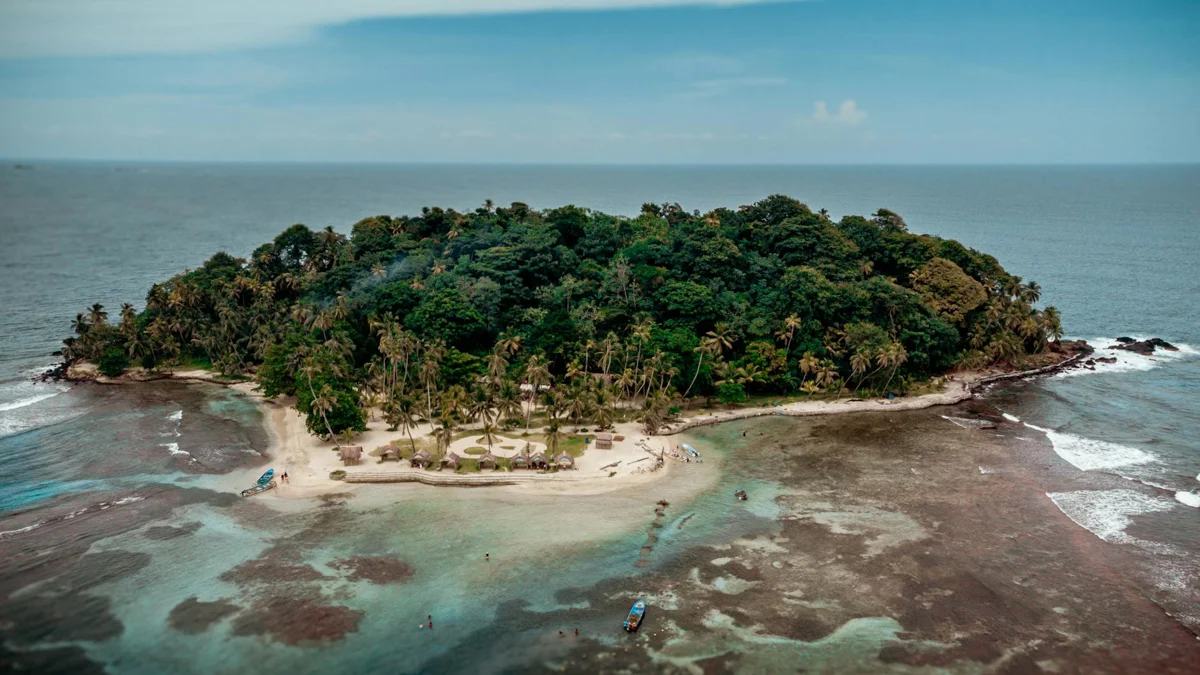
São Tomé and Príncipe is a two-island volcanic archipelago in the Gulf of Guinea, sitting on the equator off the coast of Gabon. One of the least-visited countries on Earth, it barely registers on the dive circuit. Vertical walls, Atlantic pelagic life and migrating humpback whales make it a genuine explorer's destination, not a packaged resort trip.
São Tomé and Príncipe (officially the Democratic Republic of São Tomé and Príncipe) is a two-island volcanic archipelago in the Gulf of Guinea, straddling the equator 250 km off the Gabonese coast. Population: 219,000 in 1,001 km². Capital: São Tomé. Official language: Portuguese (former Portuguese colony until 1975). Fewer than 30,000 tourists visit each year, making it one of the least-visited countries in the world. Currency: dobra (STN), not easily exchangeable — bring euros.
Underwater geography: both islands are volcanic, with vertical walls dropping fast to depths exceeding 1,000 m. Coastal shelves are narrow and the drop-off to open ocean is almost immediate. Water temperature ranges from 24 °C in September to 28 °C in March. Visibility is good during the dry season (June–September): 25–40 m. Atlantic tropical fauna: barracuda, trevally, tuna, reef sharks, oceanic manta rays, migrating humpback whales (July–October), green and hawksbill turtles.
Dive sites on São Tomé: 1) Ilhéu das Cabras (islet off the capital, vertical walls, 15–30 m). 2) Sete Pedras (seven rocky pinnacles, abundant marine life, 18–35 m). 3) Cabo Bom Bom (walls and caves, 20–40 m). 4) Ilhéu das Rolas (equatorial crossing point, wall and sandy sites, 12–25 m). 5) Fernão Dias (commercial wreck in shallow water, 8–15 m). On Príncipe (the smaller northern island): 6) Bom Bom Reef (Atlantic corals and reef manta rays). 7) Ilhéu Bom Bom (coral garden).
Humpback whales: from July to October humpback whales migrate to the Gulf of Guinea to breed and calve. It is a poorly documented breeding ground with frequent encounters. The islands sit on an important migration route alongside mainland Gabon. Boat-based sightings with local NGOs (MARAPA, ATM Príncipe) combine tourism with scientific research. Snorkelling is possible under regulation. Green and hawksbill turtles nest on Príncipe beaches (July–March).
Logistics and costs: flights to São Tomé (TMS) from Lisbon (TAP, 1–2 flights per week) or via Accra/Luanda. Tourist visa on arrival (simplified visa, €30 for 30 days). As a remote destination, airfares run high (€700–1,000 from Europe). Limited tourist infrastructure: few hotels, few guesthouses. On Príncipe accommodation is scarce and expensive (essentially only Bom Bom Resort, €250–400 per night). Dive centres: Atlantic Diving Center (São Tomé), Bom Bom Diving (Príncipe). Cost per dive: €60–80.
What surprises you: the terrestrial nature. São Tomé and Príncipe are tropical islands with virgin forest, waterfalls, historic cocoa plantations (former cocoa-producing colony) and endemic biodiversity. Príncipe has been a UNESCO Biosphere Reserve since 2012. Obô National Park covers 30% of the land area. As a combined diving, land-based nature and Portuguese colonial culture destination, nothing else in Africa compares. Pairs well with Gabon or Cameroon for an African safari.
What disappoints: the logistics. Air connections are limited and expensive. Transfers to Príncipe (internal flight or 7-hour ferry) are unreliable. Hotel supply is thin and quality is mediocre. Dive centres operate at half capacity with limited guides. The operational season is narrow (June–October; outside that, heavy rains). If you need solid tourist infrastructure, better options exist. If you want an exclusive Atlantic-African destination with no dive crowds, nothing else fits.
The verdict: São Tomé and Príncipe suits explorers with time and budget. Tropical Atlantic waters free of dive tourism, pelagic fauna, seasonal humpback whales, nesting turtles, virgin forest and Portuguese-African culture. Not the destination for package holidays with smooth operations. The right choice for anyone chasing an unknown Atlantic-African corner of the circuit. Recommended for divers with 80+ logged dives and experience in remote destinations. Combinable with a Gabon or Cameroon safari for a full three-week African trip.