
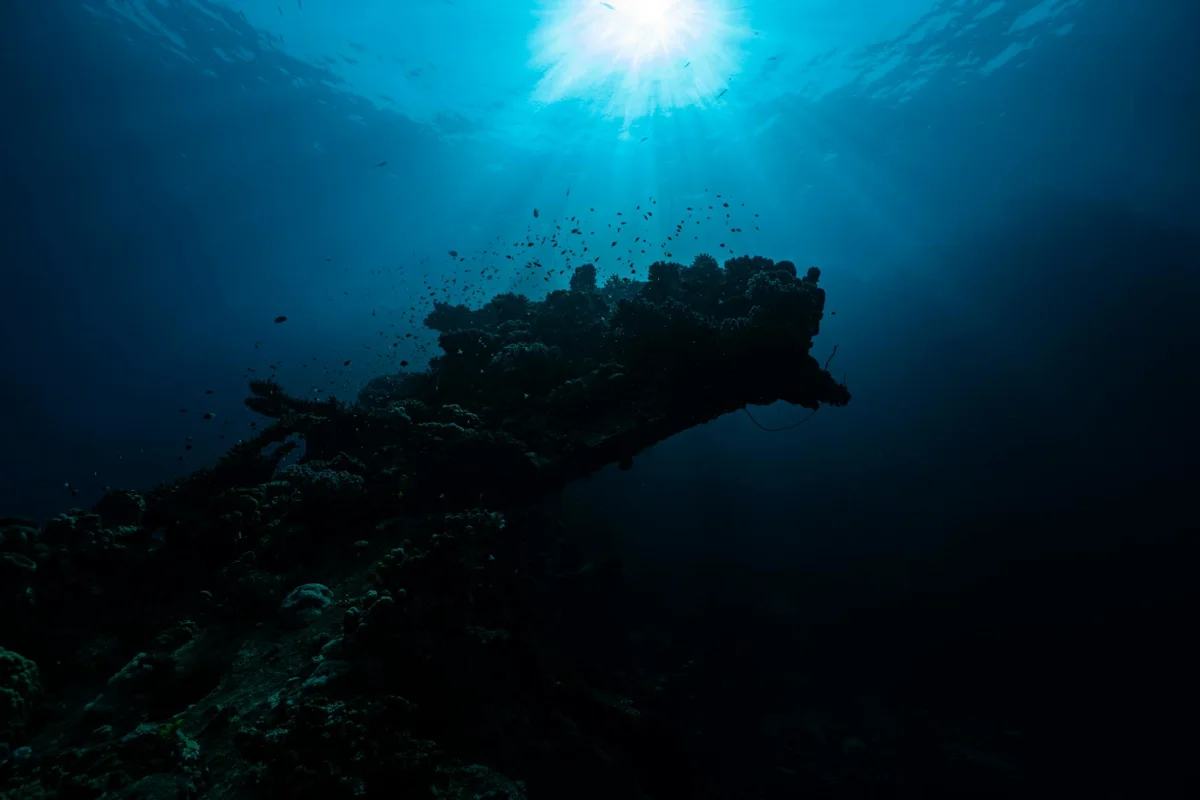
Saudi Arabia opened to tourism in 2019 and is developing 1,800 km of Red Sea coastline that remains virtually untouched for recreational diving. The NEOM zone (Tabuk) and the Farasan archipelago hold reefs in pristine condition, free from Egypt's tourist pressure. It's tomorrow's Red Sea destination: expensive now, unmatched in biodiversity, and completely crowd-free.
Saudi Arabia has 1,800 km of Red Sea coast, running from the Jordanian border in the north down to Yemen in the south. Until 2019 the country was essentially closed to tourism. The introduction of electronic tourist visas (e-visa, €80 online) and the megaprojects NEOM, Red Sea Project and AMAALA have started building tourist infrastructure. The reefs are in pristine condition — none of the industrial-scale fishing or rampant tourism that has marked the Egyptian coast to the north.
Underwater geography: the central Saudi Red Sea holds corals in better shape than Egypt, simply because of less accumulated human pressure. Water temperatures run high (24–32 °C) due to the basin's shallower profile and stronger solar exposure. Visibility is outstanding (30–50 m) thanks to low pollution. Notable species: grey reef sharks, thresher sharks, oceanic manta rays, reef mantas, dugongs, pilot whales on migration, giant Napoleon wrasse noticeably larger than in Egypt because of far less fishing pressure.
Operational diving zones: 1) NEOM (north, Jordan border) — future tourist megaproject, accessible via Tabuk, still very limited infrastructure. 2) Yanbu (north-central) — industrial port with accessible nearby reefs. 3) Jeddah and Al-Lith (central) — current hub for recreational diving, several active dive centres. 4) Farasan Archipelago (south, Yemen border) — over 100 islands with virgin reefs, national park since 1996, exceptional biodiversity. 5) AMAALA (future) — luxury development under construction.
Accessible highlight sites: 1) Abu Galawa (Al-Lith, coral walls, 18–30 m). 2) Seven Sisters (south of Jeddah, coral pinnacles). 3) Marsa Sharm (south of Al-Lith, manta cleaning station). 4) Farasan Bank (oceanic mantas and sharks, liveaboard required). 5) Dolphin Reef Yanbu (resident bottlenose dolphins). Liveaboard is the optimal way to reach remote sites: Saudi and Egyptian boats operating out of Hurghada run Saudi routes under special permits.
Logistics and costs: direct flights to Jeddah (JED) from Madrid, Frankfurt, Paris, London, Rome. E-visa online €80 (90 days, multiple entries). Alcohol is prohibited throughout the country, including hotels. Modest dress required for women in public spaces. Established dive centres: Desert Sea Divers (Jeddah), Dream Divers (Al-Lith), Liveaboard Sundowner (Jeddah). Cost per dive: €50–80. Seven-night liveaboard: €1,800–2,500, pricier than Egypt.
Compared with Egypt: Saudi advantages — healthier corals, more abundant marine life, uncrowded sites, scope for genuine exploration. Downsides — everything costs up to 50% more than Egypt, limited infrastructure, cultural restrictions (alcohol, dress codes), fewer dive centres and guides, still very few liveaboards operating. For divers who know Egypt well and want the next frontier, Saudi Arabia is the natural step: the same Red Sea as it was thirty years ago.
What falls short: operations still have friction points. Permits for certain zones require two to four weeks of advance coordination. Distances between sites are substantial — Al-Lith is a four-hour drive from Jeddah. Hotel options outside Jeddah are thin. Working languages are Arabic and basic English; no guides speak Spanish or French. For divers who value convenience, Egypt is easier. For those after exploration, Saudi Arabia is the call.
The bottom line: Saudi Arabia's Red Sea is the new frontier of Red Sea diving, accessible since 2019 with an e-visa. Pristine reefs and abundant marine life at a premium price, with operations still limited. For an exclusive, exploratory trip it's ideal. For a mainstream family destination, Egypt or Jordan make more sense. The golden window is now — 2026 to 2030 — before the planned development of NEOM and AMAALA reshapes the coastline. Recommended for divers with 50+ dives looking for something beyond the familiar Red Sea.