
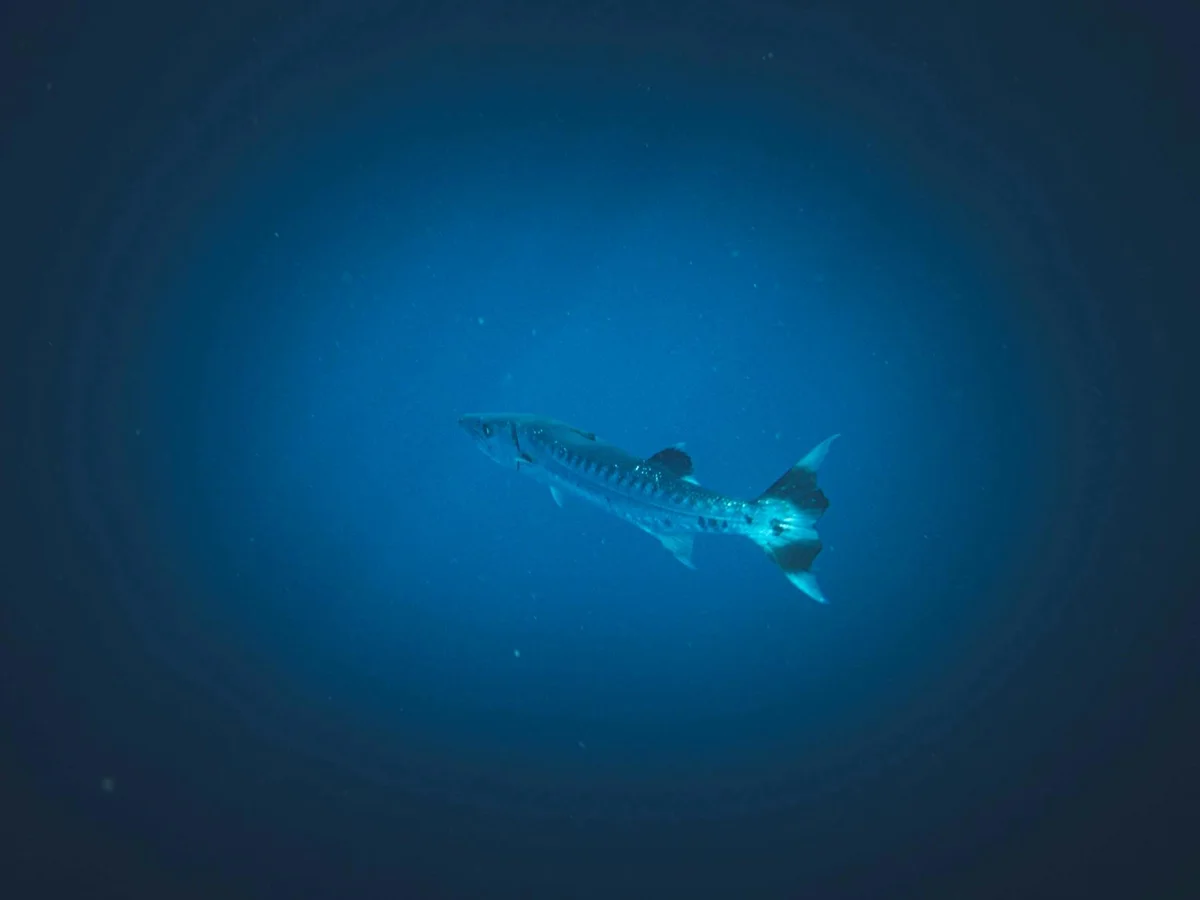
Sipadan is a tiny island off the northeast coast of Malaysian Borneo, in the Celebes Sea. Cousteau named it one of the five best dives on the planet. In 2004 Malaysia closed the island to tourist accommodation, capping entries at 120 divers per day across all operators. That cap has kept the wildlife intact in a way almost nowhere else managed.
Sipadan measures just 12 hectares and sits in the southern tip of Sabah, Malaysia's easternmost state. It is Malaysia's only true oceanic island, built on the crown of an extinct submarine volcano. The reef wall drops from 5 m to 600 m within a few fin-kicks of shore. That seamount geography explains everything: the mount intercepts open-ocean currents and turns the site into a biological rest stop for green turtles, reef sharks, tuna and enormous schools of bigeye trevally.
The Malaysian government ended all resort accommodation on the island in 2004 under conservation pressure. Before that, five resorts were actively degrading coral and substrate. Today, divers base themselves on nearby Mabul or Kapalai and boat out to Sipadan each morning. The hard cap stands at 120 permits per day shared across every operator, allocated by monthly quota. Getting one requires planning well in advance.
Securing a permit means booking through an accredited operator on Mabul — Borneo Divers, Scuba Junkie, Sipadan-Mabul Resort among others — at least six to nine months ahead. Permits are assigned in booking order. A typical three-to-five-night Mabul package includes one to three Sipadan days depending on availability. Lucky guests get back-to-back Sipadan days; others get one and fill the rest with Mabul dives, which are worth doing in their own right.
The main Sipadan sites: Barracuda Point for classic drift dive with a barracuda tornado of thousands in tight formation; South Point for drift with sharks; Coral Garden for turtle-dense coral; Hanging Gardens for soft coral walls; Lobster Lair for macro work. Depths run 12–30 m, water holds 27–29 °C year-round, visibility consistently 30–40 m. Fifty to a hundred green and hawksbill turtles in a single dive is a normal report.
First-time visitors are struck less by the numbers and more by the behaviour: the wildlife ignores you. Turtles graze sponges at arm's length without flinching. Whitetip and grey reef sharks cruise past metres away without adjusting course. The barracuda tornado at Barracuda Point can pack 5,000-plus fish spinning in synchrony. This is what tropical diving looked like in the 1970s before mass tourism reached the reefs.
Mabul pairs naturally with Sipadan as a muck diving base. The contrast is deliberate: Sipadan is walls and pelagic action; Mabul is sandy-bottom muck diving and macro. Pygmy seahorses, frogfish, mimic octopus, blue-ringed octopus — the full roster of Asian macro subjects at their best. For serious underwater photographers the Sipadan-plus-Mabul combination ranks among the top pairings globally.
Getting there: fly to Kuala Lumpur from Europe with one stop (Doha, Dubai, Istanbul), then a domestic flight to Tawau in Sabah, followed by road transfer and a short boat ride to Mabul. Door-to-door runs 24–30 hours. Accommodation packages of five to six nights in Mabul with eight to ten dives all-in cost roughly €1,200–2,000. Flights from Europe add €1,000–1,400. Total per person: approximately €2,500–3,500.
Few marine reserves anywhere in the world have held their calibre the way Sipadan has. The 120-permit ceiling, the removal of on-island accommodation, and serious enforcement have produced a reef where the predator-prey balance still works. For a week in Borneo combining Sipadan and Mabul the dive quality outperforms almost any Pacific destination. For underwater photographers it belongs on every serious list.