
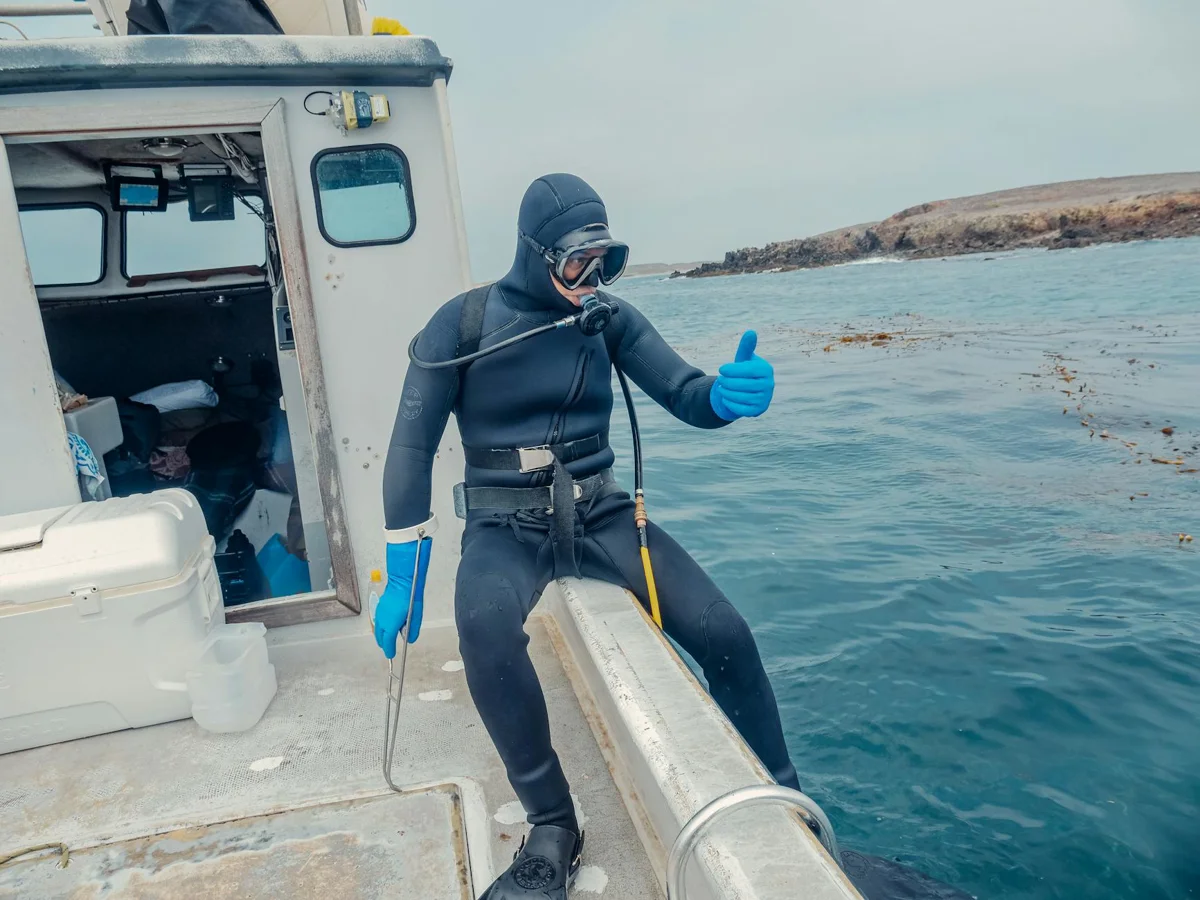
Shivering inside your wetsuit reads as uncomfortable but manageable. It's actually the last warning before the body enters a dangerous spiral. Mild hypothermia impairs judgment before core temperature drops, and underwater that means bad decisions at the worst possible moment. Knowing how to read cold is more important than learning to tough it out.
Diving in Galicia, May, water at 14°C, 7 mm semidry wetsuit. We'd been at 22 m for 35 minutes checking out a wreck when I noticed my buddy Pablo wasn't responding to signals. Not narcosis — he was frozen. He'd stopped shivering two minutes earlier, and that worried me far more than if he'd still been trembling.
The human body enters mild hypothermia below a core temperature of 35°C. Underwater it happens faster than most people expect because water dissipates heat 25 times quicker than air. A wetsuit at 14°C on the surface gives you a good 60–90 minutes. At 22 m with current, that window cuts in half.
It happens in stages. First you struggle to hold neutral buoyancy because your muscles are tight. Then shivering starts — soft, almost imperceptible. Controlled shivering is actually good: the body is fighting back, still working. The problem is when shivering becomes uncontrollable and then stops. That last part — the shivering stopping — doesn't mean you're better. It means the body is giving up.
The signs, in order, worth keeping in your head: difficulty concentrating, slow response to signals, clumsy hands (trouble releasing the BCD), purple lips visible through the water, vacant stare. Two of those on your buddy and you end the dive. It's not that he's cold — he's hypothermic.
There's an important detail with neoprene. A brand-new 7 mm suit insulates far better than one with 200 dives on it. Neoprene compresses over years and loses its insulating power. Plenty of divers buy a suit, use it for five years, and one day they're freezing at the same depth they always dive without understanding why. The suit is no longer effectively 7 mm — it's 4–5 mm of real insulation.
The difference between a wetsuit and a drysuit below 12°C is enormous. A drysuit with wool or thinsulate undergarments lets you do 90-minute dives at 8°C without getting cold. But it requires a proper course, different weighting, and a different buoyancy technique. Skipping the drysuit course to save €200 is one of the dumbest decisions you can make.
When you surface hypothermic, the body doesn't recover just by climbing into the boat. Peripheral blood rushes back to the core and can cause blood pressure drops, dizziness, even fainting. Hot drinks yes, but never alcohol: it dilates vessels and accelerates heat loss. Get the suit off quickly, dry clothes, thermal blanket — and if shivering is heavy for more than 30 minutes after surfacing, get to emergency care.
My personal rule after a few close calls: if I'm shivering consistently underwater for more than 5 minutes straight, I start going up. I don't wait for it to stop. I don't wait for my buddy to say something. I go up. Cold kills more experienced divers than beginners — because beginners abort at the first chill, and experienced divers think they can handle it.