
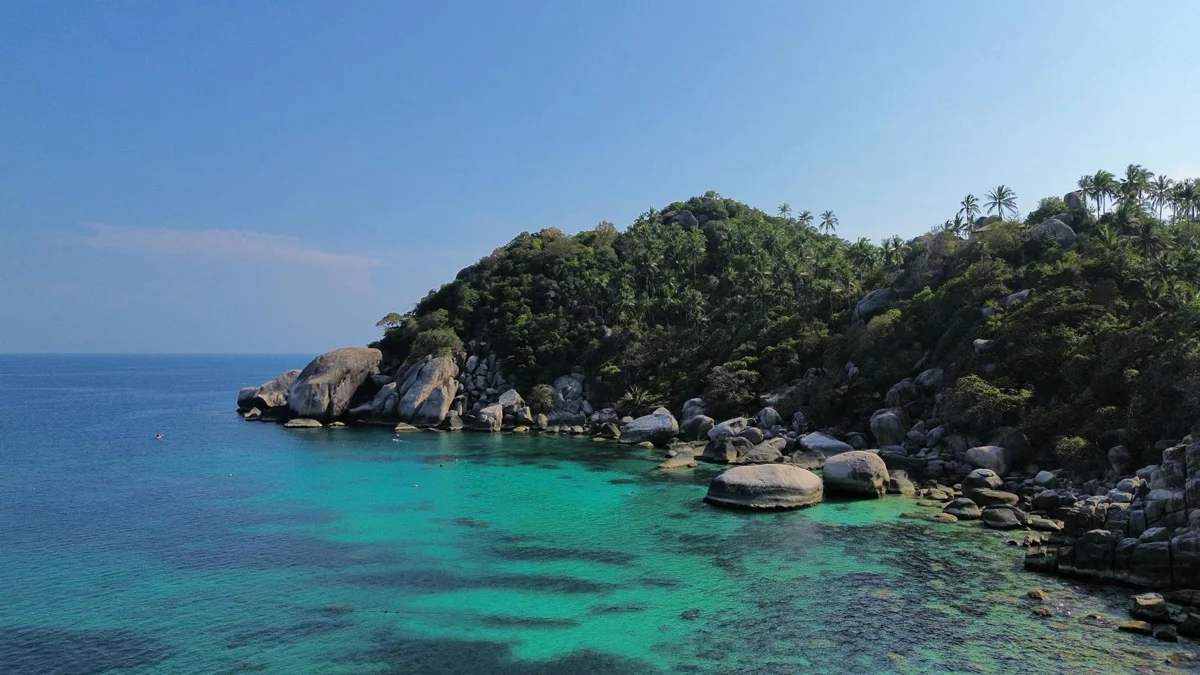
The Similan Islands form a marine national park off Khao Lak in the Andaman Sea. Access is restricted to mid-October through mid-May, while the southwest monsoon keeps waters closed the rest of the year. That narrow window makes planning critical. For European divers after a quality tropical destination at a sensible price, the Similans are a direct competitor to the Maldives.
The Similans are nine small granite islands sitting 70 km west of Khao Lak on Thailand's western coast. Together with Surin to the north and Richelieu Rock — an isolated seamount between the two island groups — they form the core of Andaman Sea diving in Thailand. Khao Lak is the main departure point. Liveaboards run 4–6-day itineraries here, while speedboat day trips from Khao Lak reach the park in around 1.5 hours.
The operational season runs strictly from 15 October to 15 May. Beyond those dates the southwest monsoon closes the national park and shuts all operations. That enforced closure is precisely what keeps the reefs in relatively good shape: five months without diving pressure each year allows meaningful recovery. Compared to year-round tropical destinations, the Similans show less bleaching and higher biodiversity.
The headline dive sites: Elephant Head Rock, a granite maze of caves and swim-throughs; Beacon Reef Wreck, a yacht sitting at 25 m; Three Trees, a drift dive with reliable current; East of Eden, a coral garden plateauing at 18 m; and West of Eden, a wall covered in reef fish. Depths run 12–30 m, water temperature 27–30 °C, visibility 20–30 m. The Surin Islands further north have quieter diving but better odds of manta rays and the occasional whale shark.
Richelieu Rock stands apart. This isolated pinnacle 30 km northeast of the Similans was discovered by Cousteau in the 1980s. It rises from 50 m to barely 1 m below the surface, smothered in purple soft coral, sea fans, sponges, and dense reef life. Whale sharks pass through between February and April; manta rays are regular visitors. It is probably the most-photographed dive site in Thailand, and the reputation is warranted.
Getting there: fly into Phuket or Krabi from Europe with a single connection via Doha or Dubai, then transfer overland to Khao Lak (1.5 hours). Double rooms in Khao Lak start around €50–150 per night. Major dive operators include Sea Bees, Khao Lak Scuba Adventures, and Wicked Diving. Liveaboards cost €800–1,500 for a 4–6-day trip. Day trips with three dives run €130–180. Thai and English are universal at dive centres; German and French are widely spoken.
The real surprise is how straightforward the logistics are. Thailand is an easy destination for European divers: cheap flights in shoulder season, mature tourist infrastructure, a wide range of accommodation, excellent food, and prices 30–40 % below Maldives or Philippines equivalents. For a first dive trip to Asia, the Similans are the pragmatic choice. Couples or families where one person dives find Khao Lak works well as a mixed beach and diving base.
The downside is the crowds. The Similans became popular and liveaboards multiplied accordingly. During the peak months of December through February, 20+ vessels can share the national park simultaneously. Popular sites like Richelieu Rock fill fast. The straightforward fix is to travel in the shoulder seasons — October–November or April–May — when diver numbers drop by roughly half and prices fall around 20 %. The reefs did suffer partial bleaching in 2010 and 2016 events, though recovery is ongoing.
Overall, Thailand works well for European divers who want a well-organised, affordable tropical destination. The Similans and Richelieu Rock rank among the world's best dive sites at mid-range prices. For a week's diving between October and May, there is no more accessible tropical option with the same quality-to-price-to-logistics ratio. For elite-only diving there are more exclusive alternatives; for high-quality diving at moderate cost, Thailand is a consistent winner.