
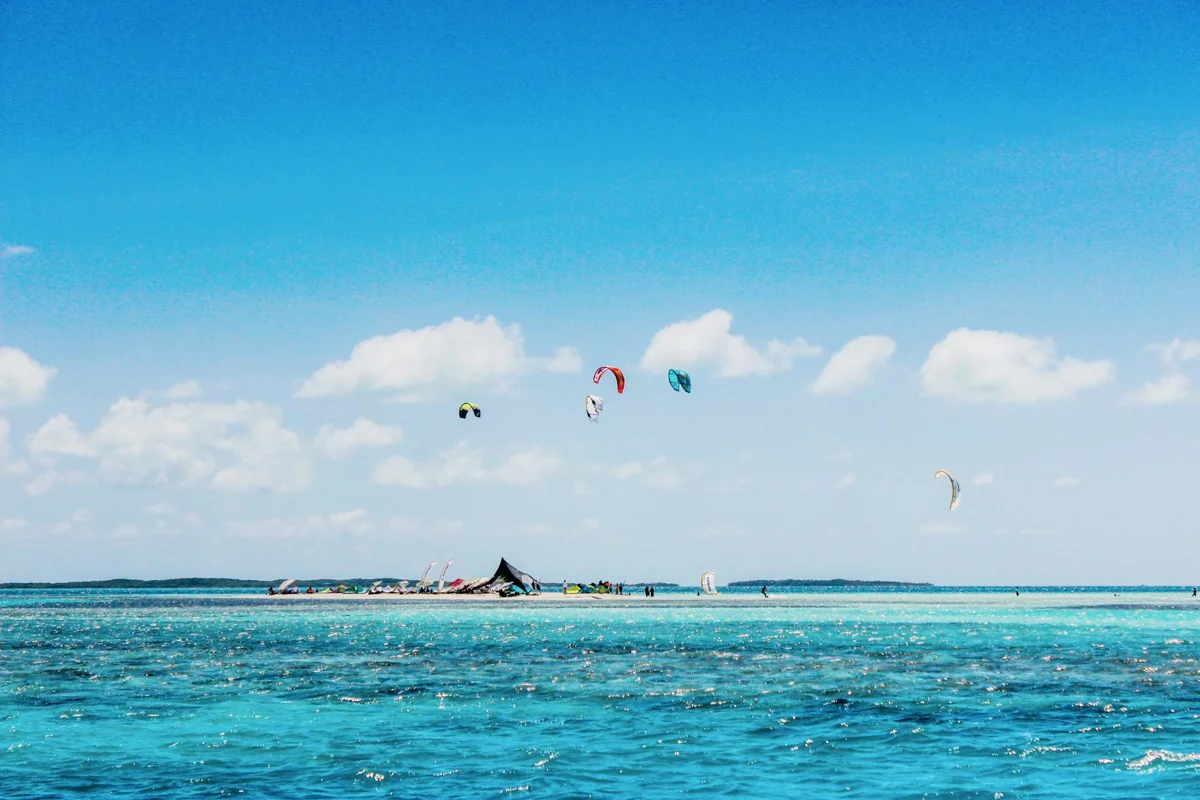
Los Roques is a Venezuelan archipelago of 350 islands and cays in the southern Caribbean (170 km north of Caracas), national park since 1972. Venezuela's political crisis has cut tourism to historic lows: virgin reefs, abundant marine life and zero mass tourism. Exceptionally clear water (30-50 m visibility). Only reachable via Caracas. A destination for explorers with political awareness.
Los Roques (Archipiélago Los Roques) is an archipelago of 350 Venezuelan islands, islets and cays in the southern Caribbean, 170 km north of Caracas. It has been a National Park since 1972 — one of the world's first marine parks. The archipelago covers 221,120 hectares (inner lagoon, coral barriers and open sea). The main inhabited island is Gran Roque (1.6 km², 1,500 inhabitants). It is a marine protected area under strict regulation. Venezuelan visa: required for many nationalities; political situation remains unstable. Currency: bolívar (VES) in hyperinflation, USD widely accepted in tourist areas.
Underwater geography: Los Roques sits on a coral platform 36 km × 24 km. The outer coral barrier drops sharply to 1,000+ m. The inner lagoon is shallow (3-15 m), with sandy bottoms, mangroves and scattered corals. Outer waters are open Caribbean. Water temperature ranges from 26 °C in February to 29 °C in September. Visibility is exceptional (30-50 m, frequently 40+ m) due to the archipelago's isolation. Marine life represents southern Caribbean species in outstanding conservation condition.
Marine life: Los Roques holds Caribbean fauna in better condition than any comparable regional destination. Green turtles, hawksbills and loggerheads (major nesting on Cayo Bequevé), napoleonfish, angelfish (French, queen), huge parrotfish (rare elsewhere in the Caribbean), barracuda, horse-eye jacks, tuna, tarpon (sport fishing), green moray eels, spotted drum, lobster, octopus. Reef sharks (grey, nurse, occasional tiger) present but not consistent. Large pelagic fauna is not typical of this area.
Top dive sites: 1) Boca del Sebastopol (drift dive with currents and baitballs, 18-30 m). 2) La Pelona (vertical walls and large fish, 22-35 m). 3) Cayo Sal (shallow coral gardens, 5-15 m). 4) Cayo Carenero (walls with turtles, 12-22 m). 5) Boca de Sal (channel with schooling fish, 18-28 m). 6) Cayo Pirata (historical colonial wreck, 8-15 m). 7) Cayo Crasquí (massive table corals, 12-22 m). Coral condition is exceptional — comparable to Cuba's Jardines de la Reina and better than almost anywhere else in the Caribbean.
Getting there: flights to Caracas (CCS, Maiquetía) direct from Madrid (Plus Ultra, intermittent Air Europa), Lisbon (TAP), Bogotá, Panama City, Buenos Aires. Onward connection to Los Roques: charter flight from Caracas (40 minutes, Aerotuy or Chapi Air, daily but limited) to Gran Roque airport. No direct international flights. Caracas–Roques return: 200-400 € (prices in USD due to local hyperinflation). Once on Gran Roque: accommodation in family-run posadas (no chain hotels). Inter-cay transport by boat.
Logistics and costs: operations at Los Roques are local and artisanal. Dive operators: Sesto Continente Diving Center (established operator), Aquatica Diving, Roques Divers. Cost per dive: 60-90 USD (includes boat to remote sites, equipment). 7-day full-board posada + diving package: 1,500-3,000 USD. Posadas (15-25 available) offer mid-range comfort — double room, private bathroom, Creole food and family atmosphere. Limited Wi-Fi, generator power, no luxury but genuinely authentic.
The downside: Venezuela's political situation. The country has suffered economic and political crisis since 2013 (Maduro regime). International sanctions, hyperinflation, product shortages and mass emigration have hit the whole country, including Los Roques (though less so due to isolation). Visas are complicated, flights limited, operations can have friction (cancelled bookings, delayed flights). Caracas is an unsafe city. For a stable, predictable destination there are better options. For a Caribbean destination with exceptional coral preserved through political isolation, Los Roques is a one-of-a-kind choice.
Bottom line: Los Roques is an exceptional Caribbean destination with pre-tourism-era reefs and abundant marine life, reachable only via Caracas with artisanal local operations. Venezuela's political crisis has effectively 'protected' the ecosystem by keeping mass tourism away. For a conventional Caribbean resort destination with smooth logistics, there are better alternatives (Bonaire, Curaçao, Belize). For an exclusive Caribbean destination with exceptional coral, abundant wildlife, family posadas and an authentic experience, Los Roques stands alone. Recommended November through June (Caribbean dry season). Suited only to divers comfortable with imperfect logistics and aware of the political context.